
By Leila
Takeaways:
- Measuring brand mascot ROI proves difficult due to mascots’ indirect effects across multiple channels and long buyer journeys.
- Multi-touch attribution models help evaluate mascot impact. They weigh each interaction and link metrics like NPS to business outcomes.
- Incremental lift isolates mascot contributions through tests such as A/B splits, Geo comparisons, and holdout groups.
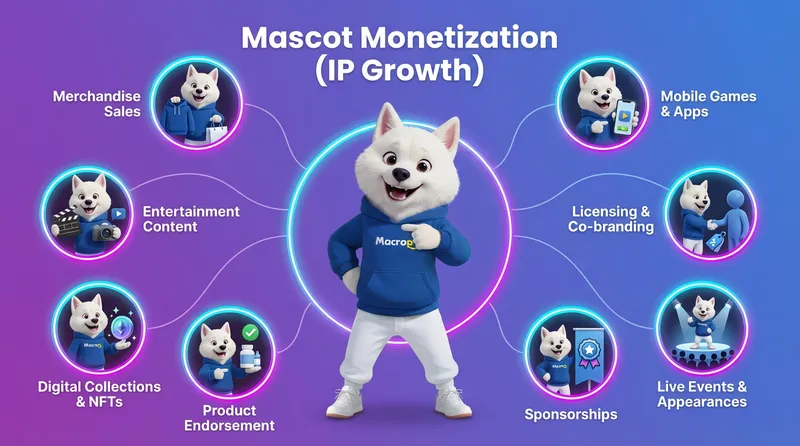
- Brand mascots boost returns by monetizing intellectual property via licensing, merchandise, and partnerships.
- Expanding mascots across channels like social media and virtual reality increases reach without proportional cost growth.
The impact of iconic brand faces is well-known. However, many wonder: Does this investment truly pay off?
To answer that, one needs to explore brand mascot ROI from every angle. This article outlines the challenges in measuring Return on Investment for branded characters. It reveals proven methods to track impact and shares ways to boost returns.
You’ll see how mascots build value, lift sales, and open new revenue streams through IP licensing and beyond. By the end, you’ll have clear steps to make your mascot a growth engine for your business.
Let’s start with ROI.
What Makes It Hard to Measure Brand Mascot ROI?
It Affects, but Indirectly
Measuring the ROI of brand mascot efforts often feels like chasing shadows. The results show up, but pinning them down takes work.
Mascots touch so many parts of a brand’s world. They appear in ads, events, and social feeds. Their influence spreads wide, yet indirectly. This makes exact attribution tough.
Still, solutions exist (I’ll discuss them in the following sections). With smart tracking and tests, you can uncover true value.
For character-centred approaches, true value starts with consistency.
Define a few mascot signatures to tag across uses. Track it ” present” versus “absent”. Note if it’s the hero or just a cameo. Mark speaking versus silent modes. This tagging lets you group data.
Over time, patterns emerge. You’ll be able to spot what drives the best results.
These gains don’t show up in direct sales data. They fuel long-term growth.
Attribution Adds Another Layer of Complexity
Mascots rarely work alone.
They team up with ads, promotions, and content.
A customer sees your mascot on social media, then searches your brand, and buys later. Was the mascot the spark? Or just one piece?
Traditional models credit the last touch, ignoring earlier influences. This undervalues mascots, especially in long buyer journeys.
To solve this, shift to multi-touch attribution. Engage with customers at various stages of their journey (ads, emails, social posts, searches, etc.).
Use tools that weigh each interaction.
Set up tracking pixels and UTM tags for mascot content.
Use surveys to gauge awareness lift.
Track metrics like Net Promoter Scores (NPS) for customer loyalty and satisfaction.
Link these to business outcomes.
This reveals the true value of your corporate mascot.
Still wondering how to measure the impact?
The next section investigates the topic deeper.
Understanding Mascot ROI Through Incremental Lift (Cumulative Advantages)
Mascots rarely result in explosive short-term spikes like a price discount or flash sale. Instead, they drive cumulative advantages.
- Better brand recall
- Higher ad engagement
- Stronger preference in competitive choices
These effects are not direct attribution but causal influence.
To understand this, see your company mascot as a strategic force that outperforms non-mascot marketing efforts.
Think of the character as a team player in a bigger game. It boosts performance, but how do you know exactly how much it adds?
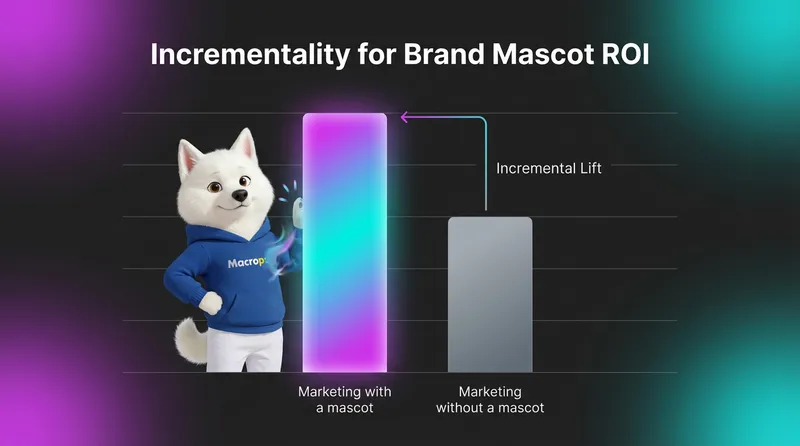
Total sales or engagement numbers show the full score. They don’t reveal what the mascot alone contributed. That’s where incremental lift comes in. It isolates the extra results your mascot drives; the gains that wouldn’t happen without it.
This matters deeply for brand mascot ROI.
Here is an example:
Imagine two similar groups of customers. One sees your mascot in campaigns, events, or ads. The other doesn’t. Compare outcomes: sales, searches, sign-ups, or loyalty.
The difference is the lift from your mascot. For example, if exposed customers buy 20% more, that’s incremental. The rest might occur anyway from other marketing or word-of-mouth.
Why focus here?
Mascots influence indirectly. They make your brand friendlier, sparking shares or preference. But buyers decide later. Without tests, you undervalue the character.
Data backs this:
Campaigns with characters like mascots drive 37% more market share growth than those without, per System1 research. Long-term mascot use boosts profits by up to 34.1%, according to Technicolor studies.
Some academic research found a positive link between consumer purchase intentions when a company uses a mascot for endorsement. The strategy is also found to lead to positive attitudes toward the product, increasing the likelihood of purchases.
Here Are Some Practical Ways to Test Brand Mascot ROI Lift
Brands use experimental designs to capture this. These create fair comparisons.
A/B Tests are Ideal for digital. Split audiences. Show mascot versions to one group, plain ads to the other. Track conversions or engagement. The uplift shows mascot value.
Geo Tests are great for broader efforts. Run mascot campaigns in select regions. Hold others as controls. Measure sales or traffic differences. This reveals real-world causal lift.
Holdout Groups withhold mascot exposure from a small audience segment. Compare it to exposed groups. Tools automate this for ongoing insights.
Start small. Tag mascot appearances consistently: hero role, cameo, or absent. This builds data over time.
How Mascot Marketing Lifts Brand ROI?
Incremental lift prioritizes cause and effect. Real examples prove this.
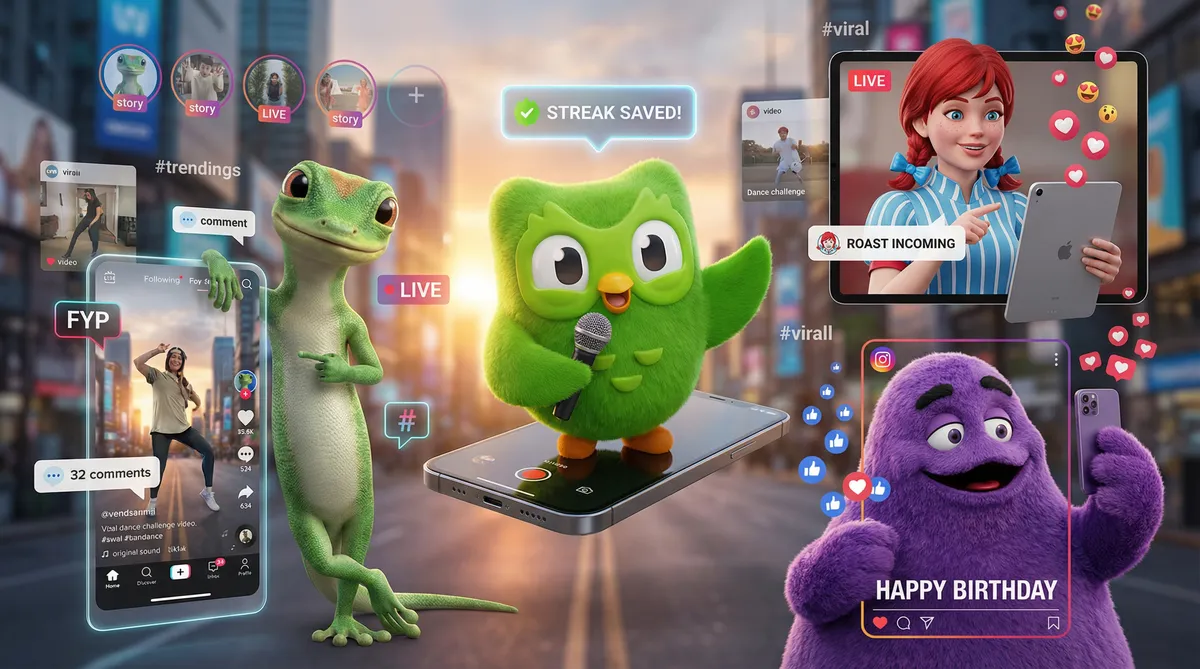
Brands like GEICO’s Gecko or Duolingo’s Owl thrive on this. Their characters create measurable preference lifts, outperforming non-mascot efforts.
Here’s how to use a mascot to impact ROI.
Monetize Mascot IP for Additional Revenue
Develop a mascot that wins hearts.
License it for IP.
Open monetization doors.
Beyond marketing, mascots create Intellectual Property (IP) value. License them for partnerships. Collaborate on co-branded products. Sell merch like tees or toys.
Protect your character legally. Then expand. This adds streams, boosting overall brand character ROI.
- To learn more about licensing a character for intellectual property, check out Dream Farm’s blog titled “IP Characters: From Design to Licensing + 12 Examples”.
Enhance Brand Equity With Mascot
Branded characters outperform celebrities in ROI, thanks to a consistent lift in recall. Brand favorability rises from positive associations. Trust solidifies over time.
Brand equity forms the foundation. Mascots excel here. They boost awareness through memorable narratives. Consideration arises when characters make your offer more relatable.
Preference grows with fun interactions.
Think of the GEICO Gecko. It simplifies insurance, building recall.
Michelin Man hits 90% global recognition, per Brand Master Academy. Such equity translates to sales.
To quantify, use brand tracking studies. Survey audiences on metrics. Compare pre- and post-mascot. This shows lifts in key areas.
Mascots as avatars or spokespeople add depth. They embody values, making abstract brands relatable. In B2B, like Salesforce’s Astro, they ease adoption. (Read our blog on B2B Mascots and Characters).
Apply this knowledge to your strategy for confident decisions.
Expand Your Mascot-driven Efforts Beyond Single Channel
A static logo or an interactive virtual being? The difference is huge, so is the impact.
An integrated brand mascot strategy offers endless possibilities for effective storytelling.
An owned character can take various roles, from a customer assistant to a social media influencer with thousands of followers. It can narrate heartfelt stories that span videos, games, and merchandise.
Weave a unified narrative across platforms. Blend traditional forms with emerging tech like AI-generated animations and virtual reality experiences.
This approach increases returns remarkably. It expands reach and strengthens connections. It allows your brand to grow without proportional costs.
- Learn more about “Transmedia Storytelling” with owned characters.
Common Missteps When Evaluating Mascot Performance
Do you expect immediate sales spikes?
Remember that mascots build influence over time. Short-term metrics may not reflect their true impact.
Does your strategy ignore brand equity as a value driver?
Improvements in brand equity can lead to better performance.
Are you relying on last-touch attribution models?
These models often undervalue long-term assets. They assign 100% of the credit to the sale or conversion. They ignore the contributions of earlier efforts in the customer journey.
Take this example:
Imagine a user who sees an ad on social media. Then, they receive an email with a seasonal offer. They visit the website and make a purchase. In a last-touch attribution model, the sale is credited solely to the website visit. It overlooked how the ad and email contributed to the customer’s decision to buy
It’s also crucial to control for context when evaluating brand mascot ROI. Without controlled tests, you cannot accurately measure the mascot’s impact.
All in All
Mascots challenge ROI measurement norms, because:
- they operate across many channels.
- they affect long-term brand perception.
- they influence behavior indirectly.
The true value of a company mascot lies in its huge potential for becoming a strategic brand asset. Add IP monetization, and returns multiply.
If mascots are evaluated as strategic assets, they become more than memorable characters. They become drivers of recognition, preference, and economic value.
Wrapping it up, invest in a mascot that aligns with your vision. Track its impact rigorously. Watch your brand soar ahead, inspiring loyalty and driving sustainable success. That’s how brand mascot ROI works.
The future belongs to those who humanize their story.
If you’re thinking about adding a mascot to your communication plan, our team is here to help.
With over 10 years of experience and the development of more than 2,500 characters, we’ll guide you through every step to unlock the full potential of your new team member!
Learn more
Leila