

Leila D.Content Marketer and StorytellerPart marketer, part storyteller, with a keen eye for what others miss. Leila D. distills complexity into creative ideas people feel, remember, and act on. For the past three years, her works have navigated new territories in character-driven marketing communications, brand storytelling with modern mascots, and AI-powered virtual influencers.
Key Takeaways
- Mascot marketing is the strategic, consistent use of a brand character across campaigns, content, customer touchpoints, events, and digital channels. It treats the mascot as a strategy-based communication system rather than mere design, with the goal of making the brand more recognizable, memorable, emotionally engaging, and commercially effective.
- A solid mascot marketing strategy framework starts by defining business objectives. Next, it assigns the mascot’s role and maps it to each stage of the marketing funnel based on audience interests and business priorities.
- A comprehensive mascot marketing roadmap advances through six phases from launch and recognition building to story expansion, IP growth, and adaptation to interactive AI applications.
- Mascot marketing relies on repeatable content formats, including episodic series, reactive commentary, educational explainers, and community participation to maintain freshness.
- Common mistakes in mascot marketing include treating the character as decoration, inconsistent personality, lack of clear strategic guidelines for launch, measurement, evolution, or governance across channels, lack of alignment with audience interests, and overusing the mascots.
Can one character turn strangers into loyal customers and lift sales year after year?
Successful examples like Duolingo’s owl clearly show that a brand character as a strategic asset can move beyond visual identity and become a recognizable brand voice, social media personality, engagement driver, and long-term communication asset.
This perspective is where mascot marketing begins:
The process of turning a mere catchy mascot into an evergreen communication asset by building a complete character-driven marketing system around it.
This guide shows you how to manifest the real power of brand mascots. You’ll discover:
- mascot marketing strategic definition,
- business advantages,
- the framework,
- the roadmap,
- Ways to measure performance,
- best practices to integrate the mascot into your content strategy, and
- common mistakes to avoid.
You’ll also learn about Dream Farm Agency’s distinctive approach.
What Is Mascot Marketing?
Mascot marketing is the strategic, consistent use of a brand character across campaigns, content, customer touchpoints, events, and digital channels. This systematic approach aims to make a brand more recognizable, memorable, emotionally engaging, and commercially effective.
Here, the mascot doesn’t function as a decoration; it operates as a strategy-based communication system. It personifies brand values and acts as a steady guide for audiences. It humanizes offers, simplifies messages, and builds ongoing stories that ordinary ads struggle to create.
Ask yourself, “What changes if I remove the mascot from my marketing efforts?” If removing the mascot would not affect your campaigns, experiences, and community activity, continue unchanged, it signals a need to revise your overall mascot-based marketing efforts.
Why Mascot Marketing Works
Mascot Marketing Solves Recognizability Issues
Weak recognition can create serious challenges in the crowded markets. Integrating mascot marketing into your overall marketing strategy can solve such practical issues.
How?
Imagine you’re a fintech brand with a cuddly, cute brand character. You’re launching fraud-awareness campaigns to teach your employees and audience how to recognize and report common scams.
You may want to use the same character differently in various touchpoints (the product tutorial, the fraud-awareness campaign, the onboarding flow, a social explainer, etc). Without a well-thought-out mascot marketing strategy, you’ll face these problems:
- Campaigns feel disconnected across seasons;
- Different teams produce content that lacks unity;
- Complex or technical products confuse audiences;
- Recognition stays weak when the market is crowded;
- Human spokespeople or external influencers bring risks and inconsistency.
- Communication with the audience is ineffective because of the absence of a distinctive brand voice.
Mascot marketing addresses these business challenges by creating consistency across all marketing efforts. While the message adapts to the context, the character’s core personality and visual identity remain consistent.
Mascot Marketing Addresses Low Engagement
The benefits of brand mascots with consistent actions extend beyond mere recognition. Consistency also turns the inactive audience into actively engaged fans. However, higher engagement isn’t merely achieved by letting the mascot appear in content; it’s obtained when your mascot has something consistent to do, say, ask, or react to.
That’s true regardless of business type. Tech startups, for example. Why do brand mascots propel startups to soaring success?
First, audiences form relationships with characters more readily than with logos or taglines, especially when facing a complex or highly technical product/service.
Second, consistency in mascot-centered content provides instant differentiation in a highly competitive market like tech. And let’s not forget that using digital or interactive mascots is aligned with rising trends and future-oriented platforms.
Mascot Marketing Framework
This mascot marketing framework aligns the character with real business needs from the start. It avoids wasted effort and supports steady expansion.
Let’s review the steps one by one.
1. Define the Business Objective
Ask clear questions first.
What business or communication problem exists now?
Can a character solve it effectively?
Which audience behavior must change?
At which customer journey stage?
How will the improvement be observed or measured?
These questions keep every decision tied to outcomes. A retailer with weak repeat business might focus on loyalty. A software company with hard-to-explain features might choose education. This step anchors the entire mascot marketing strategy in results.
You should also add a practical objective hierarchy. Look at the example below:
Example of Mascot Marketing Objective Hierarchy
| Objective Level | Example |
| Primary objectives | Simplified product education |
| Secondary objectives | Build trust |
| Long-term objective | Develop a recognizable brand-owned character asset |
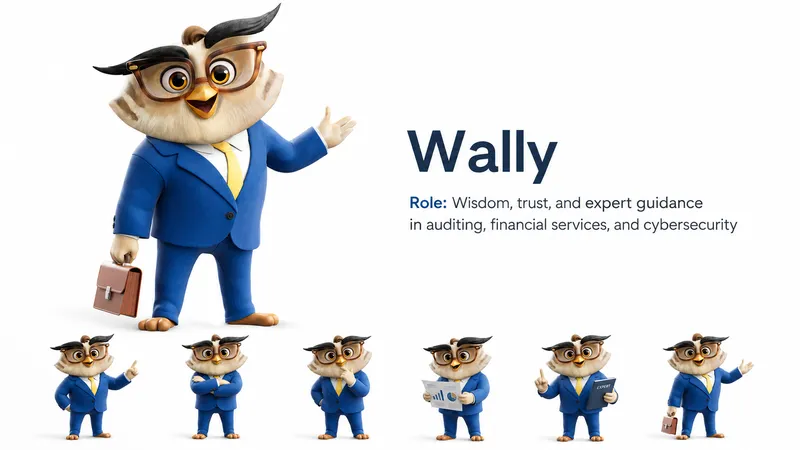
2. Assign the Mascot’s Role and Behavioral Function
Different business conditions call for different mascot roles. Define the role during strategy, before design. Backstory and character profiles in brand mascots provide the foundation for these roles and ensure consistency.
Here’s a strategic note:
A mascot’s identity and personality should remain consistent. Still, its functional role can shift depending on the touchpoint, campaign objective, audience need, and stage of maturity (behavioral consistency).
Mascot Roles in Various Business Conditions
| Business Condition | Suitable Mascot Role |
| The product is complex or highly technical. | Product educator |
| The brand is visually hard to differentiate. | Recognizable brand face |
| There are inconsistencies across campaigns. | Campaign unifier |
| The brand fails to establish emotional connections with its audience. | Relatable companion |
| There’s a need for trust in high-stakes categories. | Trusted advisor |
| The brand feels emotionally distant or abstract. | Emotional connector |
| The customer journey has friction, leading to a frustrating experience. | Customer guide |
| There is a need for a sense of community identity among customers. | Community host |
| Brand storytelling lacks the desired impact. | Storytelling device |
3. Map the Mascot to the Marketing Funnel
To effectively map a mascot to the marketing funnel, start by clearly defining its core personality, values, and visual identity to ensure consistency across all stages. Next, you need to align the mascot’s role and behavior to each funnel stage:
- Awareness
- Consideration
- Conversion
- Loyalty
- Advocacy
The mascot’s role doesn’t change across the marketing funnel. What changes is the focus of its role at each stage, what it says, and what it asks the audience to do. For each stage, define:
- Communication objectives
- Mascot behavior
- Content type/format
- Performance signal
At the awareness stage, for example:
- Communication objectives are grabbing attention and building recognition and recall.
- Mascot behavior needs to be energetic, visually eye-catching, surprising, and leaning into humor or cultural trends.
- The idea content types/formats are short videos, memes, GIFs, social ads, billboards, and event appearances.
- The key performance signals are Impressions, reach, and video views.
4. Activate the Mascot Across Brand Touchpoints
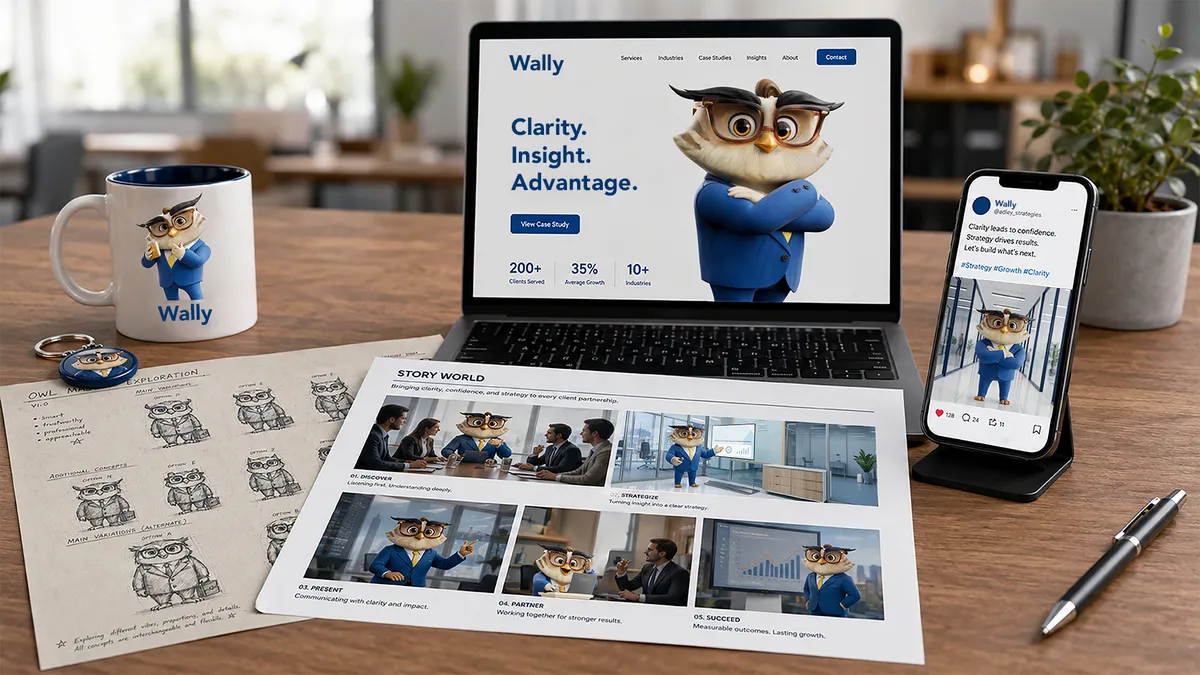
To activate your mascots in the selected touchpoints, first define the role, behavior, content format, and limitations for each touchpoint. This creates unified experiences.
Brand mascots on social media work best when they feel alive and responsive. That also enables them to quickly respond to trends and community interactions. Here are more details:
- Role: Community engager and trend responder
- Behavior: Playful, responsive, conversational
- Format: Short videos, reels, recurring series, comment replies
- Limitations: Keep responses under 30 seconds. Avoid sensitive topics.
In websites and app experiences, the character guides onboarding, explains features, and supports high-friction moments like checkout. Here are more details:
- Role: User guide and explainer
- Behavior: Patient, clear, encouraging
- Format: Onboarding animations, tooltips, progress helpers
- Limitations: Non-intrusive. Never block core actions.
For Advertising campaigns, animated mascot campaigns deliver consistent storytelling at scale. Here are more details:
- Role: Campaign storyteller
- Behavior: Energetic yet focused on key benefits
- Format: Video spots, banner sequences, social ads
- Limitations: Align strictly with campaign goals. Limit to approved messaging.
For packaging, retail, and events, physical and experiential appearances reinforce identity. Interactive mascots for events create memorable moments, which enhances overall brand experience. Here are more details:
- Role: Brand representative and experience enhancer
- Behavior: Welcoming, informative, fun
- Format: Static illustrations on packs, in-store displays, live or digital activations
- Limitations: Match physical constraints. Ensure cultural sensitivity.
In customer services and onboarding programs, the mascot humanizes support and reduces frustration. Here are more details:
- Role: Supportive companion
- Behavior: Empathetic, helpful, reassuring
- Format: Chat avatars, email illustrations, guided flows
- Limitations: Escalate complex issues to humans quickly. Maintain a professional tone.
5. Measure Mascot Marketing Performance
Track results through direct comparisons to reveal the mascot’s true contribution.
Brands gain credible insights by analyzing:
- mascot-led content versus non-mascot content
- the same message delivered with and without the mascot
- performance before and after mascot integration
- recognition levels across audience segments
- early-stage versus mature mascot performance
This method grounds decisions in evidence.
A clear KPI hierarchy organizes tracking effectively:
- Recognition metrics: Unaided recall rates, visual identification, and brand association strength.
- Content metrics: Views, completion rates, and sharing volume for mascot material.
- Interaction metrics: Comments, replies, user-generated content with the mascot, and time spent engaging.
- Experience metrics: Sentiment scores, brand affinity changes, and Net Promoter Score movements.
- Commercial metrics: Conversion lifts, sales impact, customer acquisition efficiency, and retention improvements tied to mascot activities.
Link findings to brand mascot ROI to justify investment and refine tactics. This approach shows how the mascot advances overall growth objectives.
Mascot Marketing Roadmap
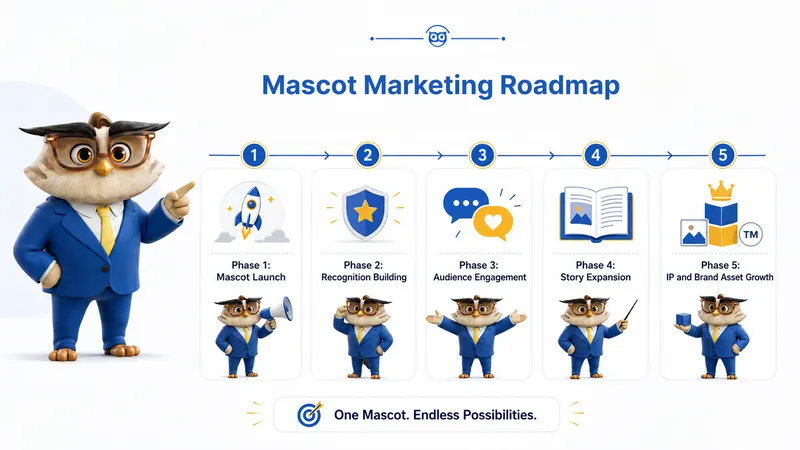
Phase 1: Mascot Launch
Introduce the character with a strong origin story and clear value. Use coordinated channels for maximum initial impact. Real-world examples show that launches tied to product stories or cultural moments gain traction quickly.
Phase 2: Recognition Building
Focus on repeated, consistent exposure. Simple visuals and core behaviors help audiences learn the character fast.
Phase 3: Audience Engagement
Shift to interaction. Respond to comments, join trends, and invite participation. Duolingo’s Duo thrives here by turning reminders into entertaining social moments.
Phase 4: Story Expansion
Develop arcs, new scenarios, and deeper layers of personality. This keeps the character fresh while reinforcing brand values.
Phase 5: IP and Brand Asset Growth
Extend into mascot merchandise, licensing, experiences, digital collectibles, and NFTs. Treat the mascot as a long-term revenue and equity driver.
Moreover, technologies like responsive/interactive AI open new possibilities for impactful mascot marketing and asset growth. Here are some key possibilities:
- Real-time conversational brand presence through direct customer chats with the mascot
- Personalized content tailored to individual user progress or preferences
- Constantly active social presence without scheduling limits.
- Cross-market adaptability for different regions while preserving core traits.
Considering these advanced features for your mascot marketing strategy keeps your assets relevant amid ever-changing market habits. At the same time, it demands stricter control over the mascot to protect personality and brand alignment while avoiding technical issues.
How to Create Content Around Your Mascot?
Brand mascot marketing works best when content revolves around the character from the start. That produces unified experiences that feel natural and effective.
Choose the Main Content Themes Based on the Mascot
Select themes according to audience needs, the mascot’s credible role, and business priorities.
Determine what the audience should know, feel, or do. Confirm the character can communicate it authentically. Selected content themes also need to be aligned with products, campaigns, or behaviors that matter commercially. This focus ensures relevance and results.
Create Repeatable Content Formats that Don’t Feel Repetitive
Formats succeed when they repeat easily without losing freshness. Define for each one its purpose, frequency, main channel, mascot behavior, production needs, and key performance metrics.
Here are some strong examples that can improve efficiency and build a stronger character presence:
- Episodic series such as weekly tips, monthly challenges, or seasonal stories with fixed structures.
- Reactive commentary where the mascot addresses news or trends in the brand’s field.
- Educational explainers in which the character clarifies product details or processes.
- Community participation as the mascot responds to user posts or joins challenges.
- Campaign anchor content where the mascot drives major initiatives during key periods.
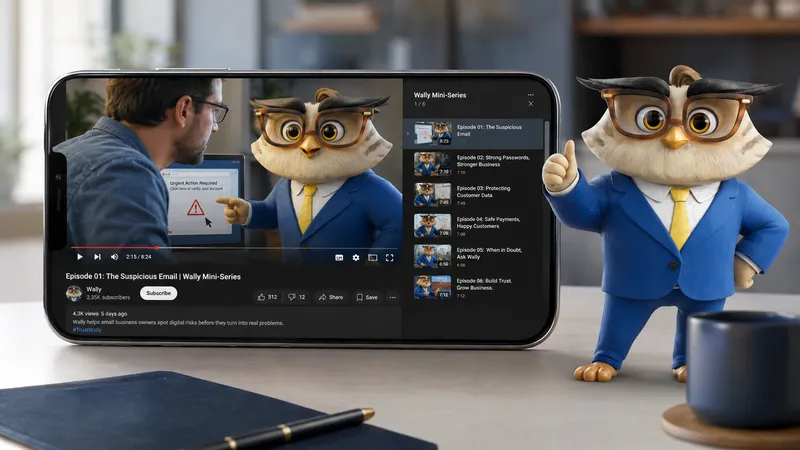
Just keep in mind that not all content needs to be mascot-led. If every post relies on the mascot, it may become repetitive or overshadow the product.
Common Mascot Marketing Mistakes
Treating the Mascot as Decoration
Seeing the mascot simply as decoration wastes potential. Without defined roles, the character adds no unique value and quickly becomes forgettable.
Using the Mascot Without a Clear Strategy
Lack of a solid mascot strategy leads to scattered efforts and mixed messages. Strategy ensures every appearance advances business goals.
Launching the Mascot Without a Strong Introduction
Audiences need context and a compelling entry point. Weak mascot launches fail to build early connection and momentum.
Creating an Inconsistent Personality and Voice
Inconsistency in mascot voice or personality erodes trust. Audiences disengage when the character feels unreliable.
Making the Mascot Misaligned with the Audience
Relevance matters when using a mascot. A mismatch between the mascot and the target audience creates confusion or alienation instead of connection.
Overusing the Mascot or Letting it Overshadow the Product
Balance in using a mascot keeps focus on value. Excessive use can fatigue audiences or distract them from the product.
Ignoring Channel Context and Customer Journey Touchpoints
Mascot behaviors need to match the chosen touchpoint. One-size-fits-all behaviors ignore user needs. For better results, you should tailor your mascot’s actions to the moment.
Launching without Governance, Measurement, or an Evolution Plan
Mascots without operational rules for management, performance measurement, or monitoring may face long-term decline or stagnation.
Dream Farm Agency’s Unique Approach to Mascot Marketing
At Dream Farm Agency, we believe in building a complete mascot system that eventually turns into a long-term asset for lasting impact and growth.
Here, mascots aren’t just adorable drawings; we give them identities, personalities, stories, and worlds to exist and live in. They mature as your business grows, adapt to new demands and trends, and generate consistent commercial value as much as emotional loyalty.
Dream Farm’s brand mascot solutions are built on three key pillars:
- The strategic foundation that comes before diving into the creative creation of mascots;
- our in-depth understanding of the character’s function and influence in modern storytelling for business purposes; and
- marketing expertise that’s backed by years of experience in designing full character systems (not just a design).
Brands that invest in mascot systems (not just a catchy design) gain lasting differentiation and turn marketing into sustained relationships.
Conclusion
Mascot marketing succeeds when brands treat characters as strategic systems with clear objectives, consistent behavior, activation across touchpoints, and continuous measurement. A mascot as a durable asset adapts to new marketing channels and technologies while staying true to its core.
Consider how a mascot could unify your efforts and accelerate growth. The opportunity lies in moving beyond decoration to a living part of your marketing communication strategy.
FAQs
How does Dream Farm Agency use a mascot in marketing?
Dream Farm Agency develops mascots as long-term brand assets through fully developed character systems. Our emphasis stays on strategic integration, consistent personality, and evolution that supports objectives across every channel.
When does mascot marketing make sense for a business?
Mascot marketing fits companies seeking emotional bonds, clearer messaging for complex offerings, or a standout presence in crowded markets. It works best with audiences that connect through personality and stories.
How is a virtual mascot different from a traditional brand mascot?
A virtual version of a mascot leverages digital tools and technology like interactive AI for instant interaction and customization. Traditional mascots, on the other hand, depend more on physical or static formats with limited real-time responsiveness.
Does mascot marketing work for B2B brands?
Yes, Astro from Salesforce is a prime example of a successful B2B mascot. In B2B businesses, mascot marketing helps humanize technical solutions, build trust in high-stakes decisions, and add an approachable personality to formal communications.
How do I keep my brand mascot consistent across channels?
Start by creating detailed guidelines covering look, voice, behaviors, and values. Apply them everywhere and review materials regularly against the core profile.
What should a mascot marketing strategy include?
A well-developed mascot marketing plan requires goal alignment, a phased mascot marketing roadmap, content frameworks, measurement systems, and rules for consistency and adaptation.
What roles does a mascot play in marketing?
A mascot can serve various roles. Depending on the business condition or priority, it can be a brand spokesperson, storyteller, community connector, trusted advisor, customer guide, etc.
How can a mascot help with content marketing?
Mascots anchor series, explain ideas accessibly, react to trends, and generate shareable moments that raise engagement and support messages.
What is the difference between mascot design and mascot marketing?
Mascot design creates the character’s visual identity. Mascot marketing defines how that character is used across campaigns, content, customer touchpoints, and business objectives.
Can a mascot become a brand IP?
Yes. A mascot can become brand IP when it develops recognition, emotional value, story potential, consistent usage, and commercial extensions such as merchandise, games, animation, events, or licensing.
How long does mascot marketing take to show results?
Early signals such as engagement and recognition can appear within campaign cycles, but deeper value such as loyalty, community, and IP growth requires consistent long-term activation.
Insightful read! Mascots truly are powerful brand storytelling tools.
Absolutely, they’re essential!