
Leila D.Content Marketer and StorytellerPart marketer, part storyteller, with a keen eye for what others miss. Leila D. distills complexity into creative ideas people feel, remember, and act on. For the past three years, her works have navigated new territories in character-driven marketing communications, brand storytelling with modern mascots, and AI-powered virtual influencers.
Key Takeaways
- Character-led storytelling builds content, campaigns, and brand experiences around a distinct persona that drives the message through its actions, words, and viewpoint from the start. That is different from plot-driven storytelling, where characters may appear passively just to decorate the message.
- Character-driven storytelling for brands turns separate marketing efforts into an ongoing narrative that audiences recognize and follow across various platforms.
- Character-led storytelling prioritizes strategy over character appearance. From the outset, each character is planned to become a lasting asset that drives narratives beyond any single campaign.
- Character-led storytelling supports multiple formats including episodic, serialized, social media, and interactive stories, each suited to different campaign goals and audience engagement levels.
- A well-planned character becomes a lasting storytelling asset that compounds recognition and delivers organic reach beyond any single campaign.
Character-led storytelling is a strategy centered around a distinct persona that pushes the story forward rather than being pulled by external storytelling elements.
Mastering the art of storytelling with characters gives brands a competitive edge. Not only does it generate organic reach that traditional slogan-based campaigns often struggle to achieve, but it also carries the brand narratives across years rather than one-time campaigns.
This piece breaks down what separates character-led storytelling from standard brand narratives. You’ll discover:
- where character-driven narratives earn their place across campaigns, social content, and product communication,
- the best content formats by campaign objectives, and
- how product offerings show up inside a character’s world.
If you want your character to work harder than a simple landing-page visual, keep reading.
What Is Character-led Storytelling?
Character-led storytelling builds your content, campaigns, marketing efforts, and brand experiences around what a character does, says, and stands for, not just how it looks. The character is written into the strategy from the outset, ensuring that all future efforts revolve around it.
The strategy gives your marketing efforts a consistent voice that audiences recognize and trust over time. Creators gain a reliable framework for producing fresh stories without starting from zero each campaign. The result is more efficient production, deeper emotional connections, and assets that support business growth for years.
When Character Drives the Story vs When the Story Pulls It
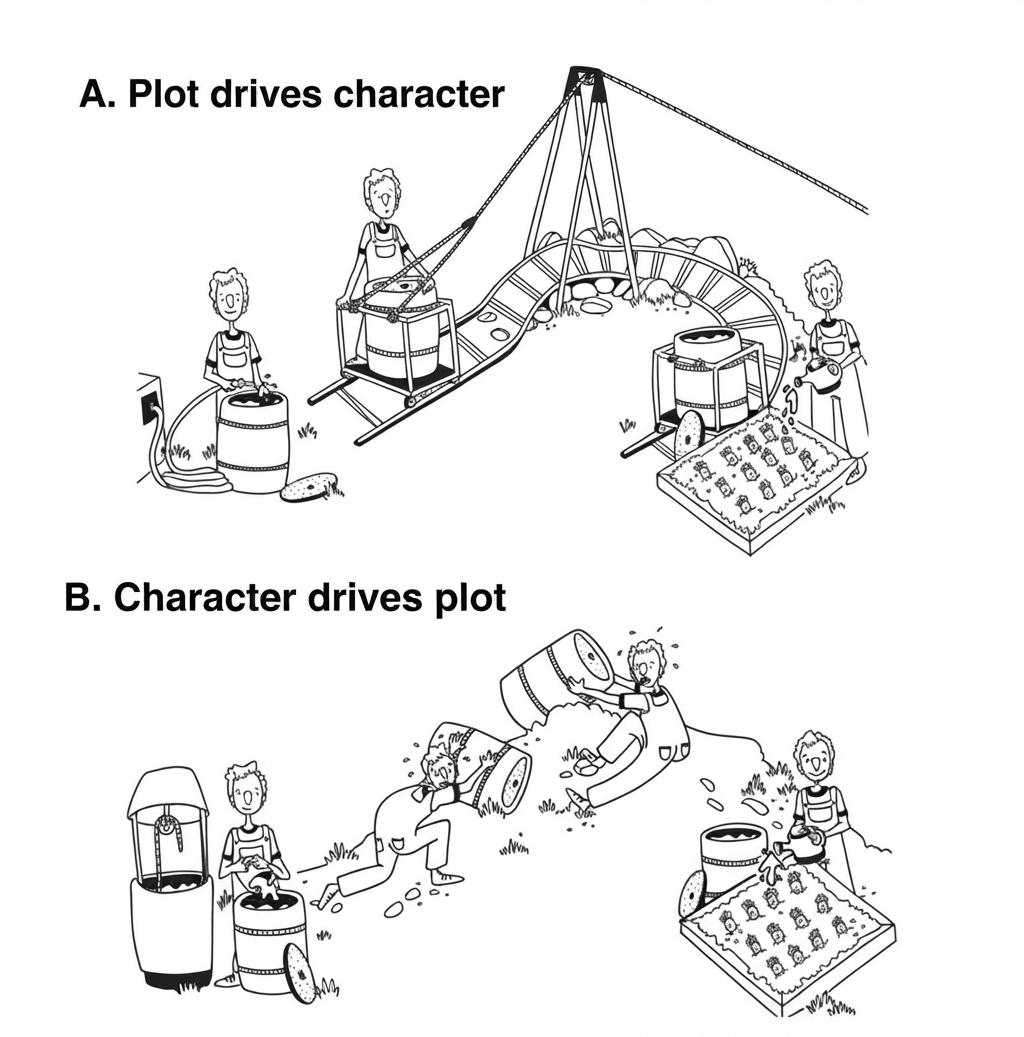
In character-led narratives, the character is an active agent who determines the progression of the plot.
In contrast, when a character is added later, it functions merely as a fictional touch. It does not shape the plot; it’s pulled along by it. In the first case, the character’s personality, actions, and viewpoint form the foundation of the narrative. In the second, the story stands without it.
The method necessitates that the character be integrated into the brand strategy from day one.
Character-led Storytelling vs Plot-driven Storytelling
| Character-led Storytelling | Plot-driven Storytelling | |
| Character role in storytelling | Drives the plot | Appears as an added detail, decoration, or fictional touch |
| Character origin | Built into strategy from day one | Added after the concept is already done |
Think of traditional logo mascots. They used to sit next to a headline as decoration, nothing more. A character that leads a story works differently. It explains a feature or process, reacts to a trend, hosts a series, or pushes back on a competitor’s claim.
How do you know whether a character is actually leading the story, rather than just appearing in it? Try a simple test. Remove the character and see what’s left:
- If the message still holds together without them, the character is decoration.
- If the story falls apart because the explanation, the humor, or the emotional beat depended on that specific personality, the character is doing real narrative work.
Strong cases like GEICO’s Gecko and Duolingo’s Duo hold up under this test because the character was written into the strategy from the start. Nobody layered it on top of a finished script afterward.
Character-led Storytelling vs Brand Storytelling
Brand storytelling encompasses a broader discipline. It covers origin stories, mission narratives, and customer journeys. Character-driven narrative is one method within that larger discipline, and often the most durable one.
A strong character can carry a brand narrative across years and formats in ways that a single campaign idea rarely matches. Michelin’s Bibendum and Kellogg’s Tony the Tiger stand as proven cases. Yet the method also works with spokesperson personas, fictional guides, recurring hosts, or AI-generated personas. The core mechanics stay the same; the character advances the story.
Character-led Storytelling vs Brand Storytelling
| Character-led Storytelling | Brand Storytelling | |
| Scope | One method within the discipline | The full discipline |
| What it covers | A recurring personality | Origin stories, mission narratives, customer journeys |
Does Character-led Storytelling Fit in Brand Strategy?
Character-led storytelling earns its place in a content plan in several ways. It reflects brand identity and values, strengthens advertising campaigns, puts products and services in a more engaging context, explains complex ideas without overwhelming an audience, and builds a steady presence across social platforms.
Here are more details.
Expressing Brand Personality and Values Through Actions, Not Claims
While a mission statement can claim a company is playful or protective, a character proves it through behavior, word choice, and reaction.
The character acts as living proof of the brand’s personality traits through behavior, word choice, and reactions.
What does that look like in practice?
Duolingo’s Duo shows this clearly. The owl’s blunt, slightly chaotic tone demonstrates the brand’s irreverent spirit more effectively than any mission statement.
Turning Separate Campaigns Into One Ongoing Story
A recurring character turns a set of separate ads into one ongoing story.
Audiences recognize the character across placements, which means each new ad builds on the last one instead of starting from zero.
What does that look like in practice?
GEICO’s Gecko proves the value of character-driven ads. Over two decades, advertisements were centered around this character. The strategy contributed to the company’s growth in market share, transforming it into the second-largest auto insurance brand in the US in 2022.
Improving Product/Service Storytelling and Feature Communications
Explaining a feature through a character’s situation is easier to follow than a list of specs. That helps audiences follow complex topics without fatigue.
The character hits a problem, the product resolves it, and the audience absorbs the function without reading documentation.
What does that look like in practice?
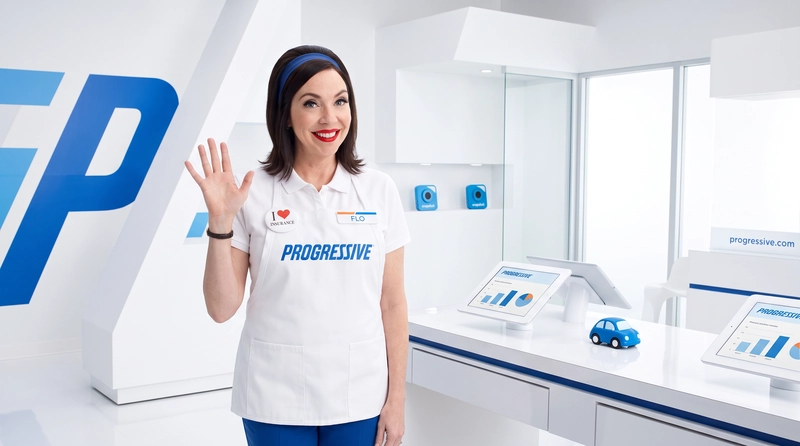
Progressive’s Flo demonstrates policy options through scenes and small interactions rather than bullet points. The strategy has been the driving force behind Progressive’s massive surge in awareness and online presence.
Enhancing Educational and Explainer Content
Character-led narratives turn abstract brand values or complex concepts into something visible and understandable.
Viewers follow one perspective instead of jumping between disconnected facts. Also, the character’s tone can soften technical or dry subject matter.
What does that look like in practice?
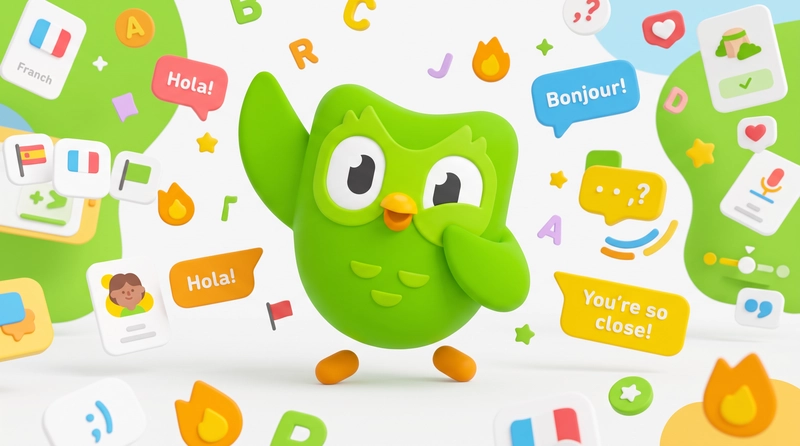
Duolingo’s Duo delivers short, playful lessons and reminders that feel personal. This strategy helps millions stick with daily language practice.
Keeping a Consistent Voice Across Daily Social Media Content
Social platforms reward a personality that shows up regularly and responds in real time.
The character comments on trends, replies to followers, and keeps a consistent tone across many posts.
What does that look like in practice?
Duolingo‘s TikTok account, run largely in Duo’s voice, has grown past 17 million followers on the strength of that character consistency alone.
Creating a Brand Universe
A single character can expand into a full cast, and that cast becomes a source of new stories naturally without needing a new campaign concept every quarter.
The lead character keeps the throughline. Supporting characters add angles, humor, or specialist expertise the brand’s core narrative can’t easily deliver alone.
What does that look like in practice?
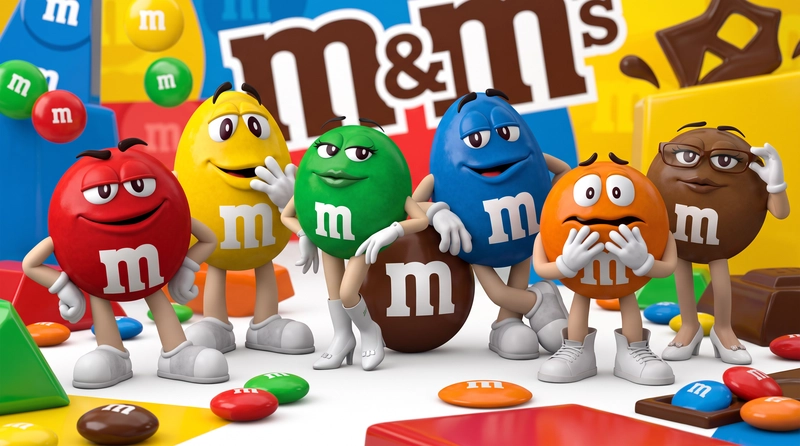
M&M’s spokescandies are the clearest example of this brand world-building system. Each candy character has a distinct personality. The interplay between the characters has generated fresh scenarios and stretched a brand’s content plan over years.
Widely Used Formats for Character-led Storytelling
Character-led storytelling is a powerful narrative technique that places characters at the forefront of the plot, allowing their development and interactions to drive the story forward. Let’s look at the widely used formats.
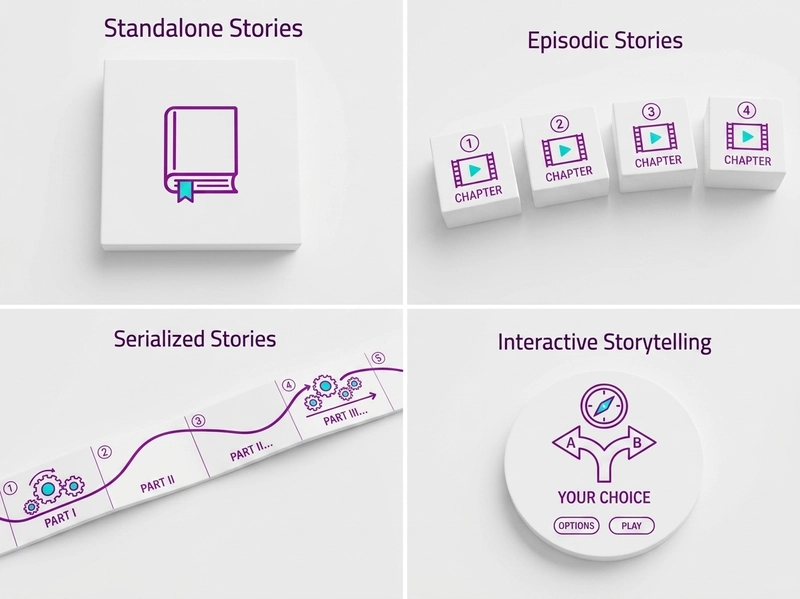
Standalone Stories
A standalone story is a single, complete narrative with no sequel attached.
- Best for: a specific launch or seasonal campaign where the brand needs impact now rather than a long arc.
- What sets it apart: Self-contained, no continuity to track. Production stays simple and fast.
Episodic Stories
Short, independent episodic stories share common characters and tone. They are released as connected but self-contained installments, similar to a sitcom.
- Best for: supporting a consistent content marketing strategy.
- What sets it apart: Each stands alone but builds familiarity, which maintains interest over time without high commitment.
Serialized Stories
Serialized stories carry one plot forward across every installment, so missing an entry means losing the thread. Here, the payoff builds gradually rather than resolving in a single post.
- Best for: building anticipation and fostering loyalty that encourages viewers to return without feeling pressured.
- What sets it apart: Viewers return to see developments. That creates anticipation and stronger emotional investment compared to other formats.
Social Media Storytelling
Social media storytelling treats a character’s social media presence as a permanent, ongoing feed rather than a campaign with an end date.
- Best for: engaging audiences on a daily basis and encouraging them to actively participate in trends
- What sets it apart: feels live and conversational, different from polished narratives. It humanizes the brand and boosts engagement.
Interactive Storytelling
Interactive storytelling lets the audience influence what happens next. Audiences influence outcomes through choices, polls, or story branches.
- Best for: apps, websites, or social campaigns.
- What sets it apart: The format increases involvement and data collection for personalization, aiding targeted growth.
Transmedia Storytelling
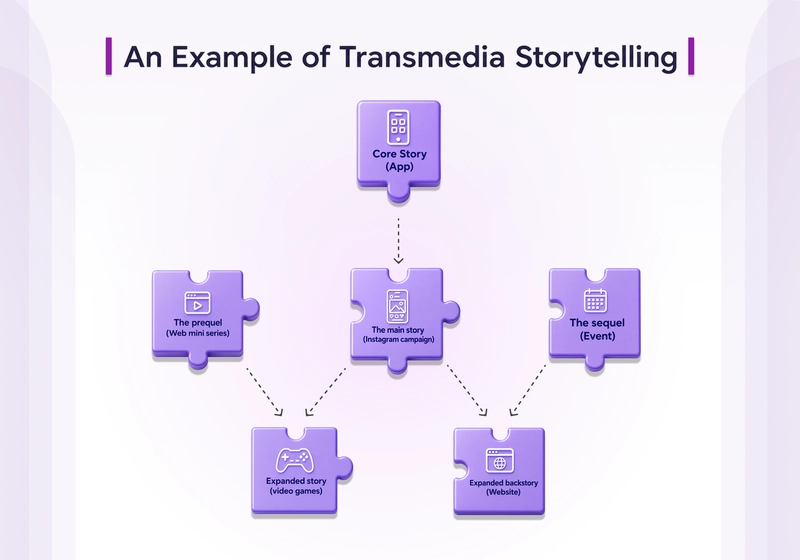
Transmedia storytelling spreads one core story across multiple platforms, with each format contributing a different narrative piece of the whole. A comic might cover backstory, a show might carry the main plot, and a game might let the audience act inside the world. None of the narrative pieces repeat each other; each contributes to the whole by adding something new.
- Best for: creating expansive worlds, provided that the resources to sustain a full universe are available.
- What sets it apart: Each channel adds unique pieces, rather than repeating the same story. This builds richer experiences and wider reach.
Real-time Storytelling
Real-time storytelling reacts to live events, news, or trending conversations within hours.
- Best for: timely campaigns and dynamic marketing strategy, provided that you have an agile content team and a character built to comment on culture
- What sets it apart: The format’s immediacy creates authenticity and buzz.
How Brands and Products Appear in Character-led Storytelling
A character can carry a brand’s voice without ever mentioning the product directly, or it can put the product front and center. Both are valid choices. What matters is picking the right level of visibility for the moment.
Here’s how that visibility usually breaks down.
The Product Sits in the Background
The product exists naturally in the character’s environment without becoming part of the main action.
This works best when the goal is brand familiarity rather than a sales push.
Picture this scenario:
The character’s preferred drink sits on their desk in every scene, unremarked but always there.
The Character Uses the Product Naturally
The character holds, wears, or uses the product as part of normal behavior, without calling attention to it.
It suits lifestyle stories where authenticity matters most. Also, it works well when a brand wants association without an obvious sales moment.
Picture this scenario:
The character casually uses the item while solving a small daily challenge, letting audiences notice benefits on their own.
The Product Shapes the Narrative
The product directly affects what happens next. It helps the character make a decision, clear an obstacle, or reach an outcome, giving the brand a functional role inside the plot.
It works best when demonstrating real value in problem-solving moments.
Picture this scenario:
The character uses a specific product feature to settle a customer’s dilemma, and the story pauses just long enough to show how.
The Character Explains or Endorses the Product Directly
The character demonstrates, compares, or explains the product directly, closer to a tutorial than a story beat.
This suits moments when a brand needs clarity over subtlety, such as a new feature launch.
Picture this scenario:
The character hosts a short walkthrough in an influencer-style format, speaking straight to the audience.
Character-led Storytelling Puts Strategy Before Appearance
Once a business asks, “What should our character look like?”, it has usually skipped a fundamental step. Most teams make the same mistake. They rush to visuals too early. In character-led storytelling, however, strategic planning happens before the sketches do.
Professional storytellers answer the key questions before any sketch appears:
- What role will the character play in brand narratives?
- Does the character have a profile and backstory?
- What story world does it inhabit?
- How does it interact with others?
- What range of stories could it plausibly carry?
These questions need operational answers before anyone opens a design file.
To avoid mismatched characters and create a scalable asset for future marketing campaigns, you need to settle three practical points first:
- What does this character do for the audience that the brand can’t do directly?
- What situations will it plausibly need to face in the coming year?
- What happens to the story if the character is removed?
These decisions shape the full profile, design, voice, and future arcs. Early strategic alignment also prevents inconsistencies and unlocks scalable content for long-term marketing goals and business expansion.
Skipping these fundamental requirements is how you end up with a character that looks great in one hero image and has nothing to say in the next hundred posts.
Character-led Storytelling Outlasts Any Single Campaign
A single ad ends while character-led storytelling keeps going. Every additional appearance adds to what audiences already know about it. That means the tenth story a character appears in works harder than the first one did, because it rides on existing recognition and trust.
That compounding effect creates the true business value.
From this perspective, a thoughtfully made character isn’t one story tied to one campaign but a growing asset that a brand’s content strategy can lean on for years.
A single campaign rents a moment of attention and hands it back once the media budget runs out. A character, once it earns recognition, keeps a share of attention on its own, in conversations, memes, and screenshots the brand never paid to produce.
That’s what happened when other companies started referencing Duolingo’s owl unprompted. And guess what? The character’s reach was extended into audiences Duolingo never directly targeted. Few campaign ideas deliver that kind of organic extension. A strong character does it again and again.
Conclusion
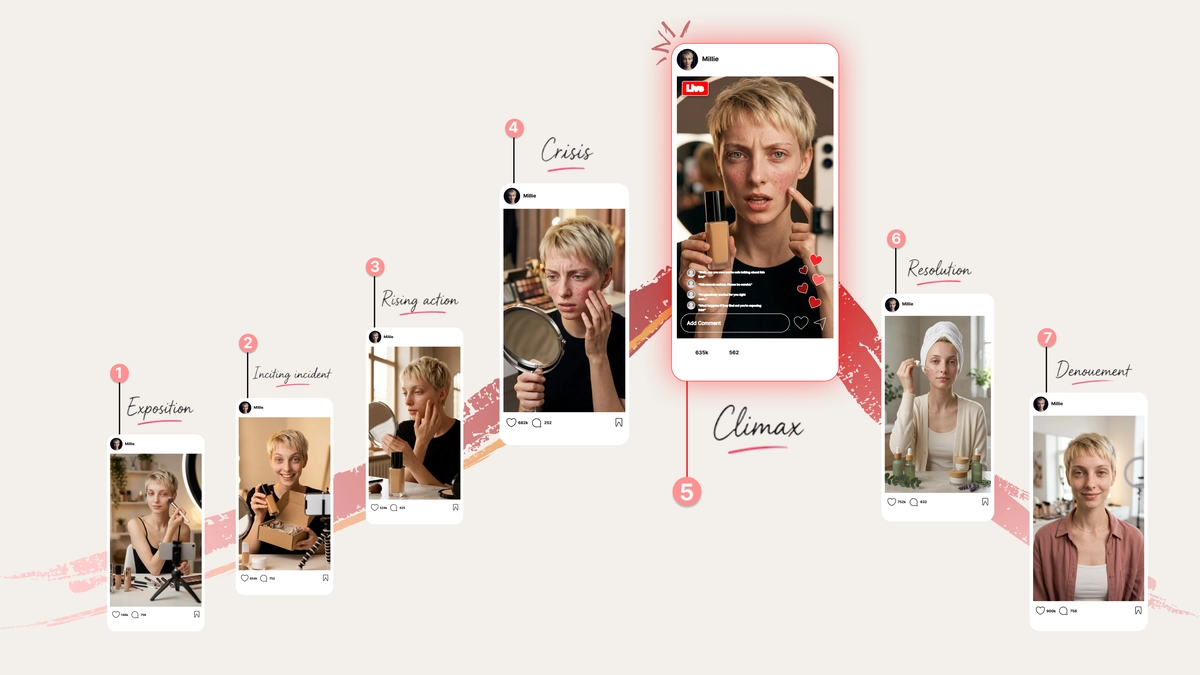
Character-led storytelling turns a brand’s message into something audiences follow rather than something they scroll past. The strongest examples, from Duo’s blunt notifications to Flo’s steady walkthroughs, share one trait: the character has a defined role and a reason to keep showing up in a brand’s content.
Formats and integration methods matter, but they only work once that role is settled first. If you’re weighing the character-led approach, the immediate next step isn’t picking a format or a look; it’s answering what the character is actually for, what it does inside the story, and what world it belongs to.
Get that right, and the character becomes an asset that keeps paying off long after any single campaign wraps.
A character-driven marketing agency knows how to leverage this potential effectively
- Read more about storytelling techniques in marketing.
- You may also find our blog on visual storytelling useful.
FAQs
What are the major benefits of character-driven storytelling for brands?
Character-driven storytelling serves various purposes depending on brand needs or marketing objectives. This approach is ideal for
- expressing brand personality and values
- connecting different ad campaigns
- explaining products through relatable situations instead of specs
- simplifying educational content or complex processes
- sustaining daily social media presence
The approach also allows a single character to expand into a wider brand universe.
Can I use an existing brand mascot for character-led storytelling?
Yes. An existing mascot can move into character-led storytelling as long as its role, personality, and world get defined clearly. Many long-running mascots, including the Michelin Man and Tony the Tiger, started as visual symbols before being developed into fuller storytelling assets over time.
What is the difference between episodic and serialized character storytelling?
Episodic stories are connected but self-contained, so each installment can be understood on its own. Serialized stories carry one continuous plot across every installment, so missing an entry means losing part of the story.
How is character storytelling used on social media?
On social media, a character maintains a consistent voice across daily posts, replies to followers and trends in character, and builds recognition through frequency rather than single or separate big campaigns.
Does character-led storytelling work for B2B businesses?
Yes. A B2B character can guide prospects through complex offerings, host explainer content, or represent a point of view in industry conversations. The core mechanics don’t change; the tone and setting simply shift toward a more professional audience.
Can I use different storytelling formats for the same character?
Yes, and most established characters use various storytelling formats. A character might run always-on social storytelling day to day, appear in a standalone story for a product launch, or shift into real-time storytelling during a cultural moment, all while staying consistent in personality, tone, and role.