
Takeaways
- Top-of-mind awareness occurs when a brand ranks among the first recalled options without any prompt in customer conversations or purchase decisions.
- Brand characters help stay top of mind. The human brain processes faces much faster than words or logos and encodes them more effectively into memory for top-of-mind brand awareness.
- Byron Sharp identifies characters as distinctive assets that create instant recognition and reduce the mental effort required for top-of-mind brand awareness.
- Brands should maintain top-of-mind brand awareness status through consistent character presence and unique voices that trigger additional sensory recall.
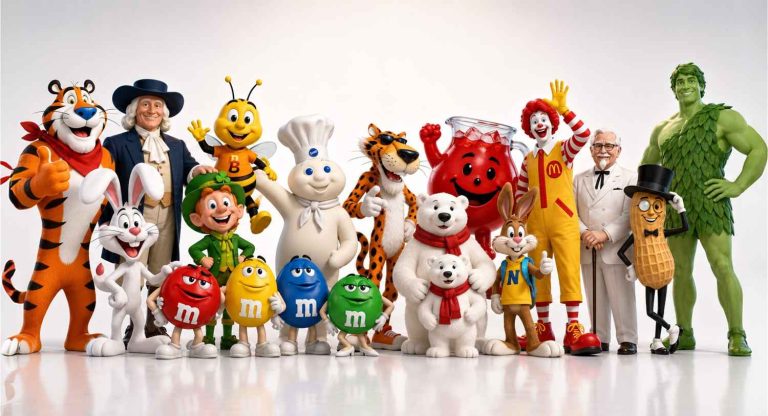
- Iconic brand characters such as the M&M’s characters, Duracell Bunny, and GEICO Gecko show how personalities and stories maintain top-of-mind brand awareness over decades.
Top-of-mind awareness is the ability of a brand to be the first one consumers recall when they think of a particular need or category.
Distinctive characters can strengthen this recall by giving the brand a distinctive, recognizable face that repeatedly appears across marketing communications.
The human brain processes faces in milliseconds, far faster than words or abstract symbols. Research shows that visual recognition of faces engages specialized neural pathways. That often leads to stronger, quicker memory encoding compared to textual or logo-based cues.
Words demand more effort and time to decode. If your goal is to claim the highest spot in a customer’s mind, present a face, not just a logo.
This article discusses how a character-driven marketing strategy builds top-of-mind awareness for brands.
It also reviews how to use a character to ensure customers name you first in conversations, searches, or purchases.
Finally, it discusses how a character-centered mindset fuels growth because mental availability trumps everything in buying moments.
What Is Top-of-Mind Awareness?
Top-of-mind Awareness (TOMA) is a stage of Brand awareness in which the audience or customer categorizes the Brand in the Top 3 Brands of that Category.
For example, if you ask a person about the top Athletic shoe brands, the top three brands he remembers first are their top-of-mind brands.
Top-of-mind Awareness influences buying decisions. You’re more likely to be chosen when you’re top of mind. Multiple factors are effective in achieving top-of-mind awareness; it’s not just about being seen. Providing outstanding products or services and ensuring great customer experiences are critical. These things make people remember you and keep you at the Top of their minds.
Important Point: The top-of-mind awareness room is so small and limited! People can’t remember over 3-5 brands in each category of products.
When a brand reaches this stage, it will be in non-stop Competition with other Top Brands. Any action at this stage is important and will be compared to competitors.
The next level of brand awareness is brand dominance, which indicates that it has gained a major part of the market and dominated other brands. Just a few brands can achieve this stage.
Building top-of-mind Awareness takes time and effort. You can’t just advertise once and expect people to remember you forever; you must stay in front of your customers and always try to deliver the best you can.
Marketing and Branding are the Front lines of this war, but you can’t do this without a Competitive product.
When Does Top-of-Mind Awareness Occur?
Imagine your brand ranks among the first 3–5 that come to mind in a category. What happens next? TOMA drives choice because the brain favors easy recall. A logo alone rarely achieves this peak.
What does?
A brand character as a distinctive asset does.
What unique characters do is act as a visual hook that the lazy brain loves. They exploit the brain’s preference for faces and stories. They turn your brand into a mental shortcut that competitors can’t easily copy.
Let’s explore what top-of-mind awareness really means and why distinctive characters offer the most reliable path to claiming it.
The Importance of Top-of-Mind Awareness
Achieving the Top-of-Mind Level will boost your Brand’s visibility and solidify your position as the preferred choice among competitors. It reflects your dedication to building a strong, memorable brand that resonates with your audience.
According to the Definition in the last section, the importance of TOMA is Explicit. Still, it’s good to review some other benefits.
It helps Foster Trust
Top-of-mind Awareness organically creates Trust. By always being at the forefront of consumers’ thoughts, you make your Brand more visible and build Trust and credibility.
According to the Edelman Trust Barometer report, brand trust leads to a 59% higher likelihood of customers purchasing new products, regardless of price.
This Trust is invaluable and lays the foundation for lasting customer relationships. It increases confidence in your products or services, maximizing the chances of customers selecting your Brand over competitors.
It grows Loyal Customers
Being consistently Top of mind builds a strong emotional connection with your audience. Customers who repeatedly encounter your Brand will likely develop a sense of loyalty and affinity for it.
This loyalty results in repeat business and positive word-of-mouth referrals. It solidifies your position in the market and drives sustainable growth for your business.
Byron Sharp’s Strategy: Distinctive Assets as Memory Structures
Professor Byron Sharp’s work in “How Brands Grow” reveals an eye-opening truth: growth comes from broad mental and physical availability, not narrow loyalty or deep differentiation.
Brands grow by being easy to notice and recall in varied situations. Distinctive assets make this happen. These are non-name elements like colors, sounds, taglines, and characters that signal “this is us” instantly.
A character stands out as the strongest asset. It combines visual impact, emotional pull, and auditory cues in one package. Faces trigger rapid recognition. Emotions create bonds. Voices add layers. Together, they form multi-sensory shortcuts.
Sharp’s research proves that brand-owned characters reduce cognitive effort. They help buyers spot and choose your brand amid clutter. As Ehrenberg-Bass Institute insights confirm, characters are among the top-performing assets for recognition and recall.
Without memorable characters, even strong products fade. With them, brands become mental defaults.
Character-led Strategies to Achieve and Stay at Top-of-Mind Level
Build Omni-Character Presence
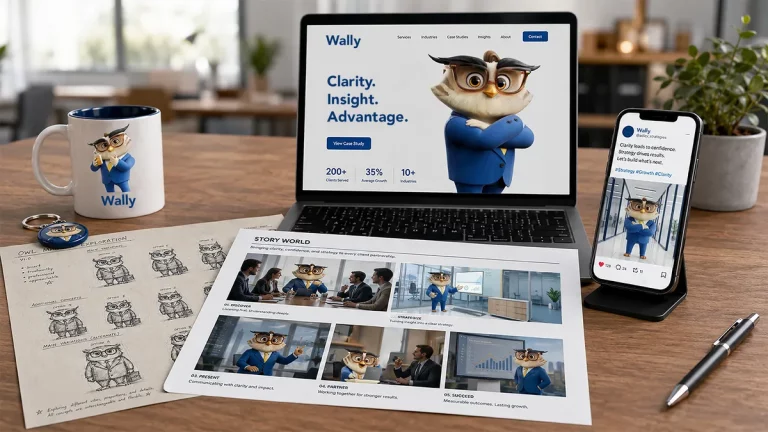
Consistency across channels turns a character into a reflex. What you need is a solid character-led strategy. Place your character everywhere customers appear: packaging, website, emails, ads, social posts, and even app icons. Each exposure reinforces the neural link.
Think of it as training the brain. Repeated sightings in different contexts build robust memory structures. When a need arises (buy batteries, insure a car), the character surfaces first. This omni-presence demands discipline. Inconsistent use weakens the asset.
Leverage the Brand Mascot’s Voice and Sound
Sound amplifies impact. A unique voice or noise becomes another trigger. The Pillsbury Doughboy’s giggle, for instance, instantly evokes warmth and fun. Pair it with visuals, and recall multiplies.
Apply this strategically. Develop a signature tone, laugh, or phrase. Use it in videos, voiceovers, and audio ads. It reaches ears when eyes are elsewhere (podcasts, radio, smart speakers). Sound cements the character as a full sensory hook.
Examples of Brands That Mastered the Character Shortcut
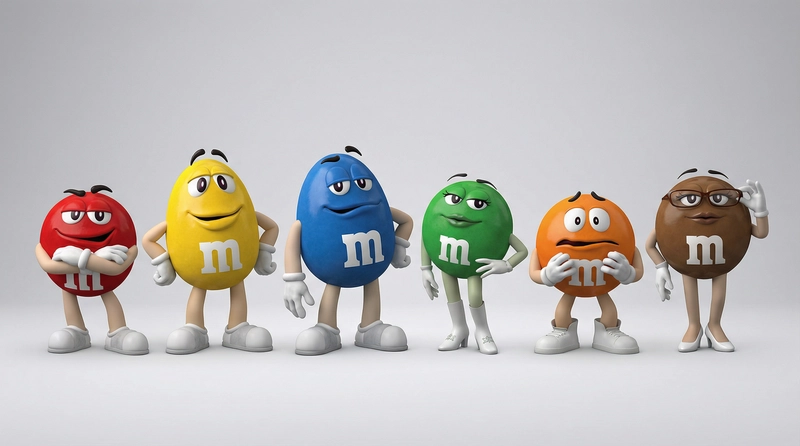
M&M’s
Who could have predicted that some plain chocolate candies would become unforgettable through colorful personalities? Red’s sarcasm, Yellow’s charm. Without them, M&M’s is just candy on a shelf. These characters enable endless stories that keep the brand fresh and top-of-mind.
What makes them top-of-mind?
- Instant personality linkage: Each color gets a distinct voice and attitude, making the brand feel human and relatable.
- Shelf dominance through recall: Characters boost visual pop in crowded confectionery aisles, driving unprompted choice.
- Storytelling engine for longevity: Ongoing narratives (ads, social, packaging) sustain top-of-mind position for decades, turning a simple candy into a cultural staple.
Duracell Bunny
Batteries rank low on excitement. The pink bunny drumming endlessly changed that. It symbolizes enduring power visually and emotionally. Decades later, it still signals “long-lasting” faster than any tagline.
What makes it top-of-mind?
- Visual and emotional endurance symbol: The relentless drumming ties directly to product performance, making “long-lasting” effortless to recall.
- Category differentiation in commodities: In a sea of similar batteries, the bunny stands out instantly, reducing decision effort.
- Decades of sustained recall: Introduced in the 1970s, it still triggers immediate brand association, proving characters build lasting mental availability without constant reinvention.

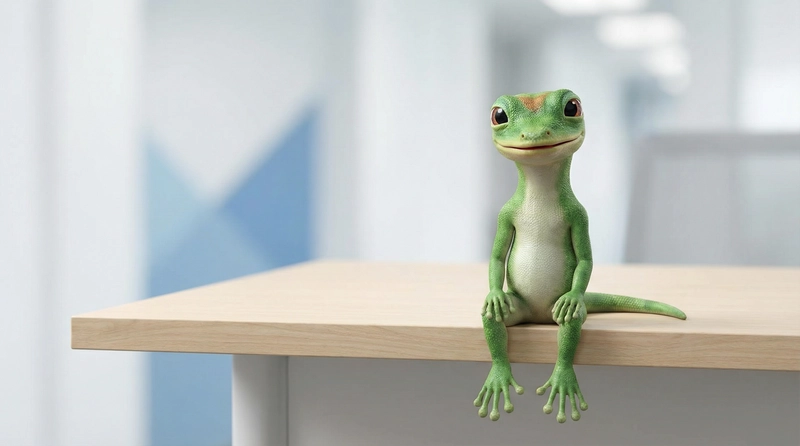
The GEICO Gecko
Insurance feels intangible and dull. The Gecko makes it approachable with humor and an accent. The lizard turns complex decisions into simple, fun associations.
Ads featuring him score high on memorability and likability. MarketCast research recognizes GEICO’s green lizard as one of the most effective characters in the industry for its excellent performance in branding and recall.
What makes it top-of-mind?
- Tangible humanization of intangible service: The lizard personifies reliability and savings, turning dry comparisons into memorable moments
- High memorability in competitive clutter: Ads featuring the gecko consistently outperform norms in breakthrough and branding metrics.
- Emotional shortcut to trust: Humor lowers barriers, leading to faster consideration and choice in high-stakes categories like insurance.
These brands show the pattern: characters humanize offerings, cut through noise, and lock in a priority position.
How to Measure Top-of-Mind Awareness?
Measuring awareness is crucial for understanding your brand’s performance and impact on the market.
It involves assessing various indicators to evaluate how consumers remember and consider your Brand.
There is one metric that is directly related to Top-of-Mind Awareness, and other metrics indirectly indicate all stages of Awareness in general.
One metric to rule TOPMA!
The best metric to measure top-of-mind awareness is the “Unaided Awareness metric.” It works as described below.
You can design a survey to ask audience questions similar to these examples:
- Can you name the first Brand that comes to your mind when you want to buy a Laptop?
- What are the top brands in the handbag category?
- What are the 3 top brands of energy drinks?
Then you calculate what percentage of Respondents said your brand name in the top 3 (top of mind) or what percentage said the brand name in the top 5 (reaching the Top of mind)
Finally, divide the number of people who mentioned your Brand by the total number of people surveyed and multiply by 100 to express it as a percentage.
Then, you can compare it with competitors and the periodical statistics of each period.
TOM Awareness = (Number of mentions in top 3 / Total respondents) x 100
Measuring Referral Sources Data
Understanding your referral sources can provide valuable insights into your Brand’s high-level Awareness.
You can track referral sources through various channels, such as customer surveys, website analytics, and customer relationship management (CRM) systems.
When Referrals happen, it means that you have customers who are at the Top of mind and therefore suggest you to other people.
Social Listening and Brand Mention
Social listening tools help you track conversations about your Brand across various social media platforms. These tools allow you to track mentions, hashtags, and keywords related to your Brand.
Analyzing social media conversations lets you gain meaningful insights into how customers interpret and interact with your Brand. As a result, you can measure positive or negative Conversations and categorize them as a brand awareness metric.
Also, identify emerging issues or opportunities and inform your Brand’s marketing and communication strategies.
Market Share
Calculating your Brand’s market share is instrumental in understanding the extent of top-of-mind Awareness. Market share indicates the proportion of total sales or customers your Brand captures within its industry or market segment.
A higher market share suggests that your Brand is more visible and preferred by consumers than competitors, indicating a stronger top-of-mind awareness. By analyzing market share data, you can gain insights into how effectively your Brand is positioned in consumers’ minds relative to competitors.
Moreover, a deeper understanding of market share enables you to identify growth opportunities, refine your marketing strategies, and enhance your Brand’s visibility and presence in the market, ultimately driving top-of-mind Awareness.
Branded Search as a Metric for Awareness
Search engine data analysis determines the percentage of searches related to your Brand. By monitoring the branded keyword search volume as a metric, you can relate it to brand awareness.
Also, we have non-branded keywords related to products or campaigns, encompassing needs or interests related to the Brand but not explicitly mentioning your Brand.
By distinguishing between branded and related-to-brand searches, you can analyze the effectiveness of your branding actions.
A higher share of Search indicates greater brand awareness, and it can be a supportive metric to primary metrics and top-of-mind Awareness among consumers actively searching for products or services in your industry.
Measuring top-of-mind Awareness requires a comprehensive approach considering various indicators across different channels. Utilizing various metrics allows you to assess the performance of your marketing strategies and make calculated decisions to enhance top-of-mind Awareness and drive business growth.
Final Words
Diversifying marketing efforts and engaging consumers across multiple channels through character-driven ads can significantly enhance brand awareness. This strategy allows brands to connect more deeply with their audience by creating relatable narratives that resonate with consumers.
Collaborating with a character-driven marketing agency can provide access to the latest advancements in marketing technology and innovative strategies. These resources are essential for developing a strong brand presence in a competitive landscape.
Ultimately, a focus on character-driven marketing helps establish brands as credible leaders in their industry, fostering consumer trust and driving long-term growth and success.


Post Comments
0 comments