- Human, Virtual, and AI Influencers: What’s the Difference?
- How Engagement and Reach Compare
- AI Influencers vs. Human Influencers: Cost and Scalability Compared
- Brand Safety and Creative Control: Who Has the Edge?
- Authenticity and Emotional Connection
- Why Ownership Changes Everything: Turning a Virtual Influencer into a Reusable Brand Platform
- When a Brand-Owned AI Influencer Isn’t the Right Move
- Work With Dream Farm to Build Your Digital Influencer
- FAQ
Key Takeaways:
- Human influencers lead in perceived authenticity and emotional depth, but they introduce reputational and behavioral risk.
- Virtual and AI influencers offer greater creative control and scalability, which reduces brand risk.
- Virtual influencers outperform human influencers in most areas, except for deep emotional connection.
- Owning an AI influencer turns it into a reusable brand asset with lower long-term costs.
- In practice, hybrid campaigns that combine human and virtual or AI influencers often deliver the most balanced and effective results, leveraging the strengths of both while minimizing their individual limitations.
According to the Influencer MarketingHub report, more than 80% of marketers consider influencer marketing as a highly effective strategy. Today, digital characters can act as influencers alongside humans.
Virtual and AI influencers can reduce risks that often come with human creators. For example, reputational damage caused by off-platform behavior.
This is a direct comparison of virtual influencers vs. human influencers. We break down all aspects of both human and virtual influencers, such as performance, credibility, costs, and more. So, if you’re planning to invest in influencer marketing, we suggest you keep reading.
Human, Virtual, and AI Influencers: What’s the Difference?
Before discussing the differences between human and virtual influencers, it helps to define each first.
Human Influencers
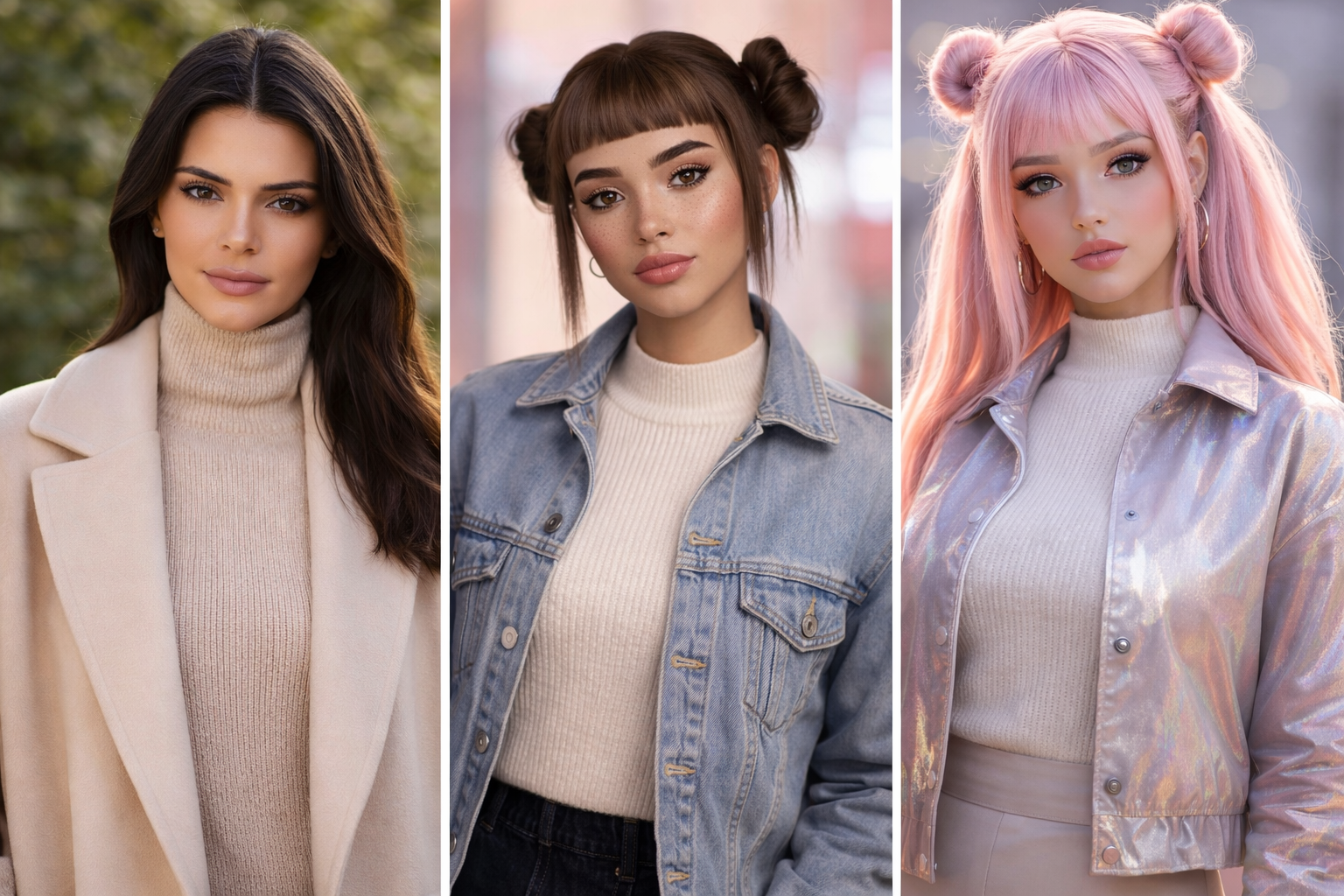
These are real people with followers on platforms like Instagram and YouTube. They elevate their personal brand by creating content that attracts and engages their audience.
Even with clear strengths, they’re limited by human constraints such as:
- Availability
- Reputation
- Scalability
Cristiano Ronaldo, MrBeast, Dua Lipa, and most celebrity creators fall into this category.
Virtual Influencers
Virtual influencers are computer-generated characters. These characters are designed to appear and behave like real social media personalities.
Today, developers and designers use advanced hardware and software, CGI, and 3D modeling to create virtual influencers. Dozens are already active across industries, representing brands of all sizes.
Lil Miquela and Rozy are two well-known examples of this type. They face fewer constraints than human influencers. For instance, they don’t age or get involved in scandals, which can hurt brand credibility.
AI Influencers
AI influencers are the modern version of virtual influencers, powered by artificial intelligence. Developers integrate AI into behavior and content generation to create characters that can operate independently.
AI models enable smooth, real-time conversations and emotional responses. AI influencers are scalable, but their automation may backfire in some cases. Maintaining consistency can become a serious challenge for brands, pushing these influencers to the edge of the uncanny valley.
Virtual influencers and AI influencers overlap in many ways. From this point onward, we’ll treat them as a single category.
The next section of virtual influencers vs. human influencers focuses on performance metrics.
How Engagement and Reach Compare
Virtual influencers often outperform human influencers in engagement rates. This advantage becomes more substantial when we look at reach and impressions.
- Engagement rate: A study by Communicate Online found that virtual influencer campaigns achieve approximately 5.9% engagement, roughly three times that of human influencers. These results depend on thoughtful character design and audience fit.
- Reach: AI influencers scale more easily and offer tighter control than human ones. As a result, they excel in terms of reach. They’re available 24/7 while maintaining consistency across platforms, reducing costly messaging conflicts.
Despite these advantages, human influencers still have the upper hand in gaining authentic engagement.
Cost and scalability add another layer to this comparison.
AI Influencers vs. Human Influencers: Cost and Scalability Compared
Human influencers are typically more expensive due to direct talent fees and logistics. Virtual influencers are more scalable and aren’t limited by human factors.
The table below outlines the differences between the two:
| Factor | Human Influencers | Virtual Influencers |
| Typical Cost Structure | Fees vary widely by tier, from a few hundred dollars for micro-influencers to tens of thousands (or more) for top creators; travel, logistics, and production costs add up. | Significant upfront investment to build and design the character and AI systems, but minimal ongoing talent fees. Companies can reuse the character across campaigns. |
| Cost Relative to Human Influencers | Generally, higher overall costs. Often 30%+ more expensive depending on campaign size, according to Hashmeta. | Brands can see approximately 30% lower campaign costs compared to human influencer expenses. |
| Recurring Costs | Recurring pay-per-post, plus costs tied to production, travel, risk management, and other related factors. | Lower recurring costs. Main expenses are tech infrastructure and creative direction |
| Scalability | Limited by human capacity: availability, time zones, shoot schedules, fatigue. | Highly scalable. Brands can produce content simultaneously 24/7 across platforms and markets without downtime. |
| Control and Consistency | Creators may have their own style, off-brief posts, or reputational risk. | Brands control messaging, visuals, and posting cadence. |
| Customization | Influencers tailor content through lived experience and personal voice, which is a strength for authenticity. | AI influencers can be hyper-targeted and personalized programmatically, but lack real emotions. |
| Long-Term ROI | Can build strong trust and community, but often with fluctuating costs and logistics overhead. | Potentially predictable ROI over multiple campaigns with fewer variable costs. |
Next, we examine brand safety and creative control.
Brand Safety and Creative Control: Who Has the Edge?
In the virtual influencers vs. real influencers debate, AI influencers outperform humans in terms of brand safety and creative control.
Human Influencers: Risk & Constraints
Individuals carry reputational risk by default, regardless of their professionalism. Off-platform behavior or sudden public backlash can directly impact the brand.
Creative control can also be difficult for brands. Human influencers, especially mega influencers, have established voices and styles. Changing their approach to content may lead to negative consequences for both parties.
Virtual Influencers: Control vs Transparency Risks
Virtual influencers are far more controllable, especially if owned by the brand. Even rented ones pose less risk to brand safety, as they’re immune to personal misconduct. However, transparency issues can jeopardize trust and endanger brand safety.
Creative control becomes much easier with AI influencers. Full control over visuals, posting frequency, and all aspects of the character ensures the influencer stays aligned with brand guidelines.
For this reason, these computer-generated characters are attractive to highly regulated industries where consistency is highly valued.
Another key difference in the virtual influencers vs. human influencers comparison is emotional connection and authenticity.
Authenticity and Emotional Connection
This is where human influencers often outperform their virtual alternatives. Real people can:
- Build real-life experiences
- Display their everyday moments and gain trust by showing personal struggles
- Connect emotionally through strong storytelling
- Offer transparency that brings credibility by demonstrating imperfections
Human influencers increase perceived authenticity. As a result, trust and purchase intention rise as well.
When it comes to virtual and AI influencers and the level of authenticity they can offer, digital characters can’t deliver results as humans do. Specifically:
- People know the persona is managed, so authenticity is constructed, rather than lived.
- Design quality and narrative impact emotional connection. So does consistency.
- Properly humanizing behavior is critical to gain trust and attention.
In general, while virtual influencers can drive engagement, human influencers are better at building brand trust.
The next section focuses on owning a virtual influencer and using it as a game-changer.
Why Ownership Changes Everything: Turning a Virtual Influencer into a Reusable Brand Platform
To understand why ownership matters, we need to look at long-term brand touchpoints and personalization at scale.
Touchpoints Beyond Social
Renting a virtual influencer comes with clear benefits, including high recognition and the ability to capture attention quickly. Although this approach is more cost-effective, investing in creating a unique character can pay off over time. This is why:
Owning a digital influencer means it’s more than a single campaign tool. Rather, it’s a long-term strategic brand asset.
By developing a digital character, brands create a permanent face for the company. Businesses have full control over backstory and personality. Visuals and values can also be adjusted whenever needed. In other words, owning a digital character means building a branded media property instead of focusing on short-term campaigns.
Additionally, investing in creating a digital character offers clear strategic advantages, such as independence from external personalities whose unpredictable behavior can put business reputation at risk.
Personalization at Scale: Dynamic Experiences
Besides reusability across platforms and for various purposes, owned AI influencers enable personalization at scale. As a result:
- Businesses can adapt the character to resonate with different audience segments.
- The campaign message can be shifted based on the goal.
- Brands can use the same character assets across different platforms without compromising consistency or core identity.
This scalable personalization leads to stronger brand equity. With human influencers, equity is partially held by the individuals.
If you’re not on a tight budget, it’s best to partner with a specialized agency and design a unique character. This way, building a long-term, reusable brand platform becomes achievable.
Even with these long-term benefits, renting is still the preferred choice for many companies.
When a Brand-Owned AI Influencer Isn’t the Right Move
Many brands overlook the importance of long-term strategy when working with AI influencers. Without a clear foundation for character development and consistent brand alignment, the execution can quickly fall apart. This is especially critical for early-stage companies that may not yet be ready to invest in sustained development.
Who Shouldn’t Invest in a Brand-Owned AI Influencer (Yet)?
Companies that are still in an early, startup phase and don’t yet have the financial capacity to support one to two years of development and growth for an AI character shouldn’t rush into this technology. If a brand isn’t mature enough to think long-term, or can’t realistically treat this as an ongoing investment rather than a short-term campaign, it’s probably not the right time.
Work With Dream Farm to Build Your Digital Influencer
Except for a few sectors, virtual influencers perform better than human influencers. Although you can rent an existing influencer, investing in a unique character is often the smarter long-term move, as it can become a valuable brand asset.
Our team at Dream Farm Agency can work closely with you to create a digital character from scratch, tailored to your needs. Contact us to discuss your project details.
FAQ
- Can Businesses use virtual influencers for B2B, or are they only for consumer brands?
Yes, they can be used in B2B, especially for tech or innovation-driven industries. In B2B, the role often shifts from lifestyle promotion to thought leadership and product education. It’s also perfect for brand storytelling. The key is positioning the character as an expert persona rather than an entertainment figure.
- Can a virtual influencer be used in regulated industries (finance or health), and what changes?
Yes, but with stricter oversight of compliance and transparent disclosure. Messaging must be tightly controlled, fact-checked, and aligned with regulatory guidelines. In these industries, the character typically acts as an educational guide rather than giving personal advice.
- Is it possible to use AI and human influencers in one campaign simultaneously?
Yes. Hybrid campaigns often combine the scalability and control of AI influencers with the credibility of human creators. The AI persona can drive narrative continuity, while humans add lived experience and relatability.
- Do virtual influencers reduce brand safety risk compared to human creators?
They reduce behavioral and reputational risk because brands control all outputs. There is no unpredictable personal life or off-platform controversy. However, transparency failures or poorly executed realism can still create trust issues.
- What’s the “uncanny valley,” and does it hurt virtual influencer performance compared to humans?
The uncanny valley describes the discomfort people feel when a digital character looks almost human but not quite right. Poor visuals and inconsistent behavior are the primary triggers of this effect.
- Can virtual influencers replace human creators, or do they work best together?
In most cases, they work best together. Human influencers bring credibility and lived authenticity, while virtual characters offer control and scalability. Replacement is possible in some categories, but strategic complementarity is usually more effective.
- What are the biggest risks of virtual influencers compared to human influencers?
The main risks include reduced perceived authenticity, transparency backlash, and uncanny valley effects. There is also the risk of high upfront investment without guaranteed audience adoption. If the character lacks depth or consistency, it can feel artificial and fail to build long-term trust.
mona