
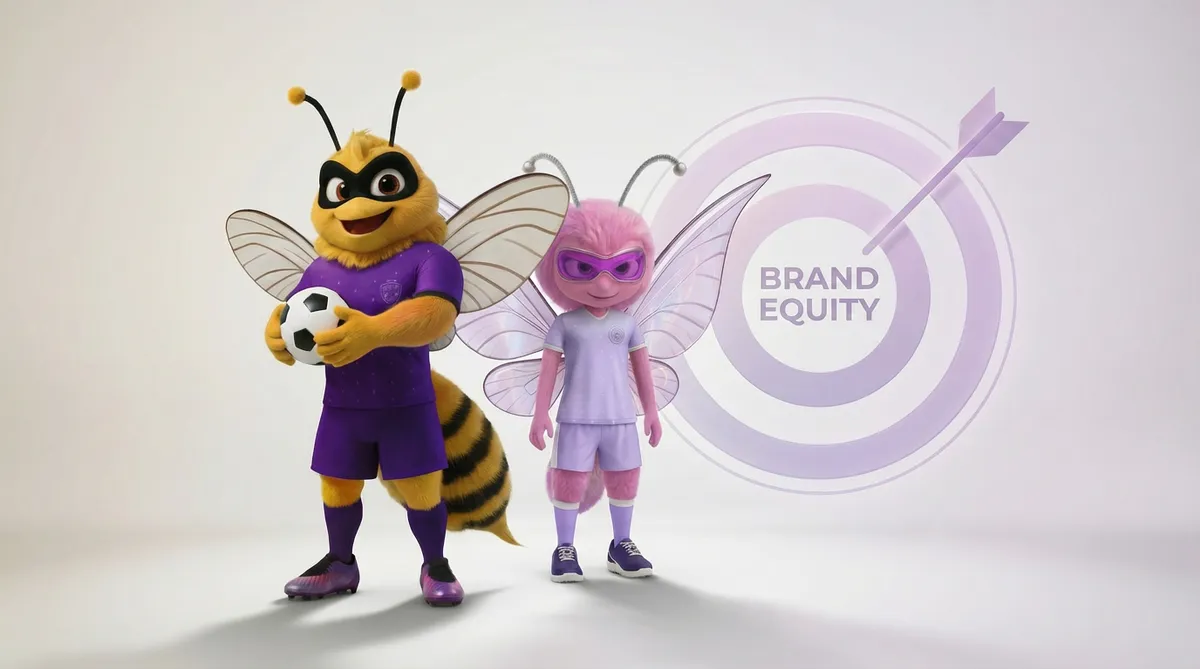
Takeaways
- Brand equity is the perceived value and strength of a brand that influences purchasing decisions. Characters can build equity by fostering loyalty and recognition.
- Characters serve as brand equity vessels by acting as independent, adaptable assets. They survive brand changes while producing ongoing cash flow.
- The character equity model builds on three pillars of likability to form lasting bonds, versatility to adapt across platforms, and merchandisability to convert appeal into direct profit.
- Real-world cases of building brand equity with characters show the impact of characters on brand equity. Examples are Pikachu (the Pokémon franchise) with $150 billion in revenue and Mario (Nintendo) with $60+ billion.
Disney paid $7.4 billion for Pixar in 2006. The deal covered animation tools and talent, but the real value lay in characters like Woody and Buzz Lightyear. Those figures headlined films, sold toys endlessly, and built lasting franchises. That’s how brand equity was built.
A plain logo might earn recognition and command a premium. A character like this creates empires. Revenue from merchandise, licensing deals, theme parks, and cultural activities all stay powerful enough to span generations.
This contrast highlights the modern financial truth. Brand equity has moved beyond warm feelings tied to a name. It now resides in intellectual property (IP) that produces ongoing cash flow.
Characters serve as equity vessels: independent, adaptable assets that often survive brand changes or market shifts. They earn directly, foster deep loyalty, and reduce long-term marketing costs. For executives chasing sustainable growth, ignoring this means leaving money on the table.
With that in mind, let’s examine what brand equity truly looks like in practice today.
What Is Brand Equity Today?
Brand equity once meant awareness, associations, and trust tied to a name. That still matters. But it is no longer the full picture.
Today, equity is measurable through owned assets that drive consistent returns. Virtual characters, whether mascots, digital ambassadors, or animated figures, play a central role here. They translate abstract brand values into something people can recognize, follow, and buy into.
Think of them as living interfaces. They give the brand a face, a voice, and a presence across channels. More importantly, they reduce reliance on paid media. A well-built character carries attention with it.
From a strategy lens, this changes how brands invest. Instead of funding short-term campaigns, they build long-term assets. The return shifts from impressions to lifetime value.
How Do Characters Strengthen Brand Equity?
Recognition That Cuts Through Noise
Characters act as visual shortcuts. The human brain processes images faster than text. A distinct character reduces the time needed to identify a brand.
This matters in crowded markets. Faster recognition leads to higher conversion rates, especially in low-consideration categories.
Emotional Connection That Drives Choice
People don’t form relationships with static logos. They connect with personalities.
Characters create that connection. They express humor, warmth, or reliability. Over time, this builds preference. According to Nielsen research, ads with strong emotional content perform nearly twice as well as rational-only campaigns.
Clear Differentiation in Competitive Markets
In saturated industries, features blur together. Characters create distinction where products cannot.
They give the brand a unique identity that competitors cannot easily copy. This is especially useful in sectors like insurance, telecom, and finance.
Stronger Brand Recall
Memory favors stories and faces over abstract symbols. Characters anchor both.
When customers recall a character, they recall the brand. This reduces the need for repeated spending just to stay top-of-mind.
Loyalty That Compounds Over Time
A character builds familiarity. Familiarity builds trust. Trust builds repeat behavior.
Over time, customers return not just for the product, but for the experience tied to the character. This increases retention and lifetime value.
Long-Term Asset Value
Campaigns expire. Characters evolve.
A well-managed character can last decades. It becomes a reusable asset that reduces future marketing costs while increasing returns.
Organic Advocacy and Word of Mouth
People share what entertains them. Characters create shareable moments.
This drives organic reach. It also builds credibility, as recommendations come from peers rather than paid channels.
Simplification of Complex Messages
Some brands struggle to explain what they do. Characters solve this.
They translate complex ideas into simple, relatable stories. This is critical in industries where clarity directly impacts conversion.
Versatility Across Platforms
Characters move easily across formats.
Ads, social media, games, packaging, and events all become touchpoints. This flexibility allows brands to stay consistent while adapting to new channels.
Mascots as Equity Anchors: The Character Equity Model
Models from Kevin Lane Keller and David Aaker remain foundational. Keller emphasizes customer knowledge, imagery, and responses. Aaker stresses awareness, associations, quality perception, loyalty, and proprietary assets.
Regarding brand mascots, these frameworks guide effectively. Yet, they underplay a key reality: characters frequently surpass the parent brand in standalone value. The Character Equity Model addresses this with three clear pillars:
- Likability: Affection drives lasting bonds. Characters that evoke warmth endure for decades.
- Versatility: Seamless adaptation across ads, games, films, social, and products preserves core identity.
- Merchandisability: Direct sales potential in toys, apparel, books, and partnerships turns personality into profit.
Logos score low on merchandisability. Characters outperform here. They narrate, engage, and flex with trends. Prioritize development that maximizes these pillars for superior brand equity.
Billion-Dollar Characters: Let’s See the Proof in Action
Real-world cases demonstrate the power of characters in building brand equity. Let’s review some standout examples.
Pikachu (Pokémon Franchise)
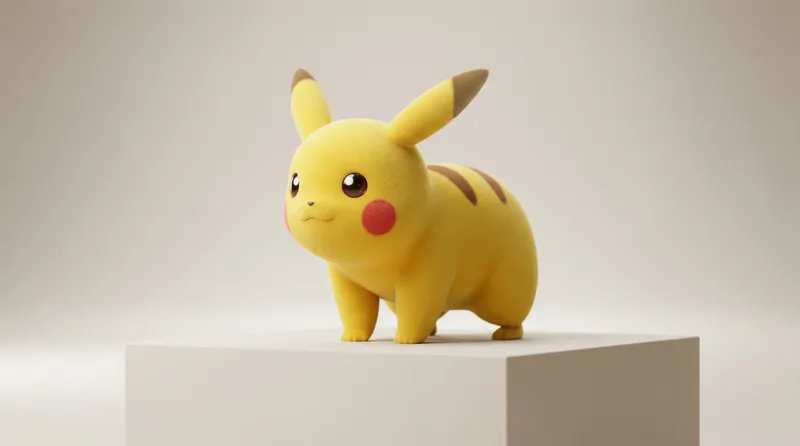
- Revenue scale: As of early 2026, the Pokémon franchise has generated approximately $150 billion in lifetime revenue. Merchandise drives over $100 billion of that total. According to Alibaba’s verified data from 2006, it’s the highest-grossing media franchise ever.
- Strategy insight: Pikachu’s extreme likability and versatility fuel cross-generational appeal, massive licensing (toys, apparel, global collaborations), and consistent revenue even during slower game cycles.
- Growth consideration: The character builds a self-sustaining ecosystem. Nostalgia retains adults while new generations enter via cards and mobile. That helps slash acquisition costs while enabling steady double-digit contributions annually.
Mario (Nintendo)
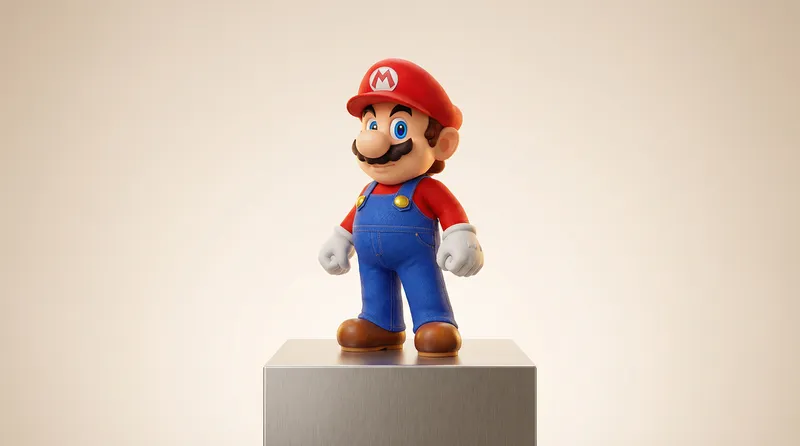
- Revenue scale: The Mario franchise has amassed over $60 billion in cumulative revenue estimates through games, films, parks, and merchandise.
- Strategy insight: High versatility supports expansion from core platformers to sports, racing, and cinematic adaptations without identity loss.
- Growth consideration: Mario serves as corporate infrastructure. It boosts hardware sales, funds new IP, and provides stability during transitions. It creates a flywheel where character equity powers long-term innovation and revenue resilience.
Bibendum, the Michelin Man

- Revenue scale: Michelin’s brand value reached $10.27 billion in 2026 (up 17% from $8.8 billion in 2025), with an elite AAA+ strength ranking and top-10 global position.
- Strategy insight: Likability humanizes a technical product. It allows the character to establish trust in quality and exploration that extends to guides and dining authority.
- Growth consideration: Bibendum enables broad extensions. Take dining recommendations, events, and partnerships. The character diversifies beyond commodity tires. It protects the brand against price competition in the core market.
Aleksandr Orlov and Meerkats (Compare the Market)

- Revenue scale: The campaign drove early sales doubling and significant market share gains in UK motor insurance (76% increase in market share), with sustained impact through perks like Meerkat Meals and Movies.
- Strategy insight: Humor and personality transformed a commoditized service into something memorable and highly shareable, outperforming rivals in recall and engagement.
- Growth consideration: The characters extend lifetime value via loyalty programs and advocacy. They churn in a competitive space and generate passive revenue from partnerships long after the initial surge.
These proven examples create equity that outpaces services or symbols. They adapt to changes, fuel extensions, and safeguard revenue.
How to Measure Brand Equity? Here are the top 3 Models
Leading up to this point, we have defined brand equity, explored its benefits, discussed the importance of brand equity in marketing, and cited some examples of well-known brands and their performance in offering added value to their brand.
The question here is: How do we measure this metric? How do you know you perform well or poorly in creating positive brand equity?
The answer lies in brand equity models! These models are like maps that help you to understand how customers think and feel about your business.
Thanks to them, you can determine the value of your brand in your target audience’s mind.
Let’s learn about these models and how to measure brand equity for different businesses.
Keller’s Brand Equity Model
As discussed above, brand equity consists of various elements, and forming a positive relationship with customers is crucial to this achievement.
The Keller model emphasizes creating such relationships and turning more regular clients into loyal ones. Therefore, experts call it a customer-based brand equity model. It highlights the importance of satisfying buyers to build strong brand equity.
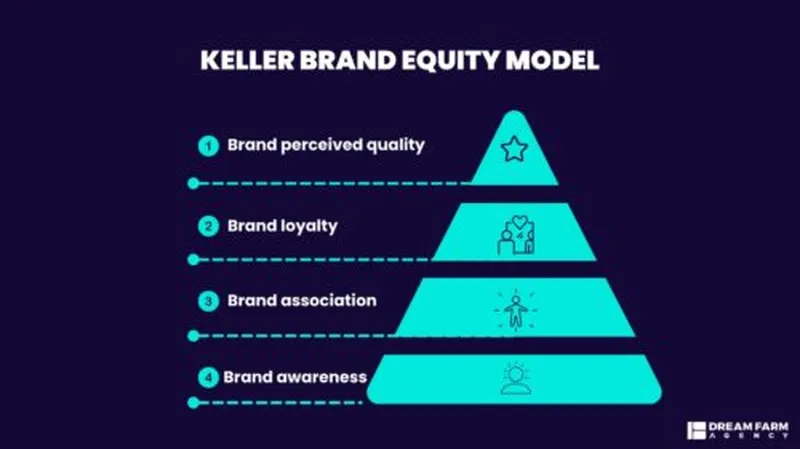
This model proposes a pyramid with four stages, which are:
- Brand awareness: How well-known is the brand?
- Brand association: What emotions, feelings, and thoughts does the brand bring to the minds of the target audience?
- Brand loyalty: How many loyal customers does the brand have? Was it successful in creating a large group of ambassadors who talk about and defend the brand like their favorite sports club?
- Brand perceived quality: Do people know the business as high-quality, or do they perceive it as an imperfect brand that sells worthless products and services?
Moving forward with this model, you should gauge these four metrics and find out how the business is performing in terms of providing extra weight and enhancing brand equity.
Aaker’s Brand Equity Model
Like Keller’s model, the Aaker model is a customer-based brand equity measurement system. But with one significant difference.
As discussed in the previous section, the Keller model suggests gauging four elements, while the Aaker model says five elements must be considered and measured.
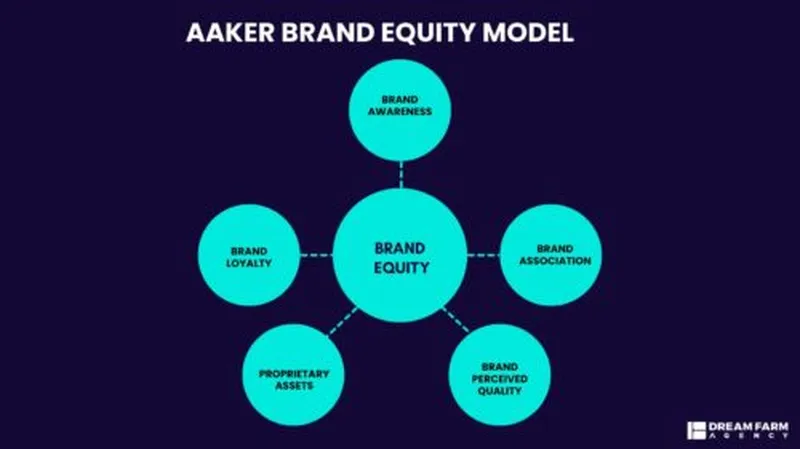
In addition to those four elements, this model emphasizes the importance of brand assets.
Brand assets encompass both tangible acquisitions, such as trademarks and patents, as well as intangible elements, like solid customer relationships and skilled personnel within your team.
Therefore, in addition to the perception of the brand that people have in mind, the Aaker model underlines the importance of the brand’s legal and intangible assets.
Brand Asset Valuator (BAV)
Unlike the two previous models, the BAV model assesses brand equity across various aspects, not just the brand’s perception in customers’ minds.
Young & Rubicam, the American marketing and communication company, developed this model, and they use it to measure brand equity across ten dimensions through four key areas:
- Differentiation: Assessing elements that set the brand apart from its competitors.
- Relevance: Determining a brand’s ability to address the target audience’s needs and requirements by producing relevant goods and services.
- Esteem: Considering elements that generate respect, admiration, and trust.
- Knowledge: Assessing if the target audience knows everything about the values that the brand proposes.
Comparing Keller and Aaker models, the Brand Asset Valuator, aka BAV, is much more comprehensive and measures many more aspects of each brand to determine whether the business successfully created potent brand equity.
There are more brand equity models, but these three are the most famous ones and the ones that so many firms utilize globally to check their performance regarding providing extra value for their brand.
Consider your needs and preferences to choose the suitable model for gauging brand equity.
So, one more time, let’s take a look at each model’s suitability:
- Keller and Aaker model: Suitable if you want to gather information about general customer perceptions and turn regular customers into loyal fans.
- Brand asset valuator (BAV): Suitable if you need a comprehensive, in-depth analysis of your brand performance across various areas.
We discussed almost everything about brand equity, and now it is time to wrap up the blog.
Does Your Character Build Equity? Here’s A Practical Checklist to Score It
The following checklist offers a fast and simple way to assess your character’s potential:
- Do customers spot the character instantly, minus the brand name? (awareness)
- Does it trigger joy, trust, or nostalgia that influences buying? (emotional connection)
- Would fans buy and wear merchandise? Do they share or defend it? (loyalty and advocacy)
- Has it succeeded across ads, social, products, or media? (versatility score)
- What are the licensing opportunities for toys, apparel, books, and partnerships? What streams emerge?
- If the brand name vanished, would the character retain value? (longevity test)
Rate 1–10 per item. Above 50 indicates high potential. Below 50 calls for refinement. Link character decisions to strategy for maximum impact.
The Next Step?
The market has shifted from attention to ownership. Brands that rely only on visibility will keep paying for it.
How to build equity then?
Build assets that last, not just campaigns.
These days, characters are a non-negotiable component for building brand equity.
Invest in them to build something that pays you back indefinitely. The difference shows in margins, resilience, and long-term growth.
The next step?
Building equity with characters requires rethinking your overall marketing strategy.
Seek the most aligned character-driven marketing solutions for your business.
Treat your character as infrastructure.
Design it to scale, to sell, and to last.
That is how modern brand equity is built.
FAQs
Do all brands need a character to build strong brand equity?
A: Not every brand requires one, but many can benefit. Sectors with low differentiation or high competition (finance, insurance, consumer goods, etc) often gain the most from adding a relatable identity.
How to build a character with real equity?
A: The first step is to set a clear business objective. Define what the character must achieve. Higher retention, new revenue streams, or market differentiation?
From there, you can start to design personality and use cases that support those goals. To ensure the character drives growth, not just attention, consider teaming up with a professional character design and marketing house like Dream Farm Agency.
Can a character outgrow the brand itself?
A: Yes, and that is often the goal. When a character gains independent recognition, it becomes a standalone asset. This creates new revenue streams beyond the core product. It also protects the business during repositioning or market shifts.
How do characters reduce marketing costs over time?
A: Characters carry recognition with them. This reduces the need for repeated brand explanation in every campaign. Over time, you spend less on awareness and more on conversion. That happens through strengthening familiarity and repeat behavior.



Post Comments
0 comments