- Psychological Factors Behind the Success of Brand Mascots on Social Media
- Mascots Marketing in Social Media: What Data Say
- Key Benefits of Showcasing Brand Mascots on Social Platforms
- Platform-Specific Strategies for Mascots
- What Famous Mascots Are Active on Social Media?
- Time to Bring Your Existing Mascot Online?
- Brand Mascots as Virtual Influencers: Step into the Virtual Realm
- Mascots Enter the AI-Driven Future
- Wrapping Up the Mascot Journey on Social Media
- FAQs
By Leila
Key Takeaways:
- Brand mascots on social media are personified characters that brands use to communicate with audiences on digital platforms.
- These mascots create viral reels, respond to users, and join trends to express a consistent brand voice. They appear most often on TikTok, Instagram, and X.
- In addition to building trust and loyalty, a brand mascot can evolve into intellectual property (IP).
- Mascot Activation on social media requires strategic decisions, as opportunities and pitfalls arise.
- Artificial intelligence (AI) offers unlimited creativity, endless storytelling, and deeper connections in mascot marketing.
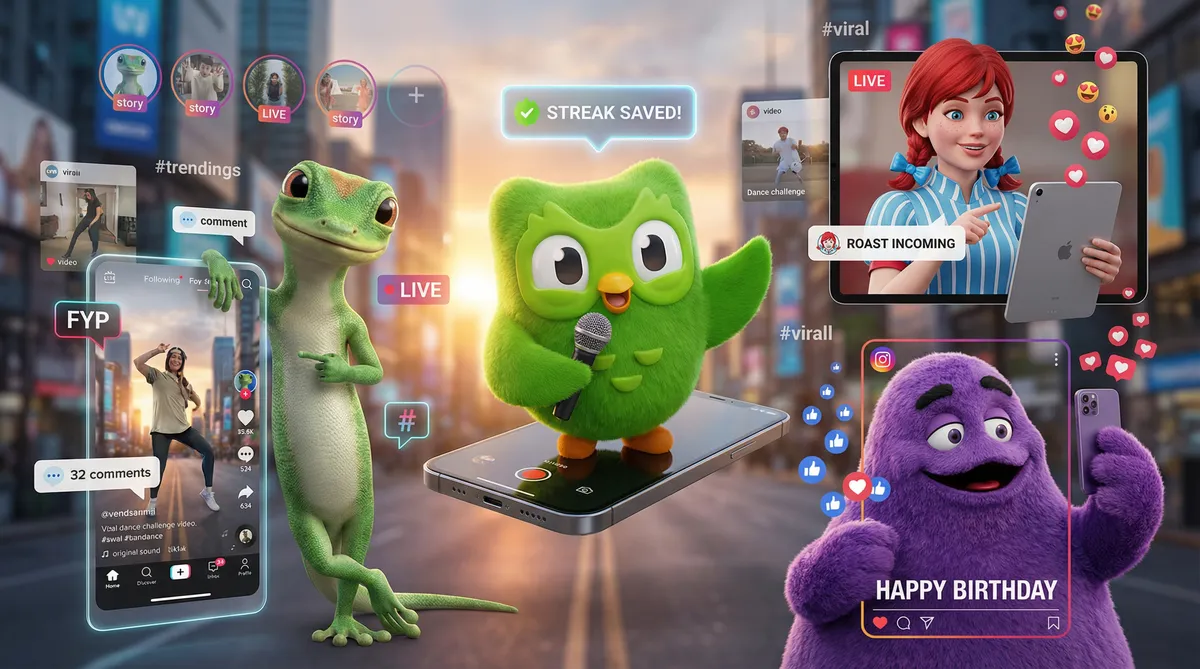
A purple blob from McDonald’s sparked a viral trend that added millions in sales last year. Brands now turn to mascots more than ever on social platforms.
Brand mascots on social media are characters that companies bring to life online. These figures act as the brand’s face. They post updates, reply to comments, and join conversations.
Mascots go beyond logos or ads. They humanize companies, form emotional ties with users, and improve brand recall and recognition.
This guide examines why mascots succeed. It covers psychological factors, main benefits, platform approaches, top examples, and future trends.
Stay tuned to discover how brand mascots on social media serve as powerful marketing assets in the ever-evolving digital landscape.
Psychological Factors Behind the Success of Brand Mascots on Social Media
Let me pose a question to draw you in:
Have you ever skipped a language lesson, only to feel a twinge of guilt when Duolingo’s green owl, Duo, pops up with a menacing reminder? Or perhaps a viral TikTok threat that he’ll “find you” if you don’t practice?
Or scrolled past Wendy‘s sharp-witted roasts on X, chuckling at how a fast-food chain suddenly feels like your snarkiest friend?
@dilemmatown Wendy really is the queen 👑 #wendys #cosplayer #cosplaygirl ♬ original sound – RuPaul’s Drag Race
These moments aren’t accidents.
They’re the subtle workings of the human mind at play, where psychology meets marketing in the digital age.
Picture this: You’re doom-scrolling through TikTok when Duolingo’s Duo appears in a chaotic video, dramatically “dying” in a stunt that sparks millions of reactions, memes, and shares. Or take CeraVe’s quirky goat mascot, Sarah V., born from fan comments, stars in hilarious skits that make skincare feel fun and approachable.
This is the enchantment of psychology in action: By humanizing brands through mascots, companies forge emotional bonds that transform passive scrolling into active engagement.
@cerave The #1 dermatologist recommended skincare brand is now #1 on the court… as the official skincare and haircare partner of the @NBA 🏀💙#CeraVe #SkincareRoutine ♬ original sound – CeraVe
Here’s why mascots thrive on social platforms.
People Treat Brand Mascots Like Social Beings
People naturally give human traits to non-human things. attribute humanlike minds, motives, warmth, and intentions to non-humans. A face or personality on a brand triggers empathy. Users feel closer to the company. This link makes the brand more likable and trustworthy.
Why does giving human attributes to non-humans (Anthropomorphism) work? Such connections are driven by social connection needs as well and the desire to understand and be understood, as research suggests.
Mascots Build Trust and Friendship, which is Translated into Brand Attributes
In today’s ever-competitive market, where options abound and skepticism is high, branded characters offer friendship without risk of being perceived as untrustworthy or deceitful.
Imagine a friendly, approachable face that feels like an old friend. People associate it with the brand. They develop a positive attitude toward the business. This bond keeps them coming back.
Being perceived as trustworthy and approachable matters for brands. Trust is the foundation of customer confidence. It directly influences consumer behavior and loyalty. Some studies support this view: anthropomorphic characters can affect the perceived warmth of a brand, which may shift purchase behaviors and preferences.
Mascot Turn Sentiment into Loyalty
Most of us can vividly recall Tony the Tiger roaring, “They’re Grrreat!” on boxes of Frosted Flakes, or Grimace clumsily bouncing through McDonald’s advertisements. These familiar faces transport us back to carefree Saturday mornings and the joy of Happy Meals, evoking a sense of nostalgia that is deeply intertwined with our childhood memories.
@kelloggsfrostedflakesus What he’s trying to say is “Your’re GR-R-REAT!” #frostedflakes #kelloggscereal ♬ original sound – Kellogg’s Frosted Flakes
Nostalgia plays a significant role in shaping our positive associations with these brands. It ties into happy childhood memories.
Iconic mascot characters like Tony the Tiger and Grimace serve as distinctive brand assets. They’re non-name cues that reliably trigger the brand in memory.
They bring back past feelings. People connect with figures from their youth. These characters tap into nostalgia. They evoke the simplicity, joy, and security of childhood; the emotions that feel comforting amid today’s stresses.
For grown-up consumers who grew up with these icons, they offer a sense of comfort amid today’s stresses.
Mascots Marketing in Social Media: What Data Say
Mascots deliver clear gains. Research supports their impact.
Let’s begin with stats on character fluency devices.
What’s a character fluency device, you ask?
Think of GEICO Gecko, the witty lizard of GEICO, Colonel Sandards from KFC, or M&M’s funny mascots. These memorable, recurring examples act as the central, repeatable element driving their brands’ campaigns. They star in various ads, scenarios, and social platforms, quickly signaling the brand while building emotional connections and recognition.
View this post on Instagram
A study by System 1 Group offers eye-opening statistics in this regard:
Campaigns using a character fluent device, compared to those with no fluent device, were more likely to achieve “Very Large” outcomes:
- Market share gain: 40.9% vs 29.7%
- Profit gain: 34.1% vs 26.2%
- New customer gain: 40.9% vs 32.0%
- Reduction in price sensitivity: 6.8% vs 5.9%
In the digital context and with the same ad concepts, the following metrics highlight the superior performance of campaigns featuring a fluent character device compared to those without:
- Effective reach (% viewing): 74% vs 69%
- Average dwell time: 0.9s vs 0.6s
- Spontaneous brand recall: 35% vs 28%
What do the data points underscore?
That if brand mascots are executed as consistent, fluent devices, they will drive deeper engagement and stronger memory encoding.
That’s true in the fast-scrolling digital social platforms as well.
Key Benefits of Showcasing Brand Mascots on Social Platforms
Stronger Brand Recall, Standout Presence
“Meet customers where they are.”
You’ve surely heard his popular business adage.
Social media is the most significant “where” these days; the primary space and channel where consumers spend a significant amount of their time. Having a “face” in popular digital channels will make your brand distinct in crowded feeds.
So…
Rather than limiting your mascot to an ornament beside your logo or featuring it only in static ads, why don’t you bring it to life on widely used social platforms?
Imagine users encounter your mascot in feeds, stories, and replies. This repeated, personality-driven exposure will surely boost your brand recognition and recall.
Consider a user scrolling through TikTok. A mascot with a bold personality, like Duolingo’s owl, appears in a dramatic reminder video. Days later, the user recalls the brand when thinking about language apps.
This simplified scenario shows how brand mascots of social media create distinct mental hooks amid content overload.
Take a look at the stats below:
- Campaigns with mascots see a 7% rise in market share. The reason? Instant visual distinction
- Branded characters prove six times more effective than celebrities for recall. The reason? They offer a consistent, ownable personality without the risks of human endorsers.
- One analysis found mascots boost emotional bonds by 41%. The reason? It’s simple; they humanize brands in an authentic, relatable way.
Maintaining a Uniform Brand Voice Across Platforms
What’s your brand’s primary social platform? TikTok, Instagram, X, others, or a combination of several platforms?
Regardless of the platform, a strategically made “brand face” is essential. There is an obvious reason for that; Consistency is the Key in storytelling with characters. A character needs to stay true and relatable. Fans connect better with consistent tales.
That’s why every mascot created at Dream Farm Agency includes a comprehensive mascot guidelines book (mascot bible). See Mozilla Firefox’s mascot, a good example of consistency in storytelling with brand mascots.
Or take Young Yang and Bubbly, the B2B and B2C mascots of Sungrow, the global solar photovoltaic inverter manufacturer.
There is also the mascot of the Saudi Green Initiative (SGI), Namour, and Coco, the lovely humanoid Shiba Inu of Macropay, the Mexican fintech and retail hybrid company.
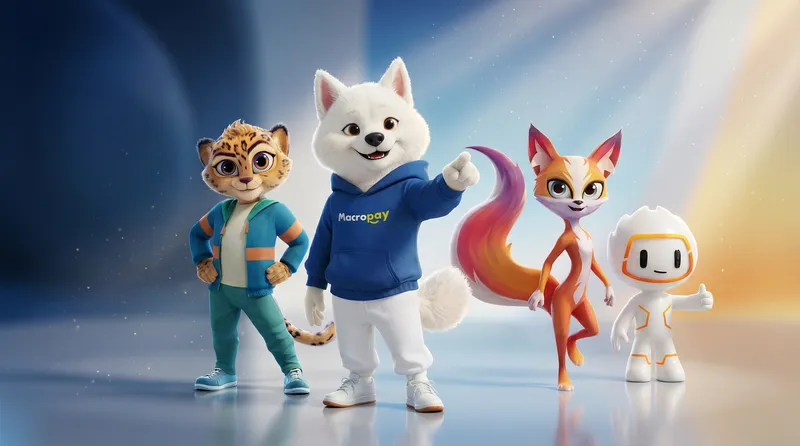
These projects all benefit from the comprehensive mascot guidelines. A mascot book serves as a roadmap to bring your mascot to life. It details personality traits, tone of voice, visual identity guidelines, behavioral DOs and DONTs, sample interactions, and guidelines for future development, and more
Mascot guidelines avoid mixed messages from changing writers or agencies. It also ensures posts match the character’s traits.
How?
Wendy’s mascot, for example. She keeps a sassy, witty voice in X roasts and Instagram Reels. Fans follow her on both platforms and feel the same brand vibe. Without this, shifts in tone confuse audiences and weaken loyalty.
Recommendation:
Read our blog “What’s a brand mascot book?” to learn why every mascot needs one.
Sparking More Interactions than Standard Updates
Take a moment to explore the TikTok or Instagram pages of the mascots mentioned earlier to see how their human-like traits encourage likes, comments, and shares.
Posts with mascots build emotional bonds that drive responses. Engagement metrics rise as users treat mascots like friends. Organic reach expands through algorithms that favor active content.
What’s so special about them? Appearance? Content? Overall be? Or smart strategies behind them?
The answer is “All of them”.
Take Scrub Daddy on TikTok, a life-sized, costumed version of the brand’s iconic yellow smiley-face sponge.
The sponge mascot duets with user videos, prompting replies and shares. One post leads to hundreds of comments, spreading naturally. This beats passive brand announcements, which often get ignored.
View this post on Instagram
Ability to Go Viral and Join Trends
Are you considering adapting to trends for rapid growth on social media? In saturated markets, what could be better than having an iconic brand ambassador?
Imagine your mascot using humor or eccentric styles to align with viral formats. That can bring you new followers by creating shareable moments. That evokes nostalgia, which can significantly enhance your reach.
Grimace from McDonald’s went viral with a shake trend on TikTok. Users posted reactions, generating billions of views. In a scenario, a brand’s mascot joins a dance challenge. Followers tag friends, turning it into a chain reaction. Plain posts rarely achieve this scale.
@mcdonaldsGrimace, Birdie and Hamburglar are ON TWITCH tn for A Minecraft Movie Meal stream♬ original sound – McDonald’s
Less Ad Weariness, Softer Sales Funnel
What if promotions felt like friendly conversations?
Using brand mascots on social media posts reduces fatigue from direct ads. Users accept sales messages from a relatable character. Their warmth, empathy, and fun humanize the funnel. And guess what? Views turn into buys through emotional ties.
Duolingo’s owl sends pushy reminders that users find amusing rather than annoying. A user sees a mascot post about a deal and clicks without feeling sold to. Contrast this with banner ads, which users skip. Mascots build trust, easing conversions.
Long-Term Asset Value Through IP Growth
Hilarious, relatable, and spot-on. That’s why we love brand mascots on social media.
However, their true value lies elsewhere; over time, they develop into protected assets (IP).
Popularity leads to merchandise, licenses, and partnerships. Trending brand faces become cultural icons, adding revenue beyond ads. Unlike short campaigns, this creates ongoing value as the character evolves with trends.
Once your mascot has built a solid follower base, it can expand to products. Legal trademarks and intellectual property protect it.
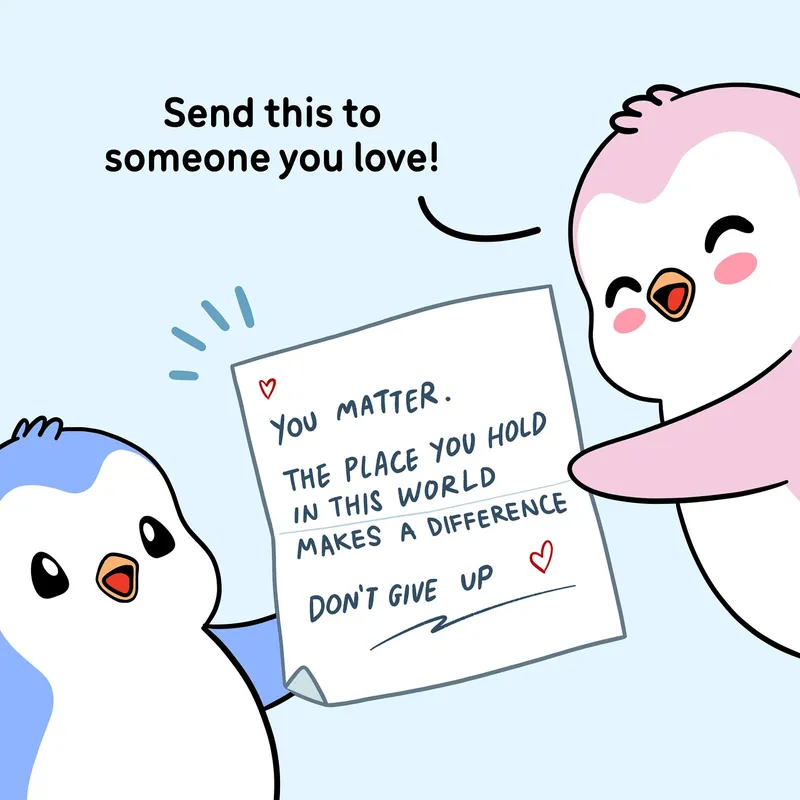
Crypto brands like Pudgy Penguins show this with toys and collabs after social buzz.
Recommendation:
Discover more about mascot IP in our recent blog ”Trademarking Mascot: A Legal Guide to Protecting Brand Mascot”.
Platform-Specific Strategies for Mascots
Each social site offers different chances. So your strategy needs to match the format. Take a moment to review the best practices for each platform.
TikTok: Center for Trends and Short Skits
TikTok favors quick, fun videos. Like human influencers, mascots can join challenges and use popular sounds. They can even duet user content for interaction.
Examples include Scrub Daddy with cleaning skits and Duolingo’s owl in dramatic reminders.
Instagram: Focus on Visual Stories and Lifestyle
Instagram works for polished images and Reels. Sharing daily scenes or partnering with influencers is recommended.
See Barbie’s lifestyle content, or Samsung’s Knox, showing security in fun ways.
X (Twitter): Quick Wit and Community Talks
X rewards fast replies and humor. A mascot arguing with rivals or using memes would capture attention in no time.
See how Wendy‘s roasts competitors. And there’s MoonPie, who shares absurd comments.
LinkedIn: Chance for B2B Humor
LinkedIn allows satire in professional spaces. Mascots can simplify complex ideas.
Salesforce’s Astro family explains tools with light corporate jokes.
What Famous Mascots Are Active on Social Media?
Here are strong cases across target customers.
Popular Consumer-facing Brand Faces (B2C Mascots)
- Duolingo’s Duo: The green owl uses wild threats on TikTok for huge engagement.
- Scrub Daddy: The smiling sponge stars in cleaning videos and trend joins.
- Wendy’s Girl: Sharp replies and roasts define the account on X.
- McDonald’s Grimace: Revival campaigns created viral shakes and trends.
Leading Sports Mascots
- Gritty (Philadelphia Flyers): Chaotic energy and memes made him a star beyond hockey.
- Benny the Bull (Chicago Bulls): Dance videos and fan interactions shine on TikTok.
- Phillie Phanatic (Philadelphia Phillies): Popular for its energetic, mischievous antics like dancing on dugouts and heckling opposing teams.
luv is love pic.twitter.com/SR34XLDRgw
— Gritty (@GrittyNHL) January 22, 2025
Recommendation:
To learn about other examples of team mascots, study our inspiring article “45 Famous Sport Mascots that Bring Teams and Fans Together”.
B2B Brand Mascots
- Salesforce Astro: The character group makes CRM topics approachable on LinkedIn.
- Hootsuite Owly: The owl shares management tips with friendly humor.
- Mailchimp Freddie: The chimp adds playfulness to email marketing posts.
@hootsuiteThe next time someone asks you what Hootsuite does, please share this video with them ❤️♬ original sound – Hayu
Recommendation:
Explore the most iconic B2B mascots and Characters.
Time to Bring Your Existing Mascot Online?
Have a dusty mascot from your brand’s past, sitting idle in old ads? It’s never too late. Let it go alive on TikTok, trading jokes with users. The shift to social media can breathe new life into your brand figure.
However, not every mascot fits the digital stage.
The decision demands careful thought. What if activation sparks a surge in followers? Or what if it falls flat and harms your image? Brands face this choice often in the current year.
Legacy characters hold potential, yet risks loom. Analysis of successes and failures reveals clear signals. Consider your mascot’s traits against current trends. Does it align with young audiences? Can it handle real-time talks? These questions guide the path forward.
Signals That Point to Activation
Duolingo’s owl was once a simple app icon. It now stars in bold videos that rack up millions of views. This shift worked because the character had a defined personality that matched TikTok’s humor.
If your mascot carries a strong, adaptable voice, social media boosts it. Younger demographics, like Gen Z, dominate platforms like Instagram and X. When they form your core market, activation makes sense.
Resources matter too. Brands with teams for daily posts see gains. Just look at how Wendy’s sassy replies built a loyal base on X.
Ask yourself: Does your mascot crave a human touch? What hidden strengths does your mascot hold?
Thoughtful answers to these questions can unlock unexpected growth.
If users view your brand as cold, a lively character warms it up. The cases reviewed so far show activation thrives when timing aligns with audience needs.
Warnings That Suggest Caution
Not every revival ends in triumph.
Recall the Pop-Tarts mascot in 2024, a strawberry figure “sacrificed” in a toaster during a bowl game. It aimed for shock value but left some viewers uneasy. That sparked debates on taste. Quiznos’ old Spongmonkeys from the early 2000s also flopped hard; their weird ads alienated more than they attracted.
If your mascot lacks clear traits, posts may feel forced and flat. Audiences spot inauthenticity fast.
Serious industries, like finance, may clash with playful mascots.
Execution risks backlash; poor timing or insensitive jokes can go viral for wrong reasons.
Does your mascot risk outdated vibes? In a fast world, holding back preserves value until ready.
Reflect on these pitfalls. Lessons from past fails apply here. Weighing them prevents costly missteps.
If you’re thinking about adding a mascot to your communication plan, our team is here to help.
With over 10 years of experience and the development of more than 2,500 characters, we’ll guide you through every step to unlock the full potential of your new team member!
Learn more
Brand Mascots as Virtual Influencers: Step into the Virtual Realm
GEICO’s Gecko started as a spokes-lizard but now engages like a personality online.KFC’s Colonel Sanders got a virtual makeover, posing in trendy settings. Lu do Magalu, from a Brazilian retailer, boasts millions of followers across platforms. She posts daily life snippets, promoting products naturally. Barbie transitioned too, sharing fashion stories on Instagram.
Mascots are no longer limited to static images. They can chat in real time, share opinions, and build their own following. Rapid evolution in AI turns branded characters into virtual influencers – and eventually, powerful digital brand assets. AI powers lifelike behaviors, blending control with independence.
This step opens endless narratives.
Virtual versions avoid human scandals, yet feel real.
Could your mascot host live sessions? This shift demands tech investment but yields deeper bonds.
As AI advances, virtual influencers redefine branding. What future roles might yours play?
- Discover more about virtual mascots and the growth opportunities they present.
- Also, check out our blog on fashion brands using AI models and AI influencers, including examples of digital social media stars.
Mascots Enter the AI-Driven Future
Follow the path of AI over recent years. It started with basic image generators. Then came tools like Midjourney for detailed characters and Sora for smooth videos. By 2027, these advances will let brands create mascots that move, speak, and respond in real time.
Traditional mascots once stayed as static drawings or costumes. Now AI turns them into dynamic virtual influencers. This change reshapes mascot marketing on social media this year.
Brands gain full control.
No scandals.
Constant availability.
Content creation speeds up.
Consider the impacts on branding communication.
In 2025, Fiverr launched a campaign featuring an AI-generated mascot. It was built to handle online roast culture. It absorbs criticism while promoting services. Other brands follow. Some build autonomous characters that post independently yet stay on-brand. This blurs lines. Is the mascot a pure brand rep or a semi-independent star like Lil Miquela?
Yet questions arise. Consumers show mixed feelings. Some surveys reveal users still feel uneasy with AI influencers. Authenticity suffers when users sense the artificial side. The uncanny valley effect kicks in; being too human-like creeps people out. This causes brand loyalty challenges that impact customer behavior.
Traditional mascots rely on clear fictions. AI versions push toward realism, risking rejection. Brands must balance. Transparency helps. Reveal the AI element to build trust.
What to Expect in the Year Ahead?
AI evolution points to personalized interactions. A mascot could chat one-on-one, remembering past talks. It might generate videos on demand.
In web3 spaces, mascots become digital assets with ownership ties. Pudgy Penguins already moved this way. For mascot marketing, AI cuts costs and scales reach. But it demands strategy. Overuse can lead to fatigue. Poor design erodes emotional appeal.
Ponder your brand.
A rapidly evolving technology like AI would breathe eternal life into your mascot. Unlimited creativity, endless storytelling, deeper connections. The potential is huge.
Businesses that navigate this path well lead in digital brand communication. Those who rush risk falling behind or alienating audiences. The future mixes control with creativity. How will your mascot adapt?
Wrapping Up the Mascot Journey on Social Media
Brand mascots on social media stand as key players in 2026 marketing. From psychological pulls to platform wins, they drive real results. Examples like Duolingo, Gritty, and Wendy prove their power.
Yet activation calls for smart choices; green lights signal opportunity, red ones warn of traps. AI pushes the next wave, turning static figures into interactive virtual presences. This shift boosts reach and control while raising questions on authenticity. Brands that adapt thoughtfully gain edges in engagement and loyalty.
Reflect on your strategy: How can a mascot and its AI potential reshape your digital presence? The path ahead holds promise for those who act with insight.
Contact us today to explore the possibilities.
If you’re thinking about adding a mascot to your communication plan, our team is here to help.
With over 10 years of experience and the development of more than 2,500 characters, we’ll guide you through every step to unlock the full potential of your new team member!
Learn more FAQs
Q: What is the most popular brand mascot on TikTok?
A: Duolingo’s Duo leads with millions of views from bold, funny videos.
Q: What social media platforms work best for mascot marketing on social media?
A: TikTok excels for trends, Instagram for visuals, and X for personality-driven talks.
Q: What is the difference between a mascot and a virtual influencer?
A: A mascot directly represents and stays tied to one brand. A virtual influencer acts more independently, often with AI creation, but brands still control it.
Leila