

Key Takeaways
- AI influencers allow brands to scale social-first video content by producing consistent, platform-native videos quickly, without the usual production delays.
- With digital characters, creating large amounts of video content has become simpler.
- Brands that use AI influencers can rapidly test multiple hooks and variations to improve performance and increase conversion rates. And all of it can be achieved without higher production costs.
- Content localization becomes easier with AI-driven characters as they can adapt to different languages and cultural styles quickly.
- To ensure long-term stability with AI influencers, businesses need a solid structure, including clear character roles, consistent content pillars, and a strong approval and testing system. These are necessary to keep content aligned and effective.
AI influencers remove production bottlenecks and enable faster production of more consistent, social-first videos. They’re also easier to test and localize, while keeping costs low.
In today’s world, where consumers are overwhelmed with content every day, brands need to be more active on social media platforms to stay connected to their audience. Using AI influencers for social-first video content makes this much easier and more cost-effective.
In this blog, we’ll explore this type of content and why it’s hard to scale.
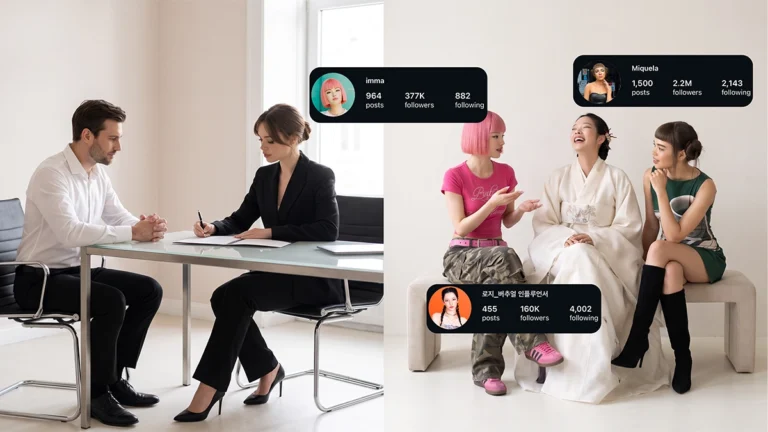
Do businesses need their own digital character, or can they work with existing influencers instead?
What are common ways brands use AI-powered characters for social campaigns?
What are some typical use cases?
Are there any prerequisites that should be taken care of before scaling social-first videos?
Keep reading, and you’ll find the answers.
What Social-First Video Means and Why It Is Hard to Scale
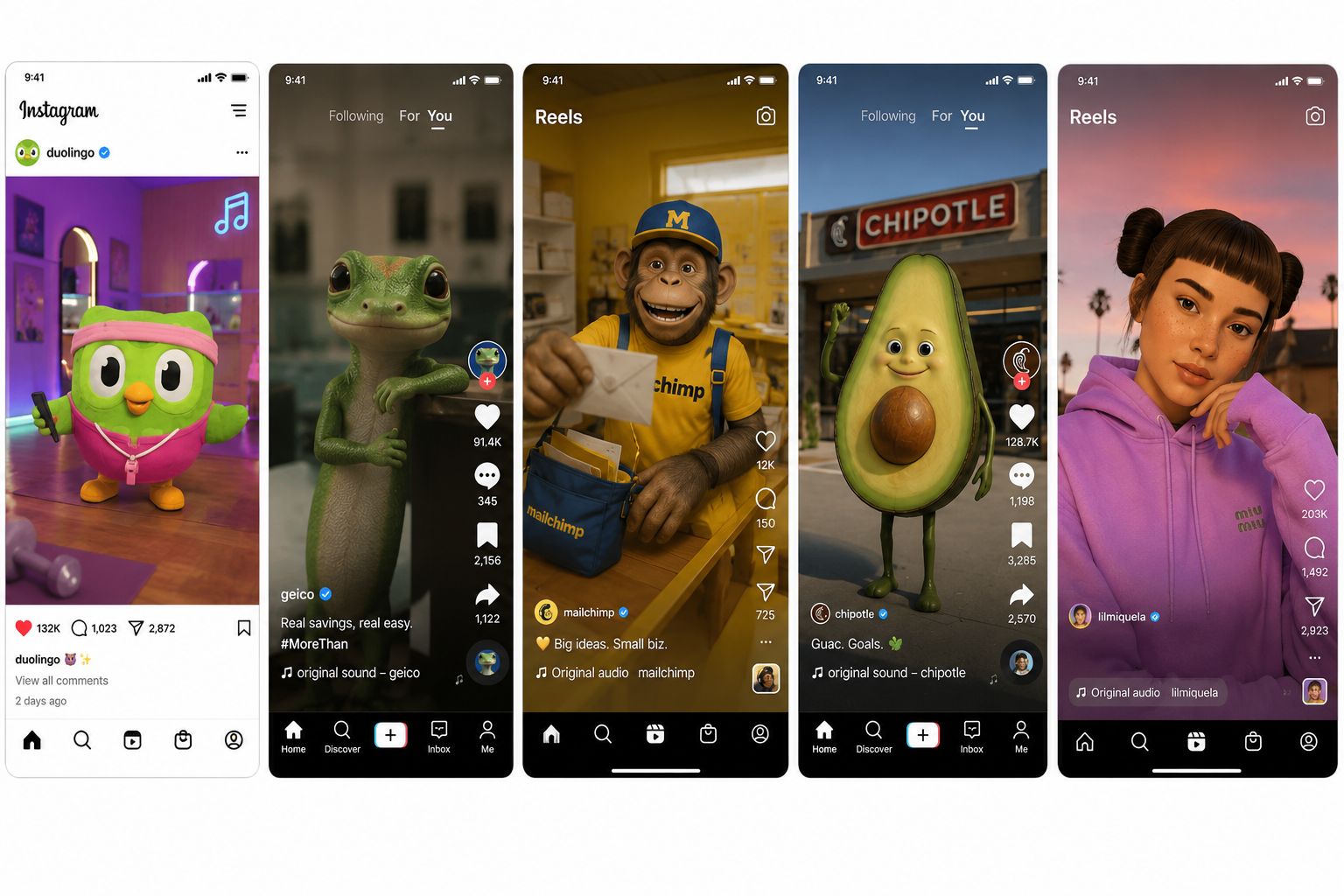
Agencies usually make ads for TV or print first, then reuse them on social media. On the other hand, social-first content is built directly for social media channels such as TikTok and Instagram from the start. They’re designed to look natural in the feed, based on how each platform works, not like an ad.
Now let’s discover why they’re hard to scale.
The Content Volume Problem
Consistency and frequency are the keys to success on social media platforms. Stop posting content for a while, and your brand will lose attention faster than you think. So you need to produce a high volume of video content.
But that’s the challenge:
Keeping up with this demand is difficult using traditional production workflows. This is where AI influencers for social-first video content help. You can keep the production volume high and prevent your followers from moving on.
The Consistency Problem
Beyond volume, consistency matters a lot in social media, as mentioned earlier. Platforms reward accounts that show up regularly and maintain a steady presence. Creating video content quickly while keeping a consistent visual style and following brand guidelines isn’t easy.
The Speed Problem
Can you keep up with emerging trends? If not, you’re losing a lot of opportunities. It’s important to react almost instantly to new trends. Once again, traditional workflows are inefficient and don’t let you keep up with this demand. So, you keep missing trend windows and lose visibility to faster competitors.
There are two types of AI influencers: rented and owned. Which works better for social-first video content?
Brand-Owned vs Rented AI Influencers: Which Scales Social Video Better?
Brand-owned AI influencers are digital characters that belong to your brand. Rented AI influencers, on the other hand, are digital personalities created by others, with whom you can work for social media campaigns. Each of them comes with its own pros and cons. Look at this table:
|
Factor |
Brand-Owned AI Influencers | Rented AI Influencers |
|
Control |
Full control over identity and narrative | Limited creative control |
|
Main Advantage |
Consistent branded persona for scalable content |
Fast deployment with existing audience |
|
Best Use Case |
Long-term social-first content scaling |
Short-term campaigns and reach expansion |
| Flexibility | Easier to adapt content to trends and campaigns |
Must follow the influencer’s established style |
| Overall Fit for Scaling | Better for ongoing content production |
Better for temporary promotional goals |
5 Ways Brands Use AI Influencers to Scale Short-Form Video Content
Thanks to AI-powered influencers, brands can now create social-first video content at scale. Here, we’ll discuss ways that brands use digital characters in their campaigns.
1. Create More Video Variations From One Idea
You can easily turn a single concept into multiple content variations. Since there’s no need to film separate videos for different audience segments and platforms, production moves much faster. This allows businesses to quickly generate multiple versions with different scripts and visuals. Multilingual content creation becomes much simpler, too.
Testing different ideas also becomes easier since costs are reduced. This means you don’t have to worry about expensive production processes, which often limit creativity.
For example, a gym can use an AI influencer to create separate videos for beginners and people who want to lose weight. The same digital character can appeal to muscle-building audiences.
It’s also possible to reach people in other countries by creating videos in their native language, using the same AI influencer.
In practice, the AI-powered character makes it easy for the gym to scale content without many of the challenges that come with human influencers, such as creating content in multiple languages and having to film multiple versions from scratch.
@duolingo yoonchae got her boy group training from me tbh @KATSEYE #KATSEYE_ANIMAL #KATSEYE #ANIMAL ♬ Animal – KATSEYE
2. Reduce Production Bottlenecks
Working with human influencers brings challenges that can slow down content production. Scheduling shoots and coordinating with creators is time-consuming. The same applies to waiting for edits and managing revisions.
Using AI influencers for social-first video content helps manage different production cycles in one place. This helps eliminate many workflow slowdowns.
Remember that timing matters in platforms such as TikTok and Instagram. So, cutting operational friction can be the key to success.
Many businesses are already investing in AI influencers to take advantage of this benefit. Nike, for example, uses digital athlete characters in AI-driven campaigns. This leads to faster content production instead of repeated shoots.
3. Support Paid Social Testing
By reducing costs, AI influencers help businesses identify the best-performing video version for paid social campaigns.
To get the most out of paid advertising, brands need to find the format that performs best. To achieve that, they need to test videos with different hooks and CTAs.
Typically, this would cost too much with human influencers because producing multiple videos traditionally takes more time and money. AI-driven characters remove much of that cost.
This gives you more room to experiment creatively and see what captures attention on each social media platform, while maintaining consistency and controlling costs.
For instance, Meta allows advertisers to test multiple ad variations with different hooks and CTAs for Instagram and Facebook ads.
Brands like retailers and mobile apps use this to avoid creating each version manually. Well, this directly impacts production costs in a positive way and helps you save your budget for more critical tasks.
4. Make Localization Easier
Reaching global markets with AI influencers traditionally requires separate creators and editing workflows. Social-first video must be translated into different languages, which can reduce the impact of the original message.
Using AI influencers helps overcome this challenge. The digital character can deliver content naturally in different languages. They can also adapt different cultural styles to match regional preferences, without rebuilding the campaign from scratch. As a result, localization becomes much easier while maintaining the brand’s identity.
Many global companies across different industries, from software to telecommunications, use AI-powered video generation platforms, like Synthesia and Nano Banana, to create videos in different languages and with customized cultural styles.
The process is simple: use the same character to maintain consistency, while tailoring the content to the audience’s language and culture.
5. Keep Brand Messaging Consistent
Preserving brand identity becomes difficult when you try to scale social-first video content. When working with different creators and editors in multiple campaigns, you must carefully oversee their tasks to ensure they all follow the same direction. Otherwise, you have to deal with mixed messaging or shifts in tone that weaken brand recognition over time.
The level of control AI influencers provide solves this issue. The narrator appears in all videos with the same appearance and communication style. So, inconsistencies are less likely to happen and affect brand identity. This consistency is especially valuable in platforms like TikTok and Instagram.
The French car manufacturer, Renault, created a long-term digital brand character named Liv. The company understood that maintaining consistency across campaigns is much easier with AI-powered digital characters. They created Liv to have full control over the brand’s digital spokesperson and rely less on human influencers.
So, how are brands actually using AI influencers in campaigns?
Best Use Cases for AI Influencer Videos
The possibilities are wide open if you think creatively. Here are some common ways brands use AI influencers for social-first video campaigns.
Product Demos
Brands can quickly create content tailored to each platform using AI characters. This way, businesses not only demonstrate the features and benefits of their products but also save costs by avoiding expensive production shoots.
For example, a SaaS company can use an AI influencer to create short videos showcasing a new product and what makes it different. Or a skincare company can create videos to show how the product performs on different skin types, without working with several human influencers, which may hurt consistency.
Explainer Videos
Explainer videos break down how a service or product works. Using AI influencers as narrators, brands can create these videos in a clear, repeatable format at a lower cost.
For example, a fintech app can use an AI influencer to create social-first videos that explain how customers can use budgeting tools in short clips. The company can then post these videos on TikTok and Instagram to get more people interested in the app.
Paid Social Ad Variations
There’s no need to produce ads from scratch for different campaigns. With AI-driven characters, generating multiple video versions with different hooks and visuals becomes much easier while keeping the core message consistent.
An e-commerce fashion brand can create separate ads to reach different types of customers using AI influencers. Similarly, a fitness app can test multiple hooks, such as weight loss or home workouts, to target people with different fitness goals.
Evergreen Educational Content
Digital characters are also useful for creating evergreen educational content. Brands can use AI influencers to create informative videos that stay relevant long after they’re posted.
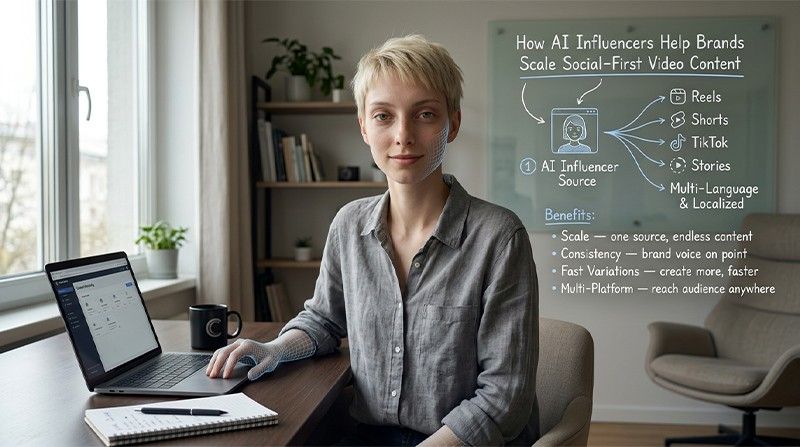
This content works well for explaining concepts like domain names or hosting types. For instance, a web hosting company can create social-first video content with AI influencers to explain these concepts. Publishing evergreen educational content on platforms such as YouTube helps bring consistent traffic and build brand awareness over time.
Seasonal or Promotional Campaigns
Working with AI influencers allows you to quickly create time-sensitive content in less time and at a lower cost. This is why these digital characters are considered ideal for holiday campaigns and seasonal sale videos. Since they’re fully controllable, you can maintain consistency while producing content much faster.
For example, during Black Friday or holiday discounts, retailers can use AI influencers to produce social-first videos in a short time frame.
To make sure AI influencers deliver results as expected, there are a few things brands need to prepare in advance.
What Brands Need Before Scaling AI Influencer Video
These four prerequisites matter before scaling.
A Clear Character Role
What exactly should the AI influencer do? Is it supposed to act as an educator or a brand ambassador? Before scaling social-first video content, you must clearly define the role of the digital character to prevent any conflicts later.
The content can quickly become inconsistent if you neglect this basic principle. This ensures every video has a clear purpose and a recognizable point of view.
Repeatable Content Pillars
Instead of constantly creating new ideas from scratch, which quickly becomes difficult to maintain, focus on a few strong content themes. When publishing high volumes of short-form content across multiple platforms, jumping from one topic to another backfires and makes audiences lose interest.
Brand and Approval Guidelines
Preserving control and consistency becomes extremely challenging without well-documented brand guidelines. This helps keep messaging and tone consistent across different social media platforms, along with persistent visuals.
Efficient approval systems also matter. As discussed, brands need to create social-first videos at a fast pace. So, long review cycles or an unclear feedback process can slow down scaling efforts.
A Testing and Optimization Process
A structured testing and optimization process makes it easier to find out what actually works. That’s how performance improves. Otherwise, you can’t understand which hooks or formats drive results and which fail to perform as expected. So what does a strong testing and optimization process actually look like?
It involves continuously testing variations and analyzing performance data to refine future videos. Specifically, engagement and conversion metrics should be studied to determine weaknesses and strengths. When trying to capture attention on fast-moving platforms like Instagram and YouTube Shorts, even small changes can have a big impact on reach.
Final Takeaway: AI Influencers Are More Than Social Media Content
Using AI influencers for social-first video content goes beyond simply using digital characters to create short videos. You need a clear strategy to build a character-driven content system that makes your brand more recognizable over time. This requires careful planning and skilled experts to develop AI-powered influencers for your campaigns.
This is where our experienced team at Dream Farm Agency can help you.
Check out our virtual influencer solutions and reach out to talk about your project.
FAQs
What makes a video “social-first” instead of just being posted on social media?
Social-first video is created specifically for platforms such as TikTok and Instagram Reels, designed around the latest trends and mobile viewing. It’s not repurposed content; it’s built to perform natively in feeds.
Should a brand create its own AI influencer or work with an existing virtual influencer?
Brand-owned AI influencers are better for long-term control and consistency. Existing virtual influencers are useful for quick exposure but offer less control over messaging.
Can AI influencers be used in paid social ads?
Yes, they are widely used in paid social media to generate multiple ad variations quickly. This helps brands test creatives and optimize performance on platforms like TikTok and Instagram.
How do AI influencers help with content localization?
AI influencers can quickly adapt videos into different languages and cultural styles. This removes the need for separate production for each market.
What types of short-form videos work best with AI influencers?
Product demos and explainers, along with ads and educational clips, perform best. These formats are easy to scale and adapt.
Can one AI influencer video be adapted for TikTok, Instagram Reels, and YouTube Shorts?
Yes, the same core video can be resized and edited for each platform. Small tweaks are usually needed to match each platform’s style.


Post Comments
0 comments