
Key Takeaway
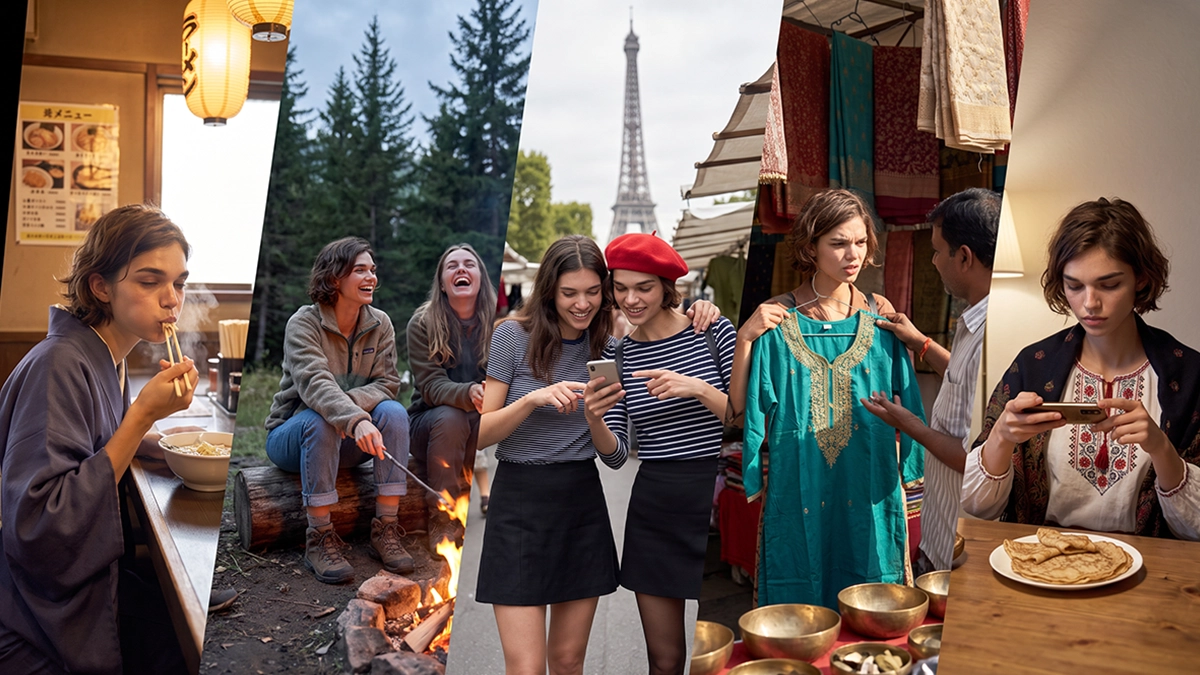
- Deep hyper-localization enables AI influencers to successfully scale international campaigns. By configuring digital personas with region-specific datasets, multinational brands can bypass traditional geographical constraints and communication barriers.
- Virtual influencers go beyond traditional limits, such as communication barriers and geographical constraints. They’re available 24/7 and can serve as the brand ambassador across the whole world simultaneously.
- Compared to human influencers, digital personas are much more cost-effective.
- When localizing content, research on the target market culture is essential to mitigate reputational risks and public backlash. An aesthetic that resonates within one demographic may alienate another due to distinct regional expectations.
Deploying virtual talent introduces an unprecedented level of scalability for multinational brand campaigns. Configuring virtual characters and training them with specific datasets allows businesses to integrate localized cultural nuances and communicate with consumers in their native language. This increases trust and improves conversion rates.
The deeper the localization, the higher the chance of the marketing campaign’s success.
Throughout this article, we will:
- Review popular strategies for localization using AI-powered personas.
- Examine real-world examples.
- Discuss the primary benefits of taking this approach.
- Understand the hidden challenges of deploying AI influencers in regional marketing.
- Find out highly possible future trends of such localization strategies.
There will also be a table for comparing Eastern and Western markets to prevent catastrophic errors during asset reconfiguration.
What Are AI Influencers and Why Do They Matter Globally?
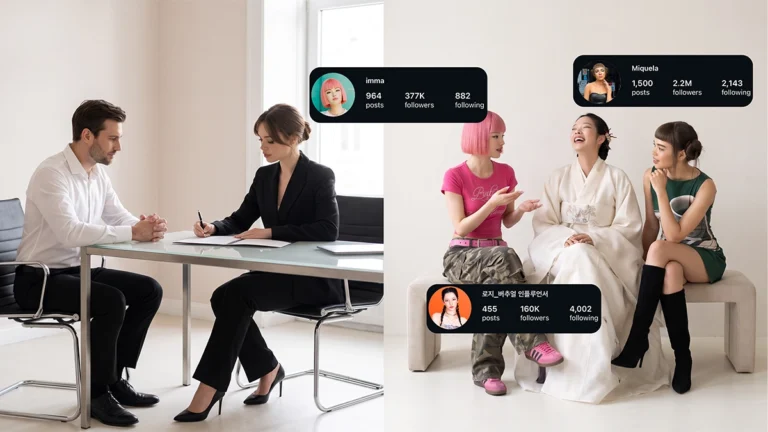
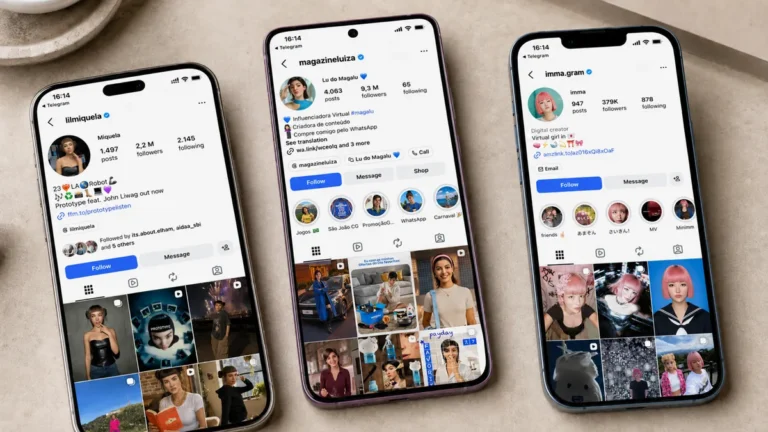
AI influencers are computer-generated characters powered by artificial intelligence. They are also called virtual influencers. As of now, several AI influencers are dominating social media feeds, dropping singles, modeling for luxury brands, and more. For example, Lil Miquela is a renowned character who has already collaborated with many big brands.
According to SQ Magazine, the global virtual influencer market has reached $11.74 billion in 2026. This proves that these digital characters are highly effective across different marketing campaigns.
These are the most significant benefits of using AI influencers in global marketing:
- 24/7 availability: Real people need to sleep and take breaks every once in a while. Besides, you can’t expect them to work outside their local working hours. This means they’re not available 24/7 across all time zones. On the other hand, digital characters don’t sleep and don’t need breaks. Simply put, they’re always available, no matter where on Earth the customer is.
- Minimizing brand safety risks: Even the most professional human creators can get caught up in real-life scandals. When they’re your brand’s ambassador, their problem is yours, as it can damage brand equity. With virtual influencers, you have full control over them and can ensure they never cross any line.
- Incredible scalability: Because AI influencers can achieve instant fluency in any language, they effectively eliminate localized communication barriers while simultaneously bypassing geographic and timezone obstacles.
Let’s dig deeper and see how brands can use AI influencers in global marketing in practice.
3 Core Localization Strategies for AI Influencers
How do AI influencers serve campaign localization across different countries and cultures? They achieve this primarily by creating visual fluency. Tailoring content to the target audience’s language and embracing cultural etiquette is equally critical.
We can break down this localization process into several distinct layers.
1. Visual Fluency: Dressing and Placing Your AI for the Local Scene
The virtual influencer’s style and appearance should appeal to target audiences in a specific region. For instance, a campaign targeting Ghana requires an entirely different cultural backdrop than one aimed at a country in the Middle East. Brands need to configure the character to integrate naturally into local traditions.
This is where digital characters show clear advantages over human influencers. With real people, adopting various cultural styles is challenging, but not with AI influencers.
These dynamic assets instantly adapt to regional aesthetic preferences. An AI model can transition from wearing a Japanese kimono to donning traditional West African Kente cloth with a few configuration tweaks. Properly dressed characters in the right environment can boost campaign engagement.
2. Multilingual Fluency: Giving Your AI a Local Voice
Visual appeal helps attract attention, but you need to go beyond to gain the trust needed for turning a lead into a paying customer. Achieving this degree of consumer trust requires communicating with target audiences in their native language.
Native-language assets outperform translated content by 4.2x (VIDEOAI.ME). This is because today, many people immediately spot and reject machine-translated captions. Beyond simple translation, AI influencers can adopt different tones and accents to better build trust with the target audiences.
Deploying localized virtual influencers yields several distinct operational advantages:
- Sophisticated 3D rendering facilitates precise vocal synchronization, effectively neutralizing the uncanny valley effect.
- A single language may be spoken in several accents. Spanish alone has around 12 accents. With the power of AI, your brand ambassador can easily learn different accents and make a memorable market entry.
- Virtual influencers can also learn language idioms and slang to seamlessly integrate into the local cultural fabric.
3. Cultural Etiquette: Respecting Local and Social Norms
Disrespecting cultural differences can cause international marketing campaigns to fail entirely. So, before localizing the AI influencer, research the target market’s ethics and religions. Honoring their traditions not only prevents unwanted consequences but also accelerates market penetration.
For instance, challenging localized cultural norms might be dismissed as a minor gaffe in one region, while in some countries, doing this is a huge red line that no brands must cross. The same applies to hand gestures and even poses.
Relying on guesswork in global marketing is dangerous; even minor oversights risk triggering severe brand backlash. This is why developers must train virtual characters using datasets mapping local taboos.
Major global enterprises are already deploying these virtual strategies. Let’s look at the brands leading the charge.
Real-World Examples of Localized AI Influencers’ Success
Look at these two examples:
- IKEA Partnered with Imma
IKEA is a multinational company that is worth around $26 billion, according to Business Insider. After launching the first city-center store in Tokyo, IKEA partnered with the famous Japanese AI influencer Imma to draw Japanese youth toward the brand.
Using massive real-time LED wall installations within the store, visitors saw Imma living in small-space Tokyo living conditions, filled with IKEA products. The result was quietly satisfying, bringing significant foot traffic. Imma helped IKEA create a customized campaign tailored to congested urban living constraints.

- Burger King Partnered with Lu Do Magalu
Burger King designed a highly aggressive regional menu in Brazil. To promote the menu, they used Lu do Magalu, the beloved and culturally entrenched virtual persona in this country. Leveraging her established domestic presence, she helped Burger King accelerate brand trust and local recognition.

Read “Top 9 AI Influencer Campaign Examples and What Made Them Work” to learn more examples of big brands using AI influencers for marketing purposes.
Benefits of AI influencers in Global Marketing for Brands
Why does replacing human influencers with virtual characters make sense? To answer this question, we must explore the advantages AI influencers offer for localization.
Cost Efficiency
With AI influencers, businesses can:
- Eliminate physical production costs.
- Repurpose the character for future campaigns with different goals.
- Bypass prolonged negotiations over contract usage rights and compensation boundaries.
- Generate several variations of the same content for different locations in a short time.
This means that, unlike partnerships with real people, using AI influencers incurs much less expense.
Data-Driven Iteration
Virtual campaigns capture granular, real-time analytics to drive data-informed decisions. Analysts use automated platforms to run continuous performance assessments to detect strengths and weaknesses. This continuous data stream makes scaling campaign ROI far more predictable.
Immediate agility allows brands to eliminate guesswork and instead rely on cost-efficient A/B testing to effectively increase engagement rates.
Consistency
Maintaining consistency in global marketing is a persistent challenge that virtual influencers directly resolve. Since you have full control over an AI-powered character, ensuring that they strictly adhere to the brand’s guidelines is easier than when working with real people.
Developers program every conversational tone and core brand pillar into the digital character’s operational framework. As a result, even with shifts in styles and target language, the brand’s values will be maintained.
Also, AI influencers bypass human lifecycle constraints, ensuring permanent brand alignment and long-term asset continuity.
Despite these clear strategic advantages, leveraging AI influencers in global marketing comes with distinct operational and cultural hurdles that you must learn about.
This is where a character-driven marketing agency can bridge the gap by creating stronger differentiation, more meaningful audience relationships, and more memorable communication through the power of characters.
Navigating The Operational Challenges and Ethical Concerns of Virtual Influencers
Using a digital persona for marketing campaigns across different regions introduces serious cultural and ethical traps that businesses should avoid. For example, regarding the uncanny valley effect, we can draw a line between Western and Eastern markets. Look at this table:
|
Target Market |
Visual Preference and Cultural Context |
The Consumer Perception |
|
The Western Market (US and Europe) |
Hyper-Photorealism: Audiences gravitate toward creators that closely mimic real human features (e.g., Lil Miquela). | High Risk: The margin for error is razor-thin. If skin texture, micro-expressions, or eye movements feel slightly off, consumers label it “creepy” or deceptive, causing detachment from the brand. |
|
The Eastern Market (Japan and South Korea) |
Stylized and Anime Aesthetics: Deep cultural comfort with cartoonish characters, shaped by decades of gaming, manga, and VTuber popularity. |
Flexible Design: Features like large eyes and highly smoothed faces that might look childish or trigger the uncanny valley in the US are embraced as inherently kawaii (cute) and trustworthy. |
Another costly mistake would be misreading a culture and disrespecting the target audience. Incorrect datasets lead to false character programming and increase the likelihood of campaign failure.
For instance, running a virtual influencer during a regional holiday without comprehensive knowledge of the target culture may spark immediate public backlash due to the asset’s tone-deaf behavior. At best, these missteps merely derail the campaign; in severe scenarios, they can even lead to unrest toward the brand in some countries.
Transparency is the next ethical obligation that comes with AI personas. When the character feels so real that distinguishing it from an actual person becomes difficult, brands must explicitly indicate that they’re using AI for that particular campaign.
In some jurisdictions, brands are forced by law to weave transparency tags such as #virtualinfluencer to inform audiences of the AI-backed nature of the content. This is highly important as it helps maintain customer trust across diverse borders.
As virtual influencers mature, deployment strategies for global marketing will shift accordingly too.
Future Trends of AI Influencers and Marketing Localization
Most likely, two massive future trends will redefine how AI influencers help global brands with localized marketing:
1. Hyper-Personalization
The integration of advanced LLMs has transformed basic chatbots into highly sophisticated conversational agents. It’s expected that AI influencers will also move toward more personalization soon.
Forget pre-scripted video replies. Driven by the latest technological advances, AI influencers that serve as brand ambassadors will be able to have 1-on-1, fully personalized conversations with millions of consumers simultaneously.
For example, an AI influencer can interact with a customer in Paris in fluent French, while simultaneously engaging a consumer in Beijing in Mandarin.
This level of personalization and localization both improves the relationship between the brand and the consumer and directly drives conversion rates.
2. The Metaverse: Localized Events in Virtual Spaces
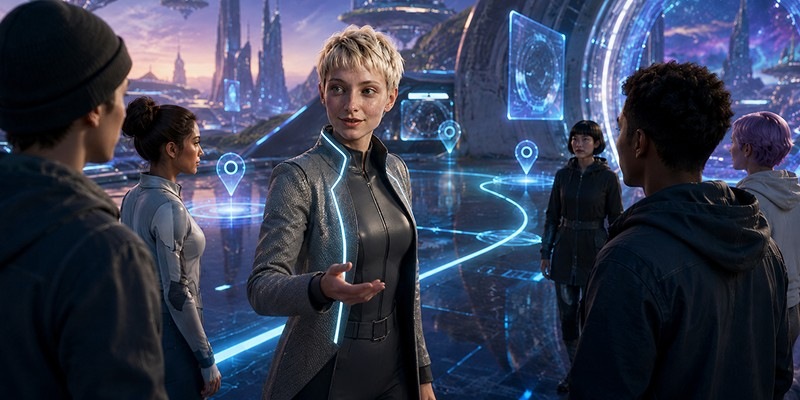
When immersive digital environments mature, the utility of virtual characters scales exponentially as they can represent the brand to visitors in virtual spaces.
This allows global brands to host highly localized virtual events more easily. A clothing brand can run a digital fashion show in which the virtual character showcases exclusive product drops. A car manufacturer can host an exhibit with the AI influencer as the visitors’ guide, delivering personalized product education in the attendees’ native language.
Read more: “What Is the Metaverse? An Explanation and In-Depth Guide”
Secure Competitive Advantage Through Scalable AI Influencers
Regional marketing is now highly manageable through virtual characters that can adopt the target market culture and speak in their language fluently. Using AI influencers for global marketing secures a distinct competitive advantage, capitalizing on frameworks that remain underutilized across many sectors.
Our specialists at Dream Farm Agency can help you create a virtual influencer from scratch and optimize it for cross-border market penetration.
Contact us now if you want to stay ahead of the competition.
FAQ
How do AI influencers adapt to different regional cultures without offending?
Brands train virtual influencers using hyper-local datasets that map regional social norms and strict cultural taboos. This detailed configuration allows creators to dynamically adjust the avatar’s visual style and clothing to blend natively into the local market.
Why do Eastern and Western audiences perceive virtual influencer designs so differently?
Western consumers generally prefer hyper-photorealism, meaning they quickly reject characters that fall into the “uncanny valley” as creepy or deceptive. Eastern markets like Japan and South Korea have a deep cultural familiarity with anime and gaming subcultures, making them highly receptive to stylized, cartoonish avatars.
Are brands legally required to disclose that an influencer is AI-generated?
Yes. Most regulatory frameworks, like the FTC in the United States and the EU AI Act, strictly mandate that synthetic media must be explicitly labeled.
What makes AI influencers more cost-effective than traditional human creators for global brands?
Virtual characters eliminate massive international expenses tied to flying physical production crews, managing cross-border logistics, and paying recurring usage rights will no longer be needed. Once the initial 3D digital asset is built, the brand can infinitely repurpose it for regional campaigns at a fraction of the cost of human talent.
How will future AI influencers achieve 1-on-1 personalization with millions of consumers simultaneously?
By integrating advanced, low-latency large language models (LLMs) and natural text-to-speech technologies, future digital avatars can hold direct, parallel voice conversations. This allows them to seamlessly engage millions of followers at the same time, instantly tailoring the language and tone to each user.



Post Comments
0 comments