
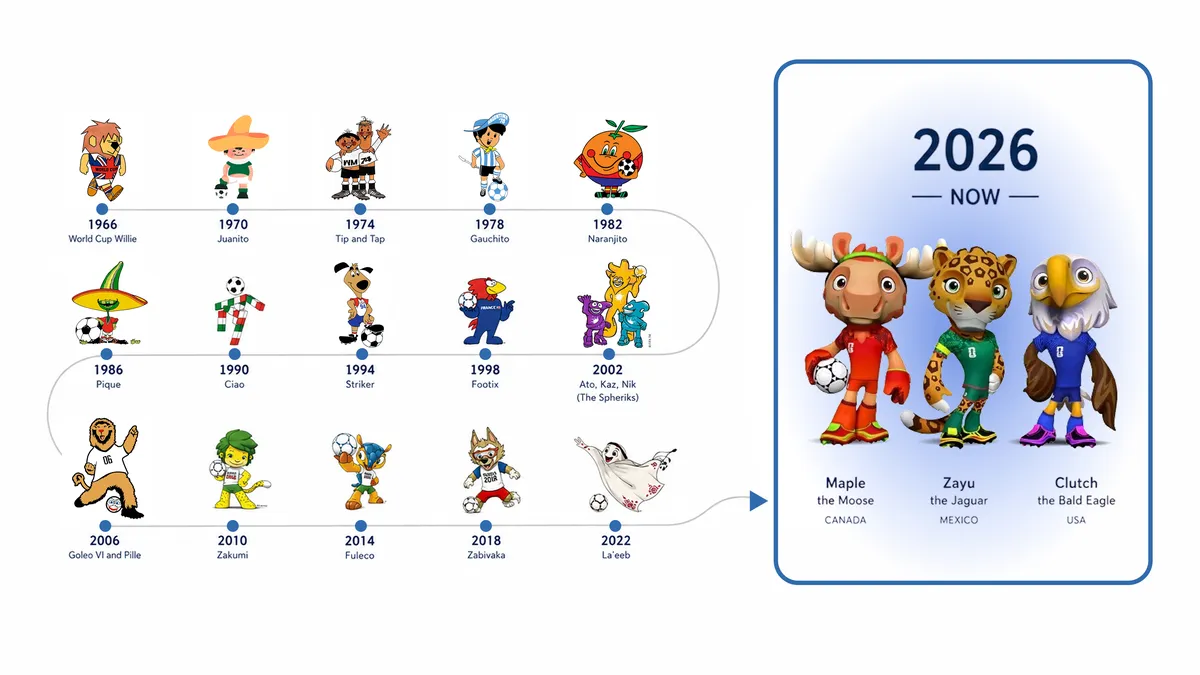
The FIFA World Cup 2026 brings a fresh twist with its first trio of mascots. At Dream Farm Agency, however, we see more than three characters.
Dream Farm’s leadership team shares a clear-eyed analysis of these mascots. We analyzed “Maple, Zayu, and Clutch” through the lens of strategy, creative directions, and their potential for storytelling and merchandise.
Eli Alizadeh, Marketing and Branding Director at Dream Farm Agency:
I’ll begin with ‘limited-cycle IP’. The FIFA World Cup happens every four years. This rhythm shapes what works best. A full, long-term IP like Mickey Mouse demands decades of consistent storytelling. For a tournament mascot, however, that approach does not fit. Football fans want excitement and connection during the event, not necessarily a profound, layered saga that lasts for years.
Tournament mascots should stay event-specific and relevant before, during, and shortly after the event, then gracefully step back. How? Build an event-based IP designed for a short, intense life cycle; Make it strong in merchandise, ready for social content, and playable in games. This approach keeps sports mascots fresh and protects long-term value.
Now, let’s return to “Maple, Zayu, and Clutch”.
Choosing three mascots makes business sense. Firstly, hosting across three countries presents a natural challenge. A single mascot could easily become too generic and lose its cultural roots. Having three mascots directly addresses this issue. They represent each host nation while working as a group.
Secondly, the thoughtful choice of a trio multiplies merchandise opportunities. Each merchandise line now sells three versions. Fans from each host country feel represented. That drives emotional purchases.
Finally, from Dream Farm’s character-driven marketing perspective, the trio creates natural storytelling dynamics. The characters can appear as teammates, rivals, or companions. This setup opens doors for games, social campaigns, and fan engagement. A single mascot can never match as easily.
While I think using multiple characters is a smart move, I can’t say the same about the designs. They play it safe with classic big-head, large-eye mascot looks.These choices work well for stadium mascot costumes and plush toys. Yet, the characters look similar in style. They lack deeper cultural signifiers or distinctive signatures that would make them memorable. While Zayu the jaguar feels more culturally distinctive in both naming and symbolism, the others need more distinctive edges to match.
Personalities, however, do not yet shine through appearance alone. FIFA can solve this in games and digital content by adding signature moves, superpowers, and group dynamics. These extra layers help the characters move from cute symbols to true assets that fans remember and share.
Placing the mascots in ‘FIFA Heroes’ as playable characters shows smart thinking. This multichannel step strengthens the overall strategy. In addition, the safe design choices leave room to build deeper character moments in games and content. Success, however, depends on building richer stories and believable dynamics between the three.
At Dream Farm Agency, we believe mascots succeed when they serve clear business goals. For FIFA, that means treating these mascots as strategic assets, not just traditions. With thoughtful development of their personalities, group dynamics, and digital lives, the trio can deliver strong returns.
Ali Noori Oskouei, Creative Director at Dream Farm Agency:
The official mascots for the FIFA World Cup 2026 mark a shift with their first trio of anthropomorphic animal characters inspired by North American wildlife. I see this as an ambitious attempt to move beyond the traditional single-mascot model toward a more contemporary strategy for a tournament-based character system.
The first noticeable aspect is that these mascots are designed for today’s entertainment landscape.
From a strategic perspective, the decision sounds logical. Today’s landscape is increasingly influenced by gaming culture and social media. Users today are more drawn to short-form content, interactive experiences, and transmedia storytelling than to traditional marketing methods.
Modern audiences, especially younger generations, respond better to ensembles. The decision also opens doors for personality differences, expanded merchandise, and stronger social campaigns. The concept holds real promise for business growth in a tournament setting.
Using a contemporary visual language is evident as well. These mascots step away from classic, rounded sports designs toward angular shapes, fragmented patterns, fashion-inspired clothing, and gaming-inspired proportions. Their faces feel ready for social media and collectible formats. This direction aligns well with how young fans consume entertainment today and supports broader marketing potential across channels.
I notice thoughtful touches. One of the most interesting aspects of the jaguar design is the attempt to integrate football-inspired geometry into the fur markings. Ideas like this tie characters directly to the sport and create memorable signatures if applied fully.
The concept of a trio is strategically sound, but the execution shows design inconsistencies. The jaguar and moose seem to share a design family. In contrast, the eagle feels distinctly different. Characters that are meant to be together here come from different design philosophies.
Strong tournament-based character systems use a clear visual motif for all characters. Here, the football-inspired geometry is strongest in one character and weaker in the others. This may make the design seem decorative instead of symbolic. The designers could have created a truly recognizable visual signature that connected every mascot directly to the game of football itself.
That matters psychologically as well. Audiences may not sense this “visual taxonomy drift” consciously, but they perceive it cognitively and emotionally. Inconsistencies create a weaker sense of ensemble cohesion. People form what psychologists call “identity anchors”. When they face those inconsistencies, they experience low emotional attachment. Recognition speed decreases, and memorability weakens. The issue becomes more apparent when the characters move across various channels and media formats.
Cross-platform inconsistency is a bigger issue; in fact, potentially one of the programme’s most important creative challenges. When the characters shift from promotional art to games, animations, stickers, or physical costumes, proportions and energy change noticeably. Without a clear adaptation framework, the mascot may feel like a reinterpretation rather than the same characters.
Beyond visuals, the mascots have profiles but miss an expandable narrative framework. A profile answers “Who is the mascot?” but a story universe addresses deeper questions such as “Where did it come from?” or “Why should audiences care?” Currently, the official mascots for the FIFA World Cup 2026 feel more like branded representatives than true narrative protagonists. That weakens the storytelling power and limits emotional engagement.
In marketing terms, storytelling isn’t mere entertainment; it’s a powerful tool to generate public relations. Strong stories elevate characters from visual tools to shareable brand assets and valuable IP with real growth potential.
As the last point, a crucial question remains unanswered: Can they evolve into a cohesive transmedia character with a unified visual language and an expandable narrative framework?
Summary Review
From Dream Farm’s leadership team’s perspective, “Maple, Zayu, and Clutch”, the mascots designed for the FIFA World Cup 2026, are trend-aware and significantly more contemporary than many previous tournament mascots. Their design language demonstrates clear thinking around younger audience preferences and current entertainment aesthetics.
However, they achieve national recognition more successfully than distinctive character memorability.
The opportunity sits in those next steps. In shaping a tournament-based mascot development system.
With tighter unity, consistent rules, and richer stories, they could evolve into a cohesive franchise, create emotional ties with football fans worldwide, and drive real business results.

Post Comments
0 comments