
Takeaways
- Virtual influencer authenticity stems from coherent actions, values, and narratives that create a believable and relatable character.
- Brands and creators achieve perceived virtual influencer authenticity through consistent character behavior and emotional storytelling.
- Hyper-realistic designs affect virtual influencer authenticity. Sometimes they reduce trust due to the uncanny valley effect, while stylized characters avoid this issue.
- Transparency about the virtual nature, combined with coherent backstories, increases credibility, engagement, and virtual influencer authenticity.
Can a digital character with no heartbeat ever make you feel like you truly know them?
Considering virtual influencers’ authenticity, the answer appears to depend on the emotional connections we forge with these crafted personas.
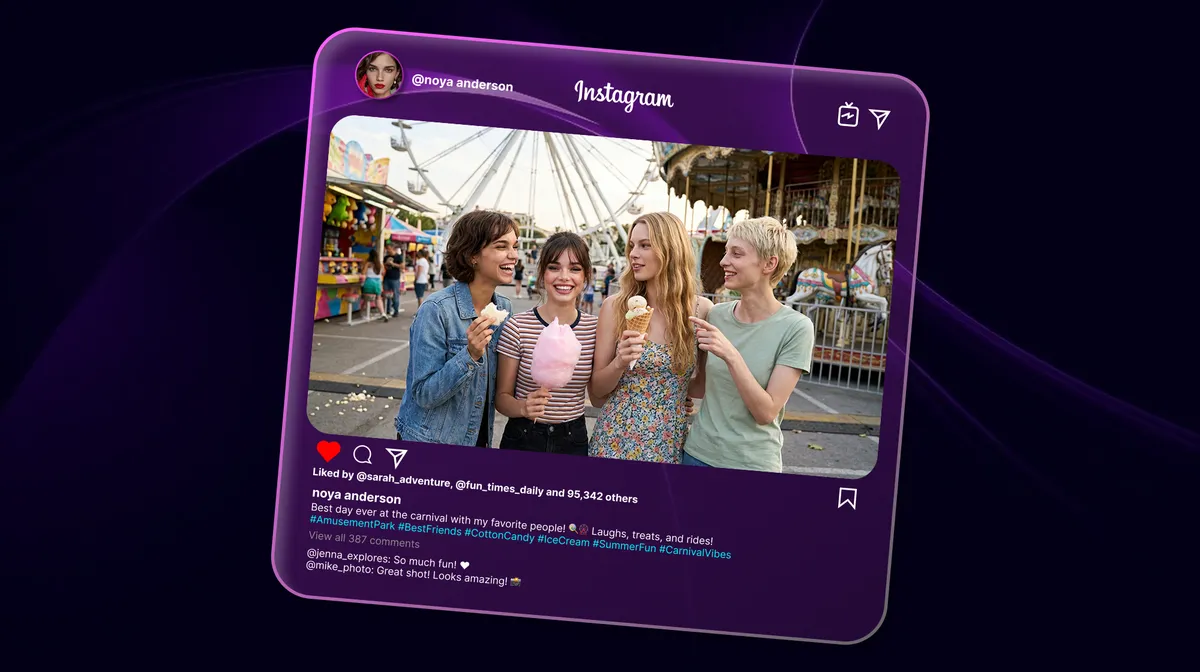
You open your feed and see a post from a young woman with pink hair. She talks openly about pushing through a tough creative day, shares how a particular routine helped her stay focused, and suggests a product that worked for her. The story lands.
You comment, feel a spark of connection, and later check out the item. Then you discover she exists only as an AI creation. Moments like this happen constantly with virtual influencers. They challenge everything we thought we knew about connection online.
Let’s take a clearer look at the situation. I’m going to break down what authenticity actually means for these digital characters; why people still form bonds with them; and exactly where the sense of reality falls apart.
There are specific factors that make an AI personality feel believable. This article outlines them. And it answers whether these figures can ever seem “real” to audiences.
Let’s continue on for more.
What’s Virtual Influencer Authenticity?
“Is this virtual person worthy of attention?”
This is the first question that forms in people’s minds when they realize the character in front of them isn’t real.
Authenticity for virtual influencers goes beyond simple truth-telling, though. It emerges when the character’s actions, stories, and values line up in ways that feel coherent and meaningful to viewers.
Researchers describe different layers: one type aligns the character with an ideal image audiences admire, another stays true to established facts about the character’s fictional world, and a third reflects an inner consistency in behavior and voice.
In practice, this means a virtual influencer succeeds when their online presence feels like a complete, believable character rather than a random collection of sponsored posts.
Think of it as building a fictional protagonist who grows and reacts in ways that match their established traits. Brands that treat virtual influencers as mere avatars miss this. Those who invest in rich backstories and consistent personalities see stronger results.
From a virtual influencer marketing viewpoint, this character-based authenticity supports growth. It reduces risks associated with human creators, such as scandals or inconsistent messaging. A well-developed digital personality can maintain perfect alignment with brand values across years of campaigns too.
That helps companies scale influence without the volatility of real-life talent. Yet, this control only works if audiences accept the character as worthy of attention.
What Draws People to Connect with Unreal Characters?
Well, let’s say the reasons go deeper than looks or novelty. One key driver is the safe space these characters create. Unlike human influencers who might share messy personal drama or shift opinions unpredictably, virtual ones offer reliable emotional tones and stories. This predictability can feel refreshing in a chaotic feed.
Below are more reasons audiences form connections.
Emotional Storytelling Builds Bridges
Like it or not, a new generation of storytellers is dominating the market. Their power comes not from appearance or technology; it comes from their ability to tell rich, memorable narratives. This is key to building virtual influencer authenticity.
Virtual influencers often share narratives about aspirations, challenges, or growth that mirror real human experiences. Even when viewers know the character is digital, the stories can spark empathy and identification.
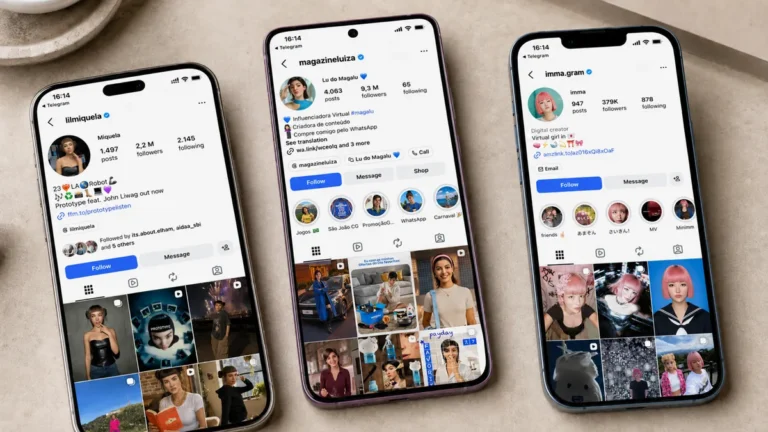
A prime example is Lil Miquela. She’s built a massive following by posting about personal relationships, social causes, and daily reflections in ways that blend fiction with relatable themes. Audiences engage because the character feels like someone they understand.

- Explore our latest blog on transmedia characters and strategies for storytelling and IP growth.
Consistency Creates Comfort
Have you ever come across human creators who sometimes post erratically or contradict earlier views?
That won’t happen for virtual ones; they can maintain a steady voice and visual style. This reliability strengthens parasocial bonds: the one-sided relationships where followers feel close to the character over time.
Some studies show that when virtual influencers display emotions and make “eye contact” in videos, viewers report higher engagement and trust.
Idealized Yet Approachable Traits Attract
Many virtual influencers represent aspirational versions of identity; they look flawless in some ways, yet vulnerable in others.
Younger audiences, in particular, respond well because these characters offer escapism without the pressure of comparing themselves to a real person’s unfiltered life.
For business growth, these connections translate into loyalty. Brands using virtual influencers report higher engagement rates in some cases. Think of up to three times that of human-led campaigns in certain studies. How is this achieved? If the content stays on-message and tailored, such a result would be no surprise.

A character-first approach lets marketers test narratives, refine messaging, and build community around shared values. And all happens while controlling costs and availability.
That also supports scalable growth strategies, especially for global brands that need round-the-clock presence across time zones. To learn more, study AI influencers in global marketing.
Wonder if this works for your audience? You may find our blog “Why People Follow AI Influencers” helpful.
When AI Influencer Authenticity Breaks Down
Despite the appeal, many virtual influencer efforts stumble. The biggest breakdown happens when the character feels too polished or disconnected from human realities.
One Common Issue Is the Uncanny Valley Effect
Take a virtual influencer who looks almost human but not quite. Viewers experience subtle discomfort. Hyper-realistic designs can trigger suspicion rather than trust, especially if movements or expressions seem slightly off. Read more about this in our latest blog, “Virtual Influencers and Uncanny Valley Effect”.
Data backs this. As per some research, overly stylized or cartoonish characters sometimes create stronger bonds because they avoid this unease and lean into their artificial nature.
Another Fracture Point Is Lack of Genuine-Feeling Experiences
Audiences quickly sense when stories lack depth or when interactions feel scripted without personality. If a virtual influencer claims to face real-world struggles but never shows growth or inconsistency, followers disengage. Explicit disclosure of AI origins can worsen this in some cases, as it reminds people of the artifice and reduces perceived trustworthiness.
View this post on Instagram
Transparency Problems Also Arise in Sponsored Content
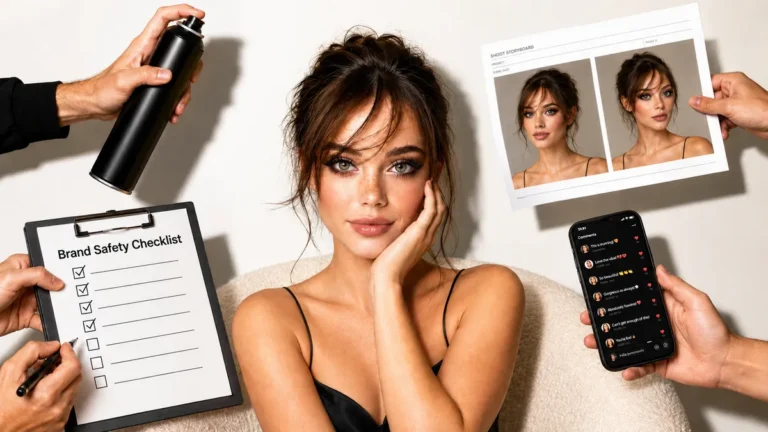
When brands push too many promotions without tying them meaningfully to the character’s world, the whole persona starts to feel like a sales tool. This erodes the very consistency that makes virtual influencers attractive in the first place.
Culturally, expectations differ too. Some regions value clear disclosure highly, while others prioritize emotional connection over origin stories.
Overall, from a strategy perspective, the above-discussed breakdowns hurt growth. Brands lose audience trust, see lower conversion rates, and risk backlash that damages their broader reputation. The lesson is clear: Control is an advantage only when paired with careful character development that respects audience intelligence.
What Contributes to Virtual Influencer Authenticity?
Well, the answer is not a straightforward one. Many factors, sometimes out of our control, affect the way people perceive a digital being. Still, there are several elements that help AI personalities cross the threshold from interesting to believable. Let’s review them quickly.
Anthropomorphic Behavior Is The Strongest Factor
People look at the way a character acts, speaks, and interacts, rather than just appearance. Actions like responding thoughtfully to comments, showing vulnerability in stories, or evolving over time create social presence that makes the character feel human and authentic.
Rich, Evolving Backstories Make a Tangible Difference
Give the virtual influencer a coherent world with history, relationships, and values, and then the storytelling feels organic, rather than pushed. For example, a fashion-focused character might “struggle” with creative blocks before launching a new look, or she/he may try product recommendations for personal growth. Such narratives make endorsements feel earned.
Balanced Emotional Expression Builds Authenticity
No advertising is successful unless it creates emotional bonds. Warm language, occasional imperfections, and positive interactions are the basics. Virtual influencers that express emotions consistently and use personal pronouns in posts tend to drive higher engagement. Audiences respond to characters who seem to care about their followers.
Smart Transparency Done Right
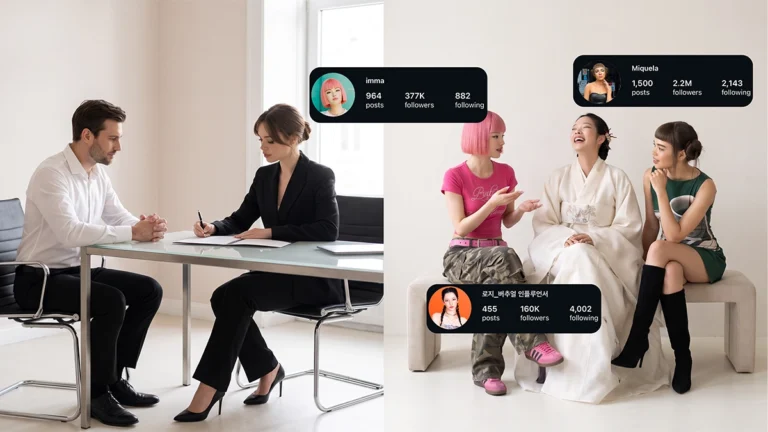
Why hide the digital nature? Some successful examples embrace it playfully as part of the character’s identity. This “authentically fake” approach can reduce skepticism and turn the artificiality into a strength. Coach’s campaign with Imma, where the virtual figure explored “courage to be real,” played with this irony effectively.
Audience Interaction and Adaptation Reinforce Authenticity
Picture a character that replies to comments or adjusts content based on feedback. While staying true to their core) build stronger bonds. This creates a sense of dialogue, even if powered by AI oversight.
For a solid virtual influencer authenticity strategy, these factors open doors to business growth. You can develop virtual influencers targeted at specific segments (perhaps a bold, adventurous character for Gen Z adventure gear, or a thoughtful one for wellness products). By tracking engagement data, teams refine the personality iteratively.
What’s achieved is long-term audience building, repeat purchases, and community advocacy, all with lower risk than relying on unpredictable human talent.
Hybrid methods, where humans review and add real-world nuance to AI-generated content, often strike the best balance.
Let’s Return to the Initial Question
“Do AI personalities feel “real” to the audience?”
A specialized virtual influencer Agency’s answer is “Absolutely yes!”
That’s what sets us apart from competitors and platforms.
But be careful; “real” here means emotionally resonant rather than literally human. Audiences do not always need biological truth to form meaningful connections.
They respond to characters that feel coherent, caring, and consistent within their own rules. Studies show virtual influencers can match or even exceed human ones in credibility on dimensions like commercial transparency and steady relatability.
The key lies in shifting focus from imitation to creation.
AI personalities succeed when they reflect values and emotions audiences already seek, not when they pretend to have lived human lives.
This redefinition opens new possibilities for brands. A virtual influencer can embody perfect brand alignment while still sparking genuine feelings through smart storytelling.
Businesses that master this gain clear advantages: cost efficiency, message control, and the ability to scale influence globally without talent management headaches.
Yet success demands investment in character depth and ethical transparency.
Brands ignoring these elements risk shallow engagement that fails to drive growth.
Final Words
This article challenged old ideas about virtual influencer authenticity and what feels believable online. To truly engage audiences, focus on creating someone audiences really want to follow, not just watch.
The secret lies in developing genuine connections. And virtual influencers are here to make it perfect.
Build your character smartly, and it delivers consistent value, emotional ties, and transparent creativity, even without a human heartbeat.
Your audience is ready.
The technology exists.
The only question left is how your brand will shape the next chapter of digital influence.
FAQs
Do virtual influencers damage brand trust?
A: Not inherently. When handled with strong character consistency and appropriate transparency, they can build trust.
Poor execution or over-reliance on hyper-realism without emotional grounding, however, does reduce perceived authenticity and hurt trust.
Are audiences more likely to buy from virtual or human influencers?
A: It depends on the category and execution.
Virtual influencers often perform well in fashion, beauty, or tech, where aspiration and consistency matter.
Human influencers may edge out in categories needing deep personal testimony. Data shows virtual campaigns can achieve higher engagement rates when the character feels believable.
Should brands disclose that an influencer is virtual?
A: Absolutely yes. Clear disclosure respects audiences and can enhance the “authentically fake” appeal for some characters. Hiding the truth risks backlash when discovered.
Can virtual influencers replace human ones entirely?
A: No, and we do NOT recommend that. Instead, we suggest that brands adopt hybrid strategies, such as using virtual influencers for always-on presence and humans for authentic, timely moments. Such methods often yield the strongest growth.
How to measure authenticity in virtual influencer campaigns?
A: There’s no direct way to measure virtual influencer authenticity. However, you can track engagement depth (comments and shares), sentiment analysis, purchase intent surveys, and long-term follower retention.
In simple words, look for signs that audiences treat the character as a believable person rather than obvious advertising.




Post Comments
0 comments