- Key Takeaway
- Why AI and Virtual Influencer Compliance Is Different
- Who Owns Your Virtual Influencer? IP Rights Every Brand Must Secure
- Turning Your Virtual Influencer’s Identity Into a Protectable Brand Asset
- Virtual Influencer Legal Risks Most Brands Don't Plan For
- Virtual Influencer Disclosure Rules: What Brands Are Legally Required to Show
- Platform-Specific Rules for Virtual Influencers: Instagram, TikTok, YouTube, and More
- Contracts Every Brand Needs Before Launching a Virtual Influencer
- Virtual Influencer Brand Safety: Protecting Your Reputation
- AI Influencer Authenticity and the Uncanny Valley
- Virtual Influencer Ethics: Transparency and Social Impact
- Understanding Data Privacy Requirements for Virtual Influencers
- Brand Compliance Checklist for Virtual Influencers
- Building Brand Safety Into Your Virtual Influencer Strategy
- FAQ

Nikan Content SpecialistI’ve been creating digital marketing content since 2018, with a growing focus on AI influencers and digital personas. My work explores how brands can use character-driven storytelling and emerging digital identities to build stronger connections with their audiences. At Dream Farm Agency, my focus is on turning these ideas into clear, engaging content that helps brands understand and embrace the future of character-driven marketing communications and digital experiences.
Key Takeaway
- Virtual influencer compliance requires brands to manage legal and ethical responsibilities such as IP ownership, disclosure requirements, platform rules, data privacy, and brand safety.
- Brands need a written agreement with creators, whether agencies or freelancers, to secure intellectual property rights.
- Disclosing synthetic media is required in specific jurisdictions and platforms, such as under the EU AI Act’s transparency rules or YouTube and TikTok policies for realistic altered content.
- Human reviewers should approve AI-generated content to maintain brand safety. Brands should also document creative input because purely AI-generated characters without sufficient human authorship are not copyrightable.
- If virtual influencers imitate real people without authorization or make unsupported claims, brands may face legal claims and regulatory action.
- Virtual influencer compliance does not end after publication, and brands must continue monitoring disclosures and audience reactions to prevent potential legal risks.
Virtual characters are CGI influencers that brands create to engage audiences and promote products or services across digital channels. Because these synthetic entities do not have human creators appearing directly on camera, companies need clear legal and operational controls to manage reputational and liability risks.
To build and manage a virtual influencer responsibly, brands need a framework covering:
- Intellectual property (IP) ownership
- Transparency and disclosure requirements
- Clear contractual obligations
- Platform compliance
- Data privacy
- Brand safety monitoring
- Authentic audience communication
This virtual influencer legal guide explores the key legal considerations around AI-generated content, from ethical responsibilities to the agreements brands need with creator agencies.
You’ll also find a practical checklist at the end of this guide that helps review your virtual influencer compliance process.
Why AI and Virtual Influencer Compliance Is Different
Compared to traditional influencer compliance, AI and virtual influencer compliance add a layer of technological transparency. Traditional influencer rules mainly focus on disclosing material relationships, while AI-specific rules also require transparency about whether content is AI-generated or significantly altered.
Differences lie in scope and technical disclosure requirements, as well as the nature of the entity being regulated.
This table highlights key differences:
|
Area |
Traditional Influencer Rules | Virtual Influencer / AI Rules |
|
Disclosure of Origin |
Require disclosure of paid partnerships or sponsorships. |
May require disclosure that content was generated or materially altered by AI, even when no commercial relationship exists. |
|
Nature of the Subject |
Applies to real people promoting products or services. |
Applies to AI-generated or synthetic personas and content, including deepfakes, to reduce the risk of misinformation. |
| Regulatory Focus | Focus on preventing deceptive advertising and protecting consumers. |
Add AI-specific transparency requirements so audiences know when they are interacting with or viewing AI-generated content. |
Who Owns Your Virtual Influencer? IP Rights Every Brand Must Secure
This section explores virtual influencer ownership rules and intellectual property rights across different situations.
Who Owns the Character When an Agency or Freelancer Builds it For You
It depends on the contract between your brand and the creator. Under U.S. copyright law, the creator, whether an independent contractor or an agency, is generally the author and copyright owner by default. Even payment for the service does not automatically transfer copyright ownership.
A properly drafted written agreement ensures your brand owns the character. The agreement should include a “work made for hire” clause. That said, work-for-hire status only applies under limited statutory categories.

So, to guarantee a full transfer of intellectual property rights, always include an explicit copyright assignment clause as a critical fallback.
One more point to consider is that if an agency employee creates the virtual influencer as part of their job duties, the agency generally owns the copyright under the work-made-for-hire doctrine.
What Happens to Ownership When AI Tools Generate the Visuals and Content
U.S. copyright law explicitly states that AI-generated works lacking sufficient human authorship are generally ineligible for copyright protection because copyright requires human authorship.
If a person provides meaningful creative input or modifies the output, they may claim copyright protection only for the human-created portions that meet the requirements for authorship.
Overall, purely AI-generated content without human authorship is not protected by copyright, though other legal rights like trademarks or contractual terms may still restrict third-party use.
Turning Your Virtual Influencer’s Identity Into a Protectable Brand Asset
Trademark registration allows you to protect your virtual influencer’s name and visual identity with the USPTO. This can give your brand exclusive rights to use the trademark nationwide.
U.S. copyright law can protect the human-created expressive elements of a character’s appearance, but as discussed earlier, you must demonstrate sufficient human creative control over those elements.
To secure ownership rights over a virtual influencer, brands need written agreements that clearly define intellectual property ownership.
Key point: While the USPTO and U.S. Copyright Office register certain intellectual property rights, owners are responsible for monitoring infringement and enforcing those rights.
What to Do if Your Agency or Creator Holds the IP Instead of You
You have a few options in that case:
- If you have a written agreement, check for “Intellectual Property” or “ Assignments of Rights” clauses to determine whether ownership transfers upon payment.
- Negotiate a written assignment that transfers the intellectual property rights.
- Ensure the agreement requires delivery of all working files, such as Photoshop or Illustrator files. These files are often separated from final deliverables and are necessary for future edits.
- To record changes in ownership, register trademark transfers through the USPTO’s Assignment Center and copyright transfers with the U.S. Copyright Office under 17 U.S.C. § 205.
If you can’t reach an agreement to transfer the intellectual property rights, negotiate an exclusive license that clearly defines how, where, and for how long you can use the character.
Virtual Influencer Legal Risks Most Brands Don’t Plan For
Overlooking these hidden risks can expose your business to serious legal consequences.
Using a Real Person’s Appearance or Voice for a Virtual Influencer
Using a real person’s appearance or voice in an AI influencer can create concerning risks:
- Right of Publicity: Unauthorized use of an individual’s likeness can violate state right-of-publicity laws, and it may also separately breach platform policies.
- FTC Deceptive Advertising: If a virtual replica implies a real person endorses a product they haven’t used, both the brand and creator may face liability. AI-generated content that makes unsupported health or performance claims is also a major focus of regulatory enforcement.
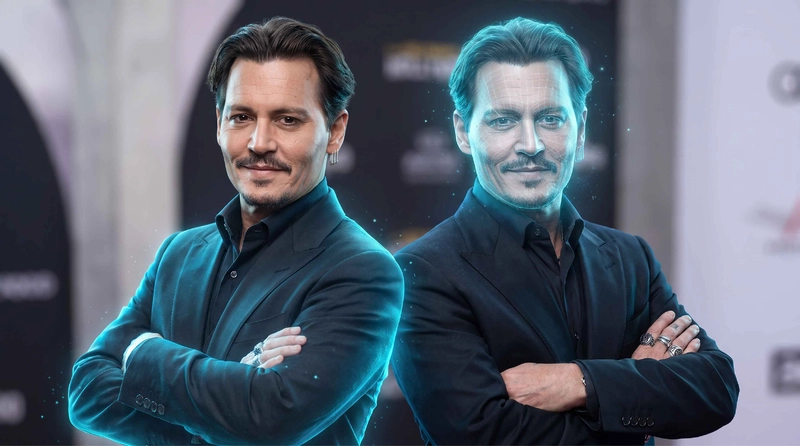
The EU AI Act and various platform policies require disclosure or labeling of certain deepfakes and photorealistic AI content that could mislead viewers into believing a real person is endorsing a product or service.
Copyright Risks of Third-Party Assets in AI-Generated Content
Training AI influencers on copyrighted material without proper authorization may lead to legal risks because the resulting character can infringe on the original creator’s rights. Even a unique virtual persona can face copyright claims if it uses protected artwork or branded elements without permission.
That’s why in this virtual influencer legal guide we strongly recommend that you always audit your AI-generated assets against existing IP to be able to defend the character against possible complaints.
What Happens if Your Virtual Influencer Makes False or Defamatory Claims
Typically, legal responsibility for false or defamatory claims made by a virtual influencer depends on who controlled, approved, published, or participated in the content, which can extend liability beyond just the brand or agency.
For example, if the influencer makes a false statement of fact that harms a person’s or company’s reputation, the injured party may sue the responsible brand for defamation.
Under the FTC Act, all companies and businesses are accountable for all marketing claims made by their agents, and synthetic personas are no exception in this case. As a result, following a false claim about a product or service, the FTC can pursue the brand for deceptive advertising.
Put simply, you cannot avoid liability by arguing that AI generated the content. Regulators and courts look at who created and published the messaging rather than blaming the technology itself.
Deepfakes and Unauthorized Use of Your Virtual Influencer by Others
Successful AI influencers often become attractive targets for impersonation and account hijacking.
Fraudsters may clone or impersonate your virtual influencer for malicious parody and economic exploitation. In these cases, legal claims rely primarily on copyright, trademark, and unfair competition laws rather than right-of-publicity claims, leaving brands to navigate significant reputational damage and enforcement challenges.
Cloning popular virtual personas for fraudulent giveaways or phishing campaigns is another common form of intellectual property abuse. Bad actors use the character’s familiar face to deceive users and damage the brand’s reputation. They often do this by creating deepfakes or other AI-generated impersonations.
Check this video to learn how deceptive deepfakes can be:
Virtual Influencer Disclosure Rules: What Brands Are Legally Required to Show
In this section of the AI influencer compliance guide, we examine three cases and explain the disclosure requirements brands need to follow.
When Virtual Influencer Content Becomes Advertising
Virtual influencers are subject to the same disclosure requirements as human influencers. Under the FTC’s Endorsement Guides, any post or video that reflects the influencer’s opinions or experiences with a product or service is considered advertising when a material connection exists between the influencer and the brand.
A material connection may exist when:
- The brand owns the character.
- There is a partnership between the brand and the virtual influencer.
- The brand provides compensation or other benefits related to the virtual influencer.
- The company receives a benefit from the content.
Businesses should place these disclosures where audiences can easily see them to comply with advertising rules.
When Brands Must Disclose That an Influencer is Virtual or AI-Generated
As AI-generated content becomes harder for people to identify, laws are increasingly requiring brands to disclose when a virtual persona is artificial. These disclosures help protect consumers from being misled.
The EU AI Act, along with other emerging AI regulations, emphasizes that people should know when they are interacting with AI, especially when that interaction may influence a purchasing decision.
So, if a brand fails to clearly disclose that its representative is AI-generated, it may face scrutiny from consumer protection agencies for deceptive practices.
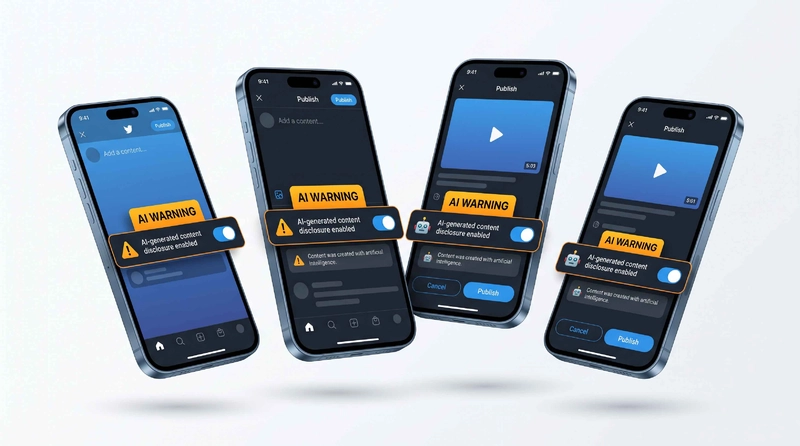
Major platforms such as YouTube and TikTok also require creators to disclose when their content contains synthetic media. Violating these rules may result in account restrictions or removal.
Additional Rules for Virtual Influencers Targeting Children
Using virtual influencers to target children comes with additional legal responsibilities.
The FTC’s COPPA (Children’s Online Privacy Protection Act) sets strict requirements for collecting personal information from children under 13. Specifically, brands must provide parents with clear notice about what information they collect and how they use it.
Character-driven marketing to children also requires higher ethical standards.
Beyond legal compliance, brands risk losing trust if children feel they were intentionally influenced by a fictional character without understanding the commercial intent.
Promoting products that are restricted or inappropriate for children using the virtual influencer may also violate advertising regulations.
Brands should avoid persuasive tactics that could be considered deceptive or manipulative.
Platform-Specific Rules for Virtual Influencers: Instagram, TikTok, YouTube, and More
Beyond government regulations, major platforms define rules for how brands can use AI influencers and disclose synthetic content.
Virtual Influencer Account Ownership Rules on Major Platforms
Virtual influencer accounts operate under the same Terms of Service as human-managed profiles. That said, as the account is a synthetic persona, the business must handle ownership and compliance.
Major platforms such as Instagram and YouTube generally hold the account owner or responsible business entity accountable for content posted through the account.
Your brand is responsible for establishing clear legal ownership. Do not expect platforms to manage IP character rights, and keep in mind that having a social media account alone is not enough to secure ownership.
How TikTok, Instagram, YouTube, and Other Platforms Handle AI Labels
Major platforms take a similar approach to labeling highly realistic AI-generated content. This approach includes a combination of manual settings and automated metadata detection.
While all these platforms require labeling for realistic AI-generated content, their specific thresholds differ. For example, YouTube focuses on realistic altered media, while TikTok requires disclosure for realistic images, audio, or video. Meta, on the other hand, provides specific tools for organic photorealistic video or audio.
Consequences for non-compliance vary by platform and scenario, ranging from reduced reach to account penalties.
The C2PA (Coalition for Content Provenance and Authenticity) standard also helps platforms identify provenance metadata added by supported AI tools.
For example, images generated with DALL-E may include embedded provenance metadata. With C2PA, the platform can automatically detect it and apply an AI-generated label.
If metadata is absent, creators may still be required by platform policies or applicable laws to disclose the use of AI.
Most platforms have native tools for this purpose. On TikTok, creators can use a disclosure toggle during publishing. On YouTube, they can indicate AI use through the disclosure options in YouTube Studio.
Unlabeled realistic AI content may be flagged by detection models or removed entirely. Repeated violations can lead to demonetization or even account suspension.
What Type of Content Platforms May Restrict or Remove
Major platforms may restrict or remove content that violates their AI or community policies. As mentioned earlier in this virtual influencer compliance guide, full suspension for deceiving viewers is also likely:
- Unlabeled AI-generated content that may mislead audiences into believing it is authentic.
- Posts or videos in which AI influencers imitate the identity or likeness of a real person without authorization.
- Fake testimonials generated with AI, or videos in which a virtual influencer pretends to be a real person while promoting a product or service.
- Spreading misinformation via AI-generated content and virtual influencers, particularly about health or medical topics.
- Any content that violates standard community guidelines, such as non-consensual sexual content and hate speech, is subject to removal and permanent account bans. This rule applies to both human-led content and synthetic media.
Steps to Take After an Account Suspension or Content Removal
- If your account is suspended or content is removed, save all communications from the platform, such as suspension notices and screenshots of the reported violations.
- Review the platform’s Community Guidelines and Terms of Service to identify exactly which rules you allegedly violated.
- Avoid unofficial account recovery services. In most cases, submitting an appeal through the platform is straightforward. Find the Appeal or Request Review button within the app or in the official help center.
- Provide a concise explanation of why you believe the enforcement action was made in error. If relevant, include supporting evidence, such as proof of account ownership or rights to the content.
- Avoid submitting multiple appeals, as doing so may delay the review process. Submit one complete appeal, then wait for the platform’s response.
- If your account was compromised, secure your email account and reset all related passwords. Enable two-factor authentication (2FA) to reduce the risk of unauthorized access.
Contracts Every Brand Needs Before Launching a Virtual Influencer
Earlier in this virtual influencer legal guide, we explained why brands need a strong written agreement when working with agencies or freelancers to create an AI influencer.
This section covers the key terms every agreement should include.
What Your Agency or Production Agreement Must Include
Standard influencer agreements are not enough because virtual influencers involve unique ownership and AI-related issues.
Explicitly addressing intellectual property ownership and AI-specific legal risks is critical.
As discussed earlier, the agreement should include a work-made-for-hire provision, but it should not stop there.
Contracts must contain clear assignment clauses on agency or vendor transfers all rights, including the underlying 3D model and protectable creative elements, to the brand upon payment.
The agreement should also include representations and warranties confirming that the AI tools and source materials used to create the influencer do not infringe third-party intellectual property rights. This helps reduce the risk of future infringement claims.
Purely AI-generated work is usually not copyrightable, as discussed earlier in this virtual influencer guide.
So, the contract must mandate that the agency document meaningful human creative contributions that may support future copyright claims.
Define your ability to modify and repurpose the character across all platforms. Without those rights, your brand may be unable to use the character in future campaigns, including paid advertising.
Essential Terms for Brand Partnership and Sponsorship Agreements
Ensure you include these terms in brand partnership and sponsorship agreements:
- Detailed scope of work. Define what you expect from the creator.
- Compensation and payment terms. Specify schedules and any late payment penalties.
- State who owns the final assets and determine the scope of usage rights.
- Mandate that all sponsored content must include clear disclosures in line with FTC guidelines.
- Define restricted periods or specific competitors the influencer is strictly prohibited from promoting.
- Outline the approval process before the influencer publishes sponsored content.
- Define the conditions under which either party can terminate the agreement.
- Add provisions that allow termination if the influencer’s content creates reputational harm or violates important regulations, such as child advertising standards.
- Define a framework for handling conflicts.
Virtual Influencer Brand Safety: Protecting Your Reputation
AI influencers are subject to many of the same oversight requirements and ethical expectations as human influencers.
That’s why brands need to treat these digital assets as extensions of the company. Protecting your AI influencer brand safety requires attention to several areas, from representation choices to content oversight.
- Diversity Washing: The Risks of Synthetic Representation
Diversity washing occurs when brands use virtual influencers to create an appearance of inclusivity, such as adopting specific ethnicities or gender identities, primarily for commercial purposes. This superficial representation can backfire and jeopardize a brand’s reputation.
Avoid cliché stereotypes and invest in thoughtful character design supported by research to reduce the risk of backlash.
Full transparency also helps brands reduce the risk of legal complaints and reputational damage.
If a character represents a specific community, the brand should support that representation with meaningful involvement from that community, or else failure is highly likely.
In our article, Famous Food Mascots That Became Brand Icons, we reviewed cases where brands retired characters after controversies involving specific communities.
- Consequences of Problematic Content Created by AI Influencers
Earlier, we explained that those who control and publish the content will be held accountable. As expected, saying “the AI did it” is not a valid defense before courts or regulators.
In these cases, your brand is exposed to risks such as defamation lawsuits and FTC enforcement for deceptive advertising. The risk increases if consumers rely on false information created by virtual influencers, potentially leading to class-action lawsuits.
In more serious cases, individuals involved in approving or managing the content may also face personal legal exposure if courts find evidence of willful misconduct or negligent oversight.
Human Oversight and Content Approval for AI Influencer Campaigns
The most important thing you must learn in this virtual influencer guide is that you should ensure humans remain involved in the content creation process.
Human-in-the-Loop (HITL) is a content approval framework that requires humans to check AI-generated content before publication.
This workflow does not need to cover every minor task. Instead, brands should apply it to high-impact activities, such as external communications or content involving sensitive social issues.
Build this review process into your production workflow rather than treating it as an afterthought. Every piece of virtual influencer content should pass through an approval process that records decisions, including who approved the content and when.
To improve the process over time, make sure feedback from human reviewers is captured and reused. This feedback can become operational data that helps improve the AI system’s safety settings over time.
Another benefit is that documenting human involvement can help demonstrate the creative contribution required for potential copyright protection of your virtual assets.
AI Influencer Authenticity and the Uncanny Valley
The biggest risk is not that an influencer is virtual; it is when audiences feel misled about what they are seeing.
Why Audience Trust Depends on How Authentic Your AI Influencer Appears
Authenticity signals a genuine experience, which is why audiences tend to trust characters that feel consistent and believable.
Giving AI influencers recognizable human traits can help close the credibility gap. For example, a virtual influencer with a distinct personality and consistent behavior is more likely to build audience trust.
On the other hand, forced or overly polished authenticity can create skepticism and make audiences feel misled.
This not only weakens the character’s connection with audiences but may also expose the brand to legal risks if consumers believe they were deluded.
For a deeper look at how audiences perceive AI-generated personalities, read our article “Virtual Influencer Authenticity: Do AI-Made Personalities Feel Real to the Audience?”
How the Uncanny Valley Affects Virtual Influencer Perception
Realistic AI influencers that closely resemble humans but contain subtle imperfections can trigger an unsettling reaction. This phenomenon is called the uncanny valley and creates psychological discomfort, making audiences feel uneasy or less connected to the character.
These characters may struggle to build an emotional connection with audiences and, in some cases, may appear inauthentic. As a result, consumers may reject the persona, and brands may face reputational risks if they create the impression of intentional deception.
Virtual Influencer Ethics: Transparency and Social Impact
Brands that intentionally hide the synthetic nature of a virtual influencer risk ethical criticism and losing audience trust. This section of the virtual influencer legal guide explores the social impact of using AI influencers without full transparency.
When AI Influencers Cross the Line Into Audience Manipulation
When a virtual influencer crosses the line from persuasive marketing into deceptive manipulation, failing to disclose its artificial nature becomes an ethical concern.
Presenting a virtual character as a real person with lived experience may constitute deceptive advertising and can violate consumer protection laws or FTC disclosure requirements, depending on the circumstances.
Without clear disclosure, people may make purchasing decisions based on the perceived opinions or experiences of a fictional persona. If consumers believe they were intentionally misled, the brand can face legal claims as well as regulatory scrutiny.
Failing to disclose that an influencer is AI-generated leads to unnecessary legal and reputational risks.
Beyond that, compliance is increasingly mandatory, and brands that cross this important ethical line may be targeted by courts and regulators for violating consumers’ rights.
Avoiding Harmful Representation in Virtual Influencer Design
Harmful character design can create controversy with the communities a virtual influencer represents. Brands can reduce this risk by following a thoughtful design process:
- Research the cultural context behind the character and base design choices on credible sources.
- Ask for help from members of the community you aim to represent to prevent unintended microaggressions.
- Confirm that the persona’s appearance and cultural markers are not only relatable but also respectful. Don’t fall for false aesthetic trendiness in design.
- Apply HITL (that we talked about earlier in the virtual influencer legal guide) to review AI’s output. LLM models may be subject to inherent biases that can be disrespectful to particular demographics.
Ethical Responsibilities When Targeting Younger Audiences
Children’s Online Privacy Protection Act COPPA may apply when a virtual influencer operates through a child-directed website or online service, or when the operator has actual knowledge that it is collecting personal information from children under 13.
When COPPA applies, the operator generally must obtain verifiable parental consent before collecting, using, or disclosing personal information covered by the rule, subject to specific exceptions.
Beyond legal requirements, brands should prioritize age-appropriate design and safe-by-default principles when developing a virtual character for younger audiences.
Children often cannot distinguish between AI-generated content and interactions with real people. For this reason, brands should provide clear disclosures to reduce the risk of misleading or overly dependent relationships between young audiences and virtual characters.
Above all, avoid persuasive or addictive design features that take advantage of children’s developmental vulnerabilities. All digital interactions must respect children’s rights to privacy and protection from exploitation.
Read more: “AI Influencer Ethics: Transparency and Solutions in AI Marketing”
Understanding Data Privacy Requirements for Virtual Influencers
Data privacy is a highly sensitive area when brands use AI influencers across different campaigns. Read this section of the virtual influencer legal guide to ensure your brand respects consumers’ rights and reduces potential risks.
Data Collected Through Virtual Influencer Interactions
The data collection process is usually similar to collecting data by human influencers. Brands use this information to personalize content and refine engagement strategies in future campaigns.
Tracking how followers interact with content is a common approach to data collection. For example, brands may analyze which types of posts followers like or share.
Businesses can also identify consumer preferences and interests by analyzing the content audiences engage with most.
Like interactions with human influencer campaigns, brands can also gather personal information by asking direct questions.
Privacy Compliance Requirements for Virtual Influencer Campaigns
The following principles help brands stay compliant with major privacy and AI regulations:
- GDPR and Data Protection: Core principles include data minimization and purpose limitation. Adopt a lawful basis for processing personal data.
- Transparency and Disclosure: Clearly label synthetic media so audiences understand they are interacting with a virtual character. Presenting AI characters as real humans with lived experience can expose brands to civil liability and regulatory enforcement, depending on the circumstances.
- AI Act Integration: Conduct risk or impact assessments where required and monitor automated decision-making or profiling to meet applicable transparency obligations.
- Protection of Minors: Adhere to safety-by-default and privacy-by-design in every step of the development process. Where COPPA or another applicable children’s privacy law applies, verifiable parental consent may be required before collecting covered personal information.
Brand Compliance Checklist for Virtual Influencers
The following checklist helps your brand comply with the key legal and regulatory requirements for using virtual influencers.
Before Your Launch
Before launching your AI influencer, make sure the following requirements are in place:
- You fully own the character. A signed contract that explicitly assigns full IP rights from the creator to your brand can secure your ownership, as explained earlier in this virtual influencer legal guide.
- The character does not closely resemble a real person’s appearance or voice without authorization.
- All third-party assets, such as music and images, are legally licensed for commercial use. This prevents copyright infringement claims.
- A designated reviewer approves every piece of content before publication. This person should ensure that no AI-generated content is published that meets the brand’s safety and ethical standards.
Before Every Post
Keep these rules in mind before publishing any content involving the AI influencer:
- Clearly label sponsored content where it is plainly visible. Maintaining transparency around paid partnerships helps your brand meet FTC disclosure requirements.
- Disclose when a character is AI-generated if audiences could mistake it for a real person. Clear disclosure helps reduce legal risks and strengthen audience trust.
- Use only accurate and verifiable product claims in testimonials and promotional content.
- Always double-check that a designated team member has approved the content before publication to ensure it meets brand standards and legal requirements.
After Publication
Your responsibility does not end after publishing AI-generated content.
- Confirm disclosures are in the right place and have not been edited out. Audit your content frequently to ensure people understand that the influencer is virtual.
- Monitor audience reactions and comments to identify confusion about the influencer’s AI-generated nature, then address misunderstandings promptly.
- Remove or correct misleading content as quickly as possible, and republish it only after addressing the issue.
Building Brand Safety Into Your Virtual Influencer Strategy
In this article, we provided a comprehensive virtual influencer legal guide to teach you all the AI influencer legal risks and every aspect of AI-generated content moderation. As discussed throughout this guide, virtual influencer compliance requires careful planning from the beginning and ongoing oversight after launch.
Partnering with a virtual influencer agency helps avoid legal and ethical pitfalls.
If you need a virtual influencer that aligns with your brand’s core values while meeting legal and ethical requirements, our experts at Dream Farm Agency can help. Contact us to discuss your project and establish a clear agreement that protects both parties.
FAQ
Who owns a virtual influencer that an AI tool or agency helped create?
Ownership depends on your specific contract with the agency or the terms of service of the AI tool used to generate the character.
Do virtual influencers have to disclose that they’re not a real person?
Not necessarily. But it is best to avoid misleading consumers and clearly disclose the virtual nature of an influencer when required by applicable laws (such as the EU AI Act for deepfakes and AI interactions) or platform policies regarding photorealistic synthetic content.
Is FTC disclosure required for sponsored virtual influencer content?
Yes, virtual influencers are subject to the same FTC endorsement guidelines as human creators. This means that any material connection or sponsorship must be clearly disclosed.
Can a virtual influencer be based on a real person’s appearance or voice?
You should never base a virtual influencer on a real person without obtaining explicit written consent. Using someone’s likeness without permission can trigger severe legal action, including “right of publicity” and privacy lawsuits.
Can someone else legally create a deepfake or unauthorized copy of your virtual influencer?
While you own the intellectual property rights to your character, unauthorised copies still occur, but they only constitute infringement if they violate human-authored creative elements or create consumer confusion. You can pursue legal action against infringers, but you must actively protect your brand assets to ensure you have the necessary documentation to enforce those rights.