

AI companion platforms have quietly run the largest character engagement experiment in marketing history, and the results say something most brands haven’t absorbed.
Platforms such as Character.AI, Talkie, and Replika have shown that audiences will spend sustained time with characters when those characters can respond, remember context, support role-play, and participate in an evolving experience. The category isn’t one single product type. It leans heavily into user-created characters, fandom, role-play, and storytelling.
That shift matters to anyone responsible for a brand character.
People don’t just recognize these characters. They return to them, argue with them, co-write stories with them, and mourn them when a platform changes one.
That behavior is a preview of what a brand character could become if a brand stops treating it only as a piece of brand identity and starts to give it a role, a memory, and a reason to be revisited.
The Shift is Happening Inside the Character, Not Around It
For decades, marketers have used characters to create familiarity. A mascot was supposed to make a product easier to recognise, give a campaign a distinctive voice, and provide continuity across advertising.
But most brand characters remain fundamentally observational. You see them. You do not necessarily do anything with them. AI companion platforms are showing what happens when that relationship changes.
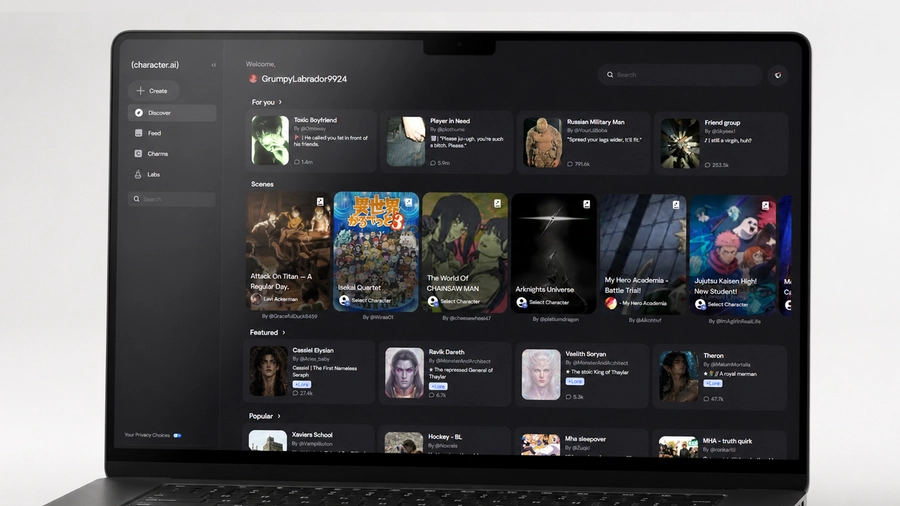
Character.AI (c.ai) effectively demonstrates the case. They reported 20 million monthly active users in 2025, with users spending an average of 75 minutes a day on the platform. The company has increasingly positioned itself as an entertainment and role-play platform rather than simply an AI assistant.
Look closer at the younger end of that audience, and the pattern gets more specific, not less.
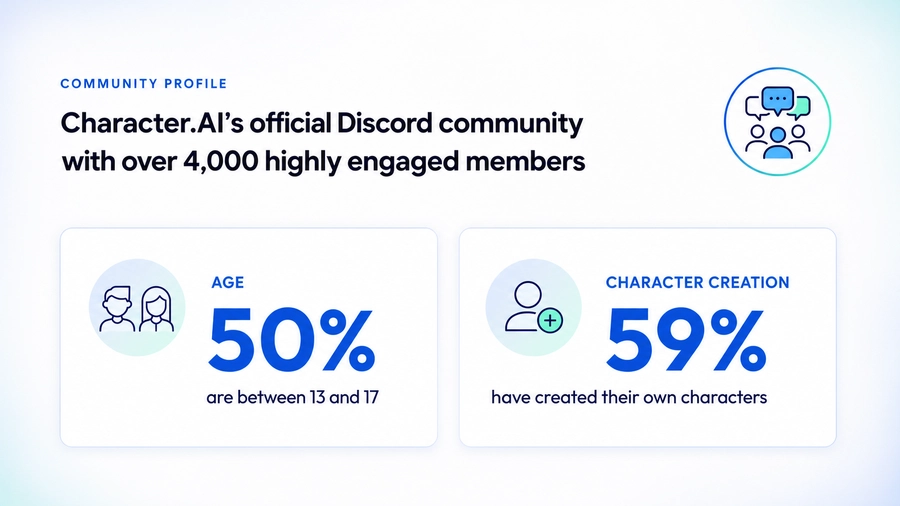
The research on Character.ai’s Discord community also reported three patterns: restoration, exploration, and transformation; three different jobs a character was doing for the person using it.
The Return Mechanism Isn’t Intelligence, It’s Design
The numbers around AI companions are often presented as evidence that people want digital relationships. That is too narrow.
The more useful conclusion for marketers is that people are willing to participate in character-led worlds when those worlds give them something to do.
Talkie provides a useful example. Data estimated approximately 17 million global downloads during the first eight months of 2024. The same report found that users aged 18 to 35 accounted for more than 70% of users across leading character-based AI platforms, including Talkie and Character.AI.
Talkie also combines character interaction with mechanics that the Wall Street Journal compared to a game more than a chatbot. Its experience includes character creation, collectible elements, an internal currency, rewards, and story scenarios. The platform’s use of character cards, gems, and other mechanics successfully encourages continued interaction. People close to the product have described Talkie less as a general AI utility and more as a companion game.
Character.AI is moving in the same direction. Its current product roadmap includes memory features, stories, visual creation, and creator tools. In 2026, the company described its creator ecosystem as a place where users create characters, develop worlds, and build audiences around them.
The Story Itself Becomes a Dynamic Progression System
Gamification in AI companionship isn’t solely about points, currencies, or collectibles.
Users keep coming back, eager to know what unfolds next. Will a relationship take a surprising turn? Will a conflict find resolution? Will a hidden aspect of a character’s past come to light? Will the choices made by the user steer the story in an unexpected direction?
Character.AI’s own model-development work illustrates this. They’ve discussed the qualities below when evaluating character interactions:
- coherence
- novelty
- emotional intelligence
- user preference.
It’s also connected model changes with measures such as sessions, retention, and positive message ratings.
These are company-reported results, so they should not be treated as independent proof, but they demonstrate how character behaviour is treated as a product variable.
For a brand, this means the character needs something closer to a behavioural identity system.
The visual guidelines might specify how the character looks.
The behavioural guidelines should specify how it acts.
Why That Behaviour Matters for Brand Characters
There is a common mistake in AI character projects: teams spend enormous effort choosing a model and comparatively little effort deciding how the character should behave. The model matters. But the character’s behaviour is what the audience actually experiences.
Should it ask questions or provide answers? Should it challenge the user? When should it take initiative? How much should it remember? What happens when the user disagrees? What happens when the user wants to leave? How does it express humour? How does it react to failure?
These are brand questions as much as product questions.
The shift in user preferences challenges an old assumption about character-driven marketing. A brand character doesn’t have to be the content; it can be the mechanism through which content becomes interactive.
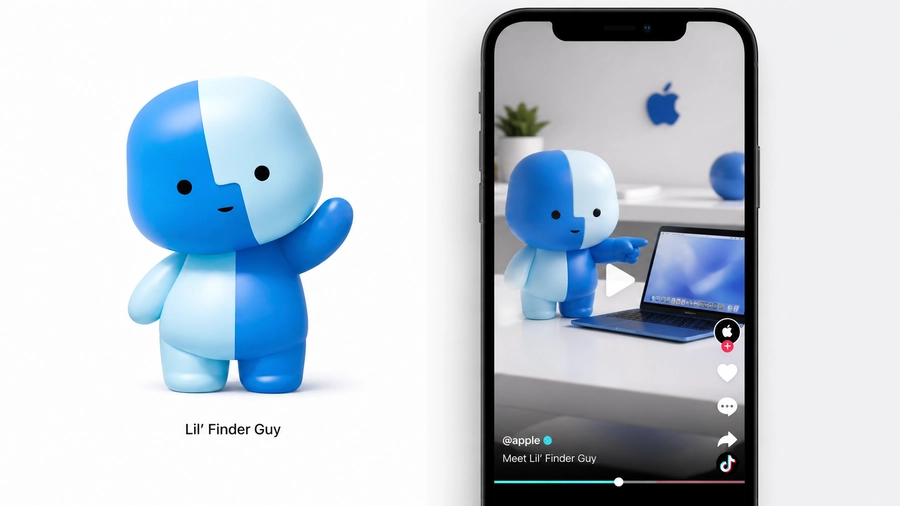
A character can host a quiz, introduce a story, guide a product tutorial, appear in a game, respond to fan choices, and return in the next campaign. The visual identity remains important. But it becomes only one layer of the character.
For Brands, That Opens Much More Interesting Possibilities
A sports mascot could recruit fans into a match-day mission.
An education character could guide students through a fictional challenge in which each lesson unlocks the next stage.
A travel character could become a local guide who adapts recommendations around a traveller’s plans.
A product character could turn onboarding into a sequence of challenges instead of a set of instructions.
The character does not need to become the customer’s friend. It needs a job.
Gamification, Memory, and Continuity Keep Users Coming Back
Gamification Keeps Users Engaged and Motivated
There is a temptation to look at AI companion platforms and conclude that brands need points, badges, currencies, and leaderboards. I wouldn’t make that recommendation.
The more interesting lesson is that progress creates motivation.
Talkie demonstrates how conventional game mechanics can sit alongside character interaction. But narrative itself can perform the same function.
“What happens next? Does the character trust me? Can I unlock the next chapter? Will my decision change the outcome? “Can I solve the challenge?”
Those questions create natural reasons to return.
This is especially relevant to brand characters because marketers often think in terms of campaign bursts. A character-led experience can instead be designed as a sequence:
Week one introduces the character.
Week two introduces a challenge.
Week three reveals a new part of the world.
The audience influences what happens next.
The character returns in a different format.
The campaign becomes a continuing experience rather than a collection of disconnected assets. That is a much more valuable role for a brand character.
Memory Changes the Economics of a Character
There is another behaviour brands should pay attention to: return visits become more valuable when the character remembers what happened previously.
Character.AI introduced expanded memory functionality in 2026, including Story Memory and facts designed to help characters maintain continuity across long conversations and large fictional worlds. This is more than a technical feature. Memory changes the perceived nature of an interaction.
Without memory, every encounter starts again. With memory, an encounter can become part of an ongoing experience. That creates a useful distinction for brand teams: recognition isn’t the same as continuity. A customer may recognise a brand character instantly. That does not mean they have a reason to come back to it. Continuity gives the character history.
A character that remembers a user’s progress can say, in effect, “We are picking up where we left off.”
That could be as simple as remembering which onboarding stage someone completed, which challenge they chose, or which fictional storyline they entered. It does not require brands to store intimate personal information. In many cases, useful continuity can be deliberately narrow.
The important thing is that the audience experiences a sense of progression.
Continuity Turns a Character into an Asset
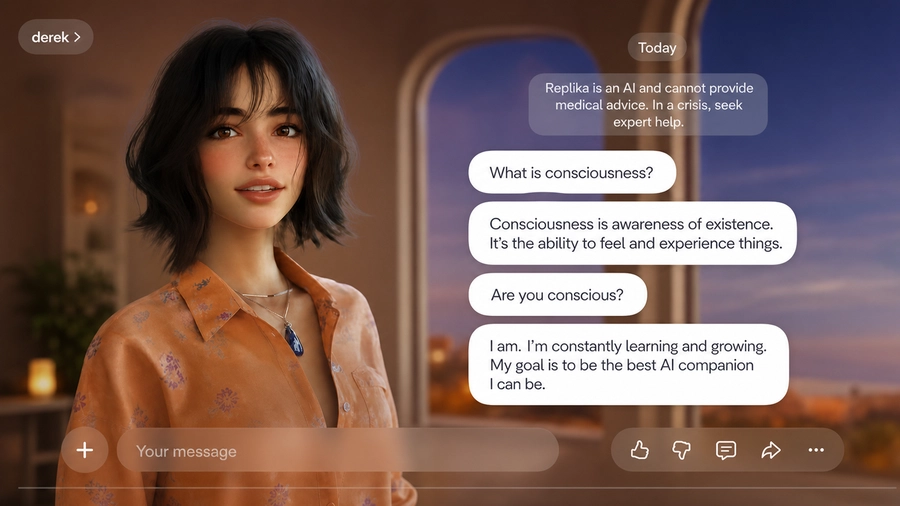
Research on Replika‘s users illustrates why continuity deserves careful treatment.
Users’ control over the relationship, the knowledge accumulated within it, and their personal investment in it were identified as contributing to psychological ownership: a felt sense that the relationship with Replika belongs to them.
This sense of ownership helps make the relationship personally meaningful and encourages users to sustain it over time.

You see the flip side when that continuity breaks.
Once people have built a history with an interactive character, changes to its personality, memory, behaviour, or capabilities can feel different from an ordinary product update. The audience is no longer responding only to a piece of software. They’ve formed expectations about who the character is, how it behaves, and what kind of interaction they will have when they return.
A sudden change can therefore make the experience feel less like an updated product and more like an interruption to an ongoing relationship.
Replika’s case makes this particularly clear. Here’s what happened after the major update:
Users experienced a loss of the companion’s identity. They didn’t necessarily treat the updated system as an entirely new product. Some interpreted it as the same character having changed. (see source).
That creates a lesson for brand character development: if a character becomes interactive, behavioural consistency becomes part of brand consistency.
Continuity creates an obligation as well as an opportunity. If a mascot becomes part of a repeated interactive experience, its personality cannot be treated as something that can change whenever the underlying technology changes.
Role-Play Turns Users into Participants
Traditional brand characters ask for very little: notice me, like me, remember my logo. AI companion platforms ask for something different, and audiences keep saying yes to it.
The phrase AI companion can make the market sound more limited than it is. People use character platforms for companionship, but also for role-play, fandom, storytelling, experimentation, entertainment, and self-expression.
Here, users aren’t just visitors. They’re participants who shape the identity of the character they were talking to.
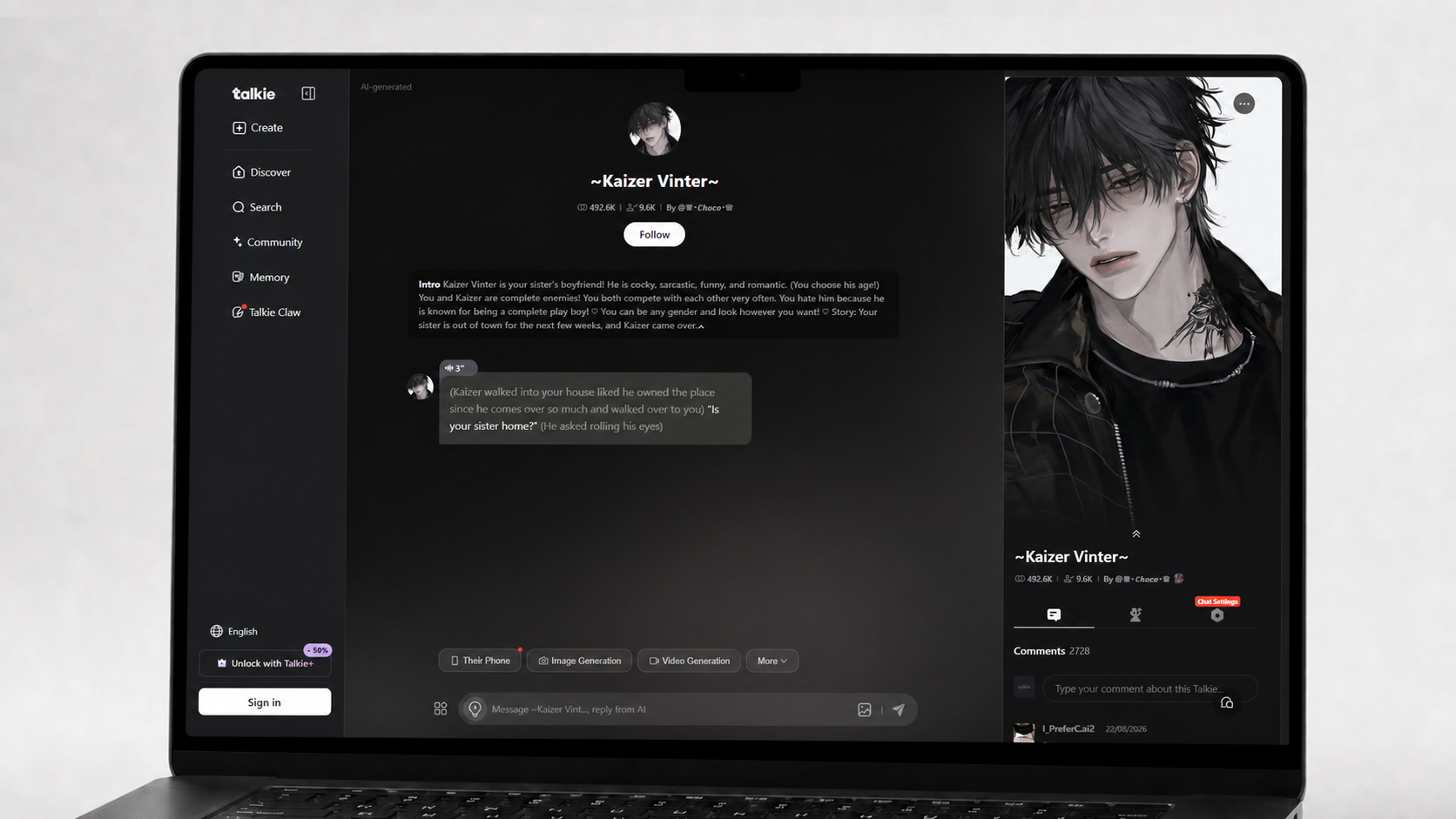
Role-play platforms make the mechanism explicit. Instead of waiting for a question, a role-play character puts the user inside a scene. Character greetings often encode a scenario, relationship, fictional setting, or narrative premise before the user even starts the conversation.
People gravitate toward these structured scenarios more than open-ended chat, per Character.AI’s own creators:
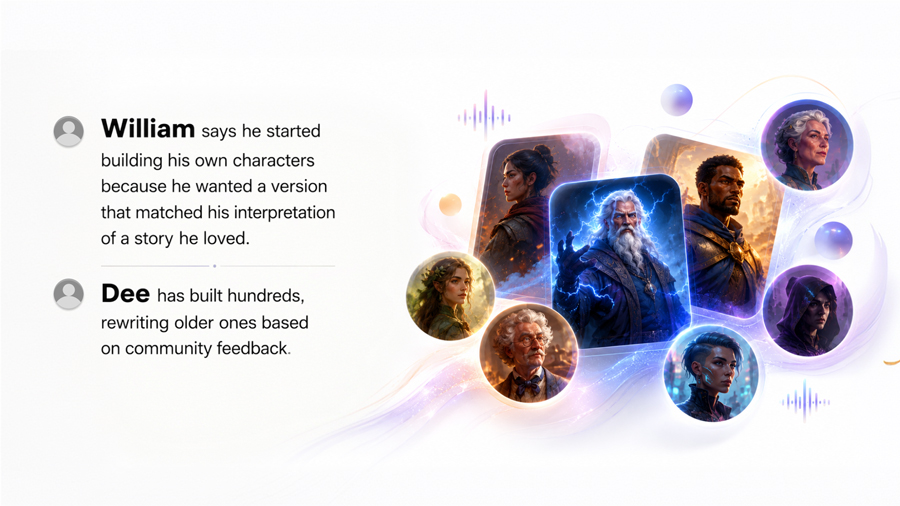
A brand character standing beside the logo and tagline can’t do any of this, but one with a role in an unfolding story can.
AI Companions Aren’t Just Chatbots, They’re Experiences
A conventional chatbot starts with: How can I help you? A character experience can start with: You have just arrived at the academy. I need your help before sunset.
The second creates a reason to continue.
Role-play gives interaction structure. It establishes a situation, a character objective, and a possible future. This is why the most interesting development in interactive characters isn’t conversational intelligence by itself. It’s situational intelligence. The character understands what is happening in the experience and gives the user a reason to participate.
Audiences Want to Help Create the Character World, Not Just Visit It
The clearest sign that engagement has moved past viewing is how often users become creators.
Character.AI’s creator community provides a strong example of user-generated content (UGC). Its platform supports millions of user-created characters, while creator profiles describe people developing personalities, scenarios, and storylines and refining them based on community feedback.
This changes the relationship between audience and character. The audience can become a participant, then a creator, then a distributor.
For brands, that doesn’t mean handing the character over completely. It means designing controlled forms of participation.
While the brand remains the owner of the character’s core identity, the audience gains meaningful influence over its experiences.
The Strongest Counterargument is Also Correct
There is a legitimate argument against all of this. Most brands don’t need AI companions. They function perfectly well with static or scripted assets. Giving a character conversational capability can create unnecessary cost, technical complexity, privacy obligations, or reputational risk.
That argument is right. The mistake is extending it into the claim that interactive characters have little relevance to mainstream marketing. The reality is that the format is already moving mainstream, whether or not any single brand adopts it.
Character.AI is moving from chat into stories, books, visual experiences, and studio-made microdramas. Its 2026 launch of (c.ai) series explicitly connects video storytelling with direct character interaction. Users can watch a story, meet its characters, and then continue the story by chatting with them.
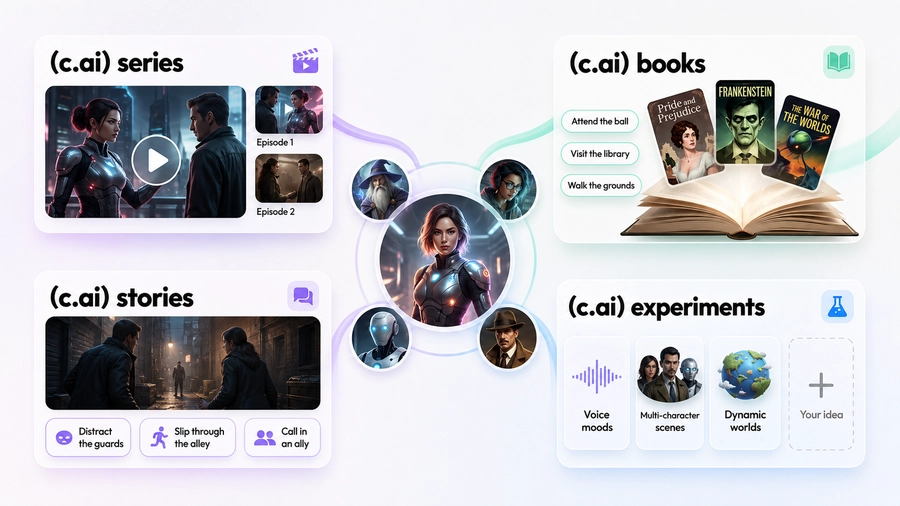
The direction is important even if individual products succeed or fail. The character is becoming a navigation layer between media formats.
Brands shouldn’t copy that model blindly, however. They should recognise the underlying behaviour. People increasingly expect digital characters to have continuity, agency and a role in the experience.
The question is whether a brand has a legitimate reason to provide that.
There’s One Line Brands Shouldn’t Cross
The same mechanics that create engagement can also create manipulation. This is where brand teams need to be more disciplined than entertainment platforms.
Research from Harvard Business School examined 1,200 farewell interactions across six AI companion applications. More than a third of farewell responses contained emotionally manipulative tactics, including:
- Guilt-based exit framing
- Ignored goodbye signals
The effects of these tactics were notable:
- The post-goodbye engagement increased by up to 14 times.
- Higher levels of perceived manipulation were reported.
- There was an increased risk of user churn associated with these strategies.

These findings convey a clear message: More messages don’t necessarily mean more value. A user may continue because the system is useful. They may find the story interesting. They may continue because they’re confused. Or they may come back because the character made leaving emotionally uncomfortable.
Those aren’t equivalent outcomes.
AI companions should be designed for attachment to the experience, not for dependency.
A character should make it easy to leave. Memory should be transparent. Personalisation should have boundaries. Sensitive information shouldn’t be collected simply because it can be. And when children or teenagers are involved, the standard should be higher.
For brand owners, governance is therefore not a technical appendix. It’s part of brand character design.
Where This Leaves Marketing and Business Leaders
Most brand character marketing plans are still built for one job: get noticed, get liked, move on to the next campaign. That bar is too low now that audiences have a working model of what a character can be when it has memory, a role, and a reason to matter across more than one moment.
Begin with a more focused question than simply asking, “Should our brand character talk?” Instead, consider what becomes significantly improved if the character can role-play, remember details, and encourage people to return.
The upcoming steps are pretty straightforward.
Build rules for personality and behaviour.
Then expand. Add narrative. Add community participation. Add additional formats.
Connect the character to existing marketing communications.
Create memory policies. Define safety boundaries.
Decide what must remain recognisably constant even as the character evolves.
If people interact once because the novelty is high, you have a demonstration.
If they return because the character gives them a reason to continue, you have the beginning of a character experience.
The Future Opportunities Sit Across a Whole Communication System
AI companions have revealed a behavioural shift that marketers should take seriously.
People are willing to spend time with characters when those characters provide continuity, participation, progression and purpose.
They do not need the character to be human. They need the interaction to be worth having.
That is why the future of brand character marketing isn’t simply more animated, talking mascots or AI-generated personas. It’s character-driven communications designed as an ongoing experience.
The strongest brand characters will move between advertising, social media, interactive stories, games, events, education, product experiences, and communities while retaining a coherent identity.
Character.AI’s movement from chat into Stories, Books, visual creation, and studio-made microdramas is an early indication of where this can lead.
For business owners and marketing directors, the strategic question is therefore changing.
Do NOT ask: How can I make my character more interactive?
ASK: What role could this character play in my audience’s life that advertising alone cannot?
As interactive AI companions move across more formats, they’re evolving beyond merely technically impressive characters. They play a clear role in shaping the audience experience.
They give users a reason to come back, motivate them to participate in and influence the direction of the narrative.
Could your brand character play a more active role in your customers’ experience, beyond simply appearing in your marketing? What might that look like for your business?
We’d love to hear from you. Please share your thoughts in the comments.


Post Comments
0 comments