
Key Takeaways
- Character-led digital experiences are digital interactions where a brand character plays a central role. In these experiences, the brand mascot shapes the overall experience by guiding users and communicating messages.
- Brand characters turn passive viewers into active participants and make the experience more engaging.
- Businesses must clearly define the character’s role, personality traits, level of involvement, and set boundaries to create successful character-led experiences.
- Characters can host digital experiences across websites, apps, social platforms, games, immersive environments, and physical spaces.
- The character needs to respond to users naturally to create a smooth, personalized interaction.
- Brands must invest in long-term relationships instead of using characters as temporary campaign elements.
Using brand characters in digital experiences adds personality to the experience and enhances the user journey. By doing this, brands encourage passive viewers to actively interact with the content. This leads to higher brand recall and customer loyalty over time.
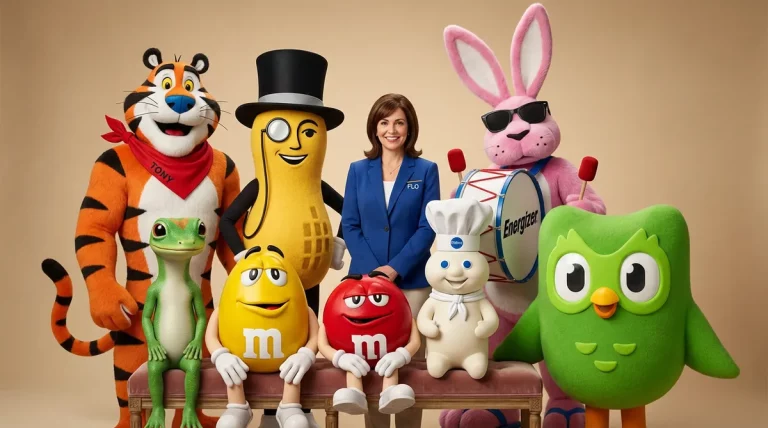
Brand characters can take different forms, including brand mascots, virtual influencers, virtual brand ambassadors, conversational AI characters, or brand-owned IP characters with their own story worlds. These categories may overlap, but they are not the same. What makes an experience character-led is not the type of character or who owns it, but the active role the character plays in shaping the interaction.
In this blog, we examine character-led digital experiences and discuss how they can change the way companies interact with users. Featuring brand mascots in the experience alone is not enough. You must have a clear plan for the character to play a central role and add value.
This article explains what makes a digital experience character-led and compares it with the decorative use of characters in a table. It also covers five types of character-led experiences, their benefits, practical steps for integrating them, and the technologies behind them.
What Makes a Digital Experience Character-Led?
A digital experience becomes character-led when a character plays an essential role in the experience and influences how users encounter or participate in it, rather than functioning as visual decoration.
In such experiences, the character helps people understand the message clearly and remember the brand.
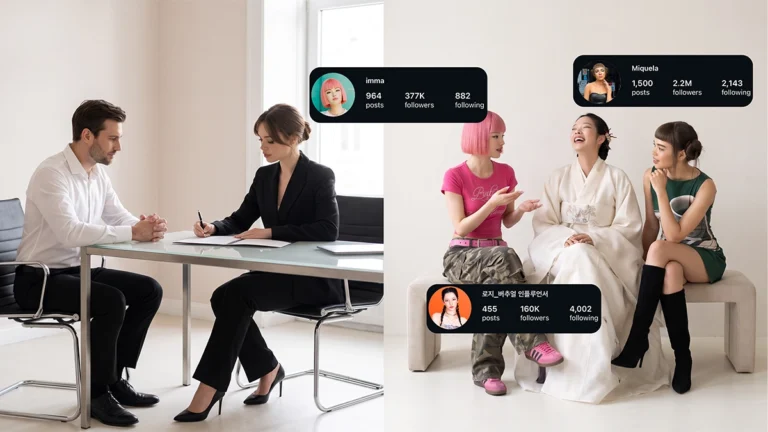
Virtual influencers (digital characters) play a major role. They influence the experience’s storytelling and the way users interact with content, and as a result, can turn interested users into customers while strengthening loyalty.
A character-led digital experience usually has these key elements:
- A defined role: The character can act as a host, guide, storyteller, advisor, entertainer, companion, or participant.
- Meaningful involvement: The character plays an active role in the user journey, story, content, or interactions.
- A consistent identity: The character’s personality, voice, appearance, and behavior stay recognizable throughout the experience and across platforms.
- A clear purpose: The character helps achieve a specific user or brand goal, such as entertaining users or promoting a product.
Disney’s partnership with Snapchat is a good example that shows how brands can give their characters a central role in digital experiences. Check this video:
Mickey Mouse Snapchat Filter Lens & More News!
Character Decorative Presence vs. Character-Led Experience
Here is how character-led experiences differ from decorative character use:
|
Aspect |
Decorative Character Use | Character-Led Experience |
|
Primary role |
The character is mainly a visual element used to make the brand look more appealing. |
The character actively guides users through the experience and contributes to how users interact with the brand. |
|
Purpose |
Creates visual recognition and adds personality to marketing materials or interfaces. |
Helps communicate brand values, guide users, simplify information, or improve engagement. |
|
User interaction |
Users see the character but do not meaningfully interact with it. |
Users engage with the character through conversations, guidance, storytelling, personalization, or interactive features. |
|
Impact on brand experience |
The character reinforces brand identity but does not significantly change the experience. |
The character becomes part of the experience design and shapes how users perceive and navigate the brand. |
|
Examples |
A mascot displayed on a website banner or social media graphic. |
An AI-powered brand character that answers questions. |
|
Consistency |
The character may appear occasionally without a defined personality or long-term role. |
The character has a consistent identity, voice, behavior, and purpose across multiple touchpoints. |
| Strategic value | Primarily supports visual branding and recognition. |
Builds deeper relationships by combining storytelling, interaction, and brand utility. |
5 Types of Character-Led Digital Experiences
This section explores five primary types of character experiences for brands.
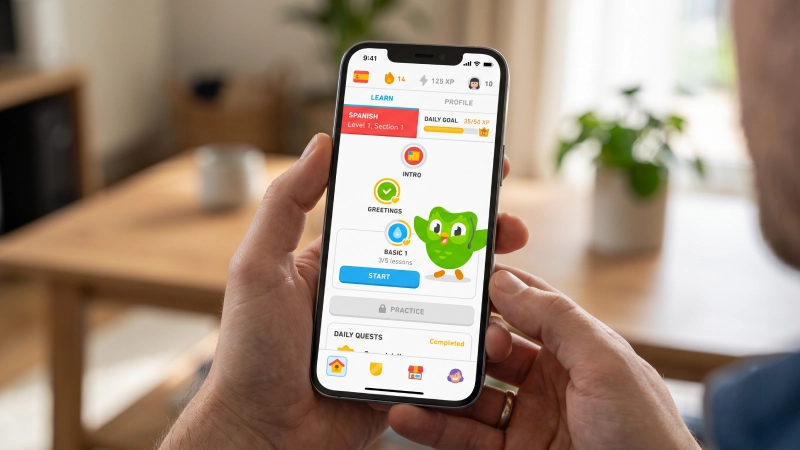
1. Web, App, and Interface Experiences
You can integrate character-led experiences into your business’s website and mobile app. Any type of digital interface can incorporate the character to offer a more intuitive experience that reflects the brand’s values and voice.
Duo in the Dulinogo app is a strong example that demonstrates how brands can give their mascot the primary role when users interact with content.
2. Conversational and Personalized Experiences
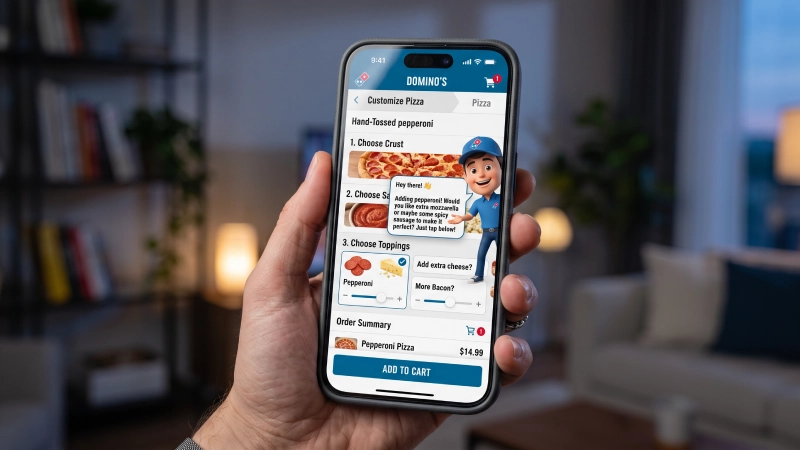
Characters can serve as virtual brand assistants by helping users:
- Answer their questions.
- Recommend products.
- Provide support on different matters.
- Guide users through services with natural conversations tailored to their level of knowledge.
The AI-powered character becomes the brand’s representative, addressing users’ concerns and helping them find what they need. What makes this approach more effective is that characters can personalize responses based on factors such as user preferences and previous interactions.
This creates a better customer experience and offers several benefits for the brand.
Domino’s took this approach and created a voice assistant named Dom that helps consumers order pizza.
3. Social and Community Experiences
Several famous brands bring their characters into social platforms and online communities, where AI personas interact with audiences through posts and shared experiences. In these cases, characters can take the leading role in published content and also participate in trends to increase brand awareness.
Businesses can use their virtual influencer, virtual brand ambassador, or brand mascots to share updates and encourage participation. Engaging people through challenges, games, livestreams, or community-driven activities is another common technique to attract attention to the brand with the help of a digital character.
As mentioned, numerous brands already use their mascots on social media platforms, from KFC to Michelin Man.
4. Games and Gamified Experiences
Brands increasingly use their characters in games and gamified interactions to offer character-led digital experiences.
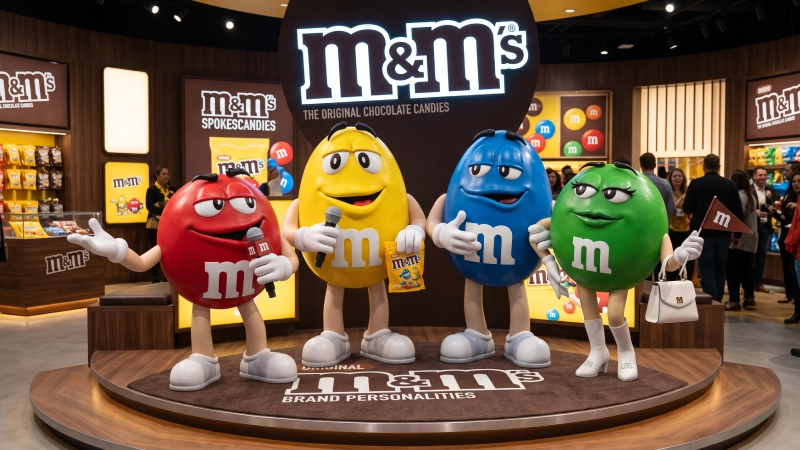
For example, M&M featured its famous spokescandies in digital games and interactive experiences it developed.
Characters in games and gamified experiences create challenges and reward participation. They guide players through the brand’s digital world and make interactions more entertaining and memorable.
Character-based gamification gives users a reason to actively participate, rather than passively view brand messages. This is how they create stronger engagement and provide value.
5. Immersive, Spatial, and Phygital Experiences
Placing brand characters in the center of the digital experience is not limited to traditional screens. Newer channels, such as immersive environments, can also provide opportunities for this approach.
Brands can use their mascots to guide users in the Metaverse. Integrating characters into AR experiences and other types of virtual worlds is becoming increasingly common.
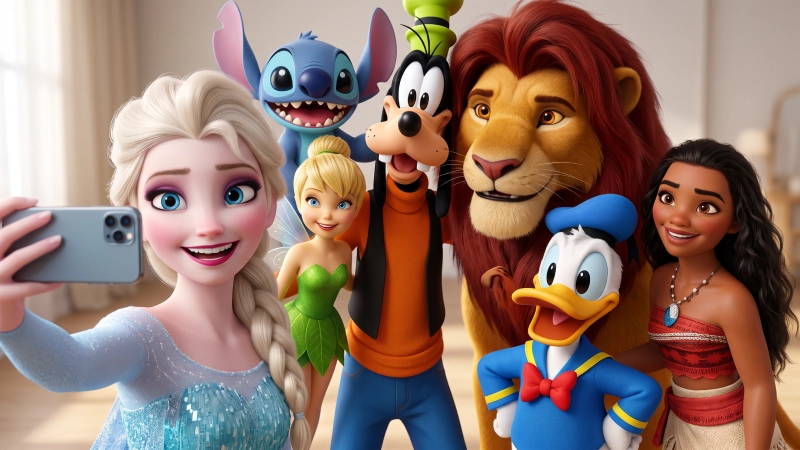
The Walt Disney Company uses its renowned characters in AR and immersive experiences across Disney Parks and digital platforms.
Famous characters, from Elsa to Mickey Mouse, not only entertain visitors but also create personalized moments for them, helping them find their destination and answer their questions.
How Character-Led Experiences Create Value
What is the point of creating character-led digital experiences? How do they benefit your business? This section answers these questions.
Making Complex Information Easier to Understand
People may struggle to understand products and advanced technologies when they have to rely only on static text or technical documentation. This is where digital characters become useful.
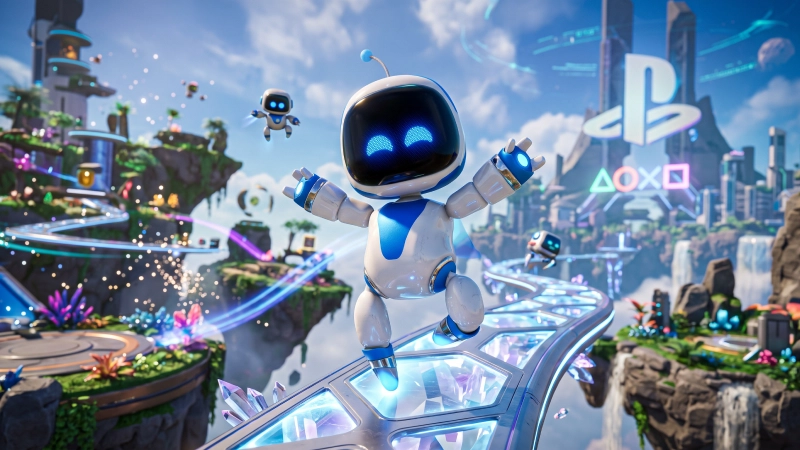
For example, Sony used Astro Bot to demonstrate PS5 DualSense controller abilities in action, rather than boring explanations. The character became so loved that the company gave the character its own game in 2024, which later won the Game of the Year award.
A well-designed character can convey information in a way that people easily understand. It can answer common questions and provide contextual guidance without overwhelming users.
We implemented this idea in our partnership with Williams Adley, which led to the creation of Wally the Owl. This character is designed to act as a guide, rather than a simple decorative element. The firm operates in a field where trust and expertise matter. That makes the mascot’s role even more important:
It can build trust and explain complex ideas without making the brand feel distant.
Supporting Navigation and Customer Tasks
Chances are, people abandon a digital experience when they get confused. Any inconvenience and unnecessary friction can increase task abandonment and prevent users from completing their intended actions.
With digital characters as guides, you will not leave users to navigate menus and try to find what they are looking for on their own.
AI-powered mascots take the role of a guide that answers common questions or assists with tasks such as onboarding, product selection, account setup, and troubleshooting.
Assigning this responsibility to a digital character with a familiar face both reduces friction and makes interactions feel smoother and more approachable.
Increasing Participation and Engagement
When people go through a digital experience with a digital character guiding them, they have someone to interact with. Given that, they can actively participate in that experience, ask questions, assess different choices, and learn more about a topic, all with the help of the character.
Knowing that capturing attention alone is not enough and brands must encourage users to engage with their content, this benefit of character-led digital experiences becomes more significant.
Creating Emotional Connection and Brand Recall
The most important advantage of a well-designed brand mascot is that it gives the brand a consistent personality across different touchpoints.
This unique personality helps people remember the brand more easily.
So, if a business can use the character strategically, it can transform functional experiences into memorable ones by creating an emotional connection.
This is how character-led customer experience contributes to emotional connection and brand recall:
- Consistency leads to a relatable personality that is more distinctive than a logo or interface alone.
- Constantly demonstrating the character reinforces the brand’s identity and makes future encounters easier to recognize.
- People are overwhelmed with business messages. Using digital characters allows brands to communicate stories and values in a way that can capture attention more effectively while making messages easier to remember.
- The character’s personality affects how people feel about a brand. As a result, if a character is helpful and empathic, consumers associate the same positive traits with the brand itself.
This is what we did for MacroPay: creating a character that gives the brand a recognizable personality across its digital presence. In other words, we made Coco part of how MacroPay communicates with its audience, making the brand feel more approachable.
A well-developed character can become a distinctive, valuable brand asset over time. Read more about this in “How Brand Characters Become Distinctive Assets.”
Building Community and Ongoing Relationships
By placing brand characters in the center of a digital experience, brands can build long-term relationships using an established, familiar personality.
Virtual influencers do not age. As a result, you can use them consistently across different campaigns for decades. This gives your brand a recognizable face that reminds people of your brand when they see it. So, encouraging ongoing interactions and building loyal communities becomes easier.
Characters can evolve as time passes through new stories and experiences, giving audiences a reason to continue following the brand rather than interacting with the brand only during one-off promotions.
Integrating the Character Into the Experience
Effective integration involves more than simply placing a character in an interface. The character needs a clear purpose and should behave consistently throughout the experience, with clear limits on when and how it appears.
The following steps show how to incorporate these personas into your brand’s digital experiences, from defining the role to setting boundaries.
Step 1: Define the Character’s Primary Role
Why do you want to involve the character in the digital experience? This is the first question that you must answer clearly to be able to define the character’s role. Defining the role prevents the mascot from drifting away and helps the character stay focused on its purpose.
You may use the character in digital experiences for:
- Guiding users through their journey.
- Explaining complex concepts in simple terms that your target audience can easily understand.
- Hosting virtual experiences, such as an event in the Metaverse.
- Entertaining users to deliver your business message more enjoyably and memorably.
- Assisting them with tasks they need to complete to move forward.
- Representing your brand and shaping the perception you want audiences to have of your brand.
- Supporting the brand’s story and its atmosphere.
Step 2: Decide How the Character Expresses Its Identity in the Experience
You must clearly define every detail of the character, from language and voice to timing and emotional expressions. How should the character use gestures and expressions? What animations would best reflect the character’s personality?
For example, Mr. Peanut has a gentlemanly personality that positions raw peanuts as a high-class snack. So, he cannot act playfully, as energetic characters, such as sports mascots, would.
In fact, in the second step, you bring the character’s personality to life through interactive behaviors. This is the key to consistency across campaigns, which we discussed earlier.
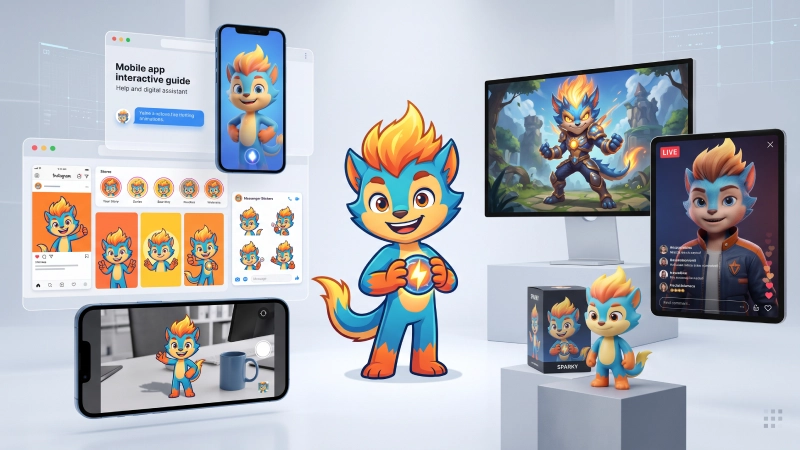
Key consideration: You can adjust the character’s behavior based on the platform where you use it, but only in a predefined framework.
Step 3: Decide the Character’s Level of Involvement
The character’s involvement level may vary in different digital experiences. In the third step, you must decide whether you want your brand mascot to be the primary host or act as a symbol of the brand’s identity.
In other words, you determine how much influence the character will have over the experience based on the user’s needs and the purpose of the campaign.
In some cases, the character only appears at specific moments, such as welcoming users or celebrating milestones. In other situations, the mascot can be present throughout the entire experience, guiding users in their journey.
A thoughtful decision at this stage prevents overusing characters that may backfire without adding value.
Step 4: Set the Character’s Boundaries
Setting clear boundaries helps maintain a balance between engagement and usability.
Defining what a character is prohibited from doing is as important as defining their responsibilities. This helps you avoid disrupting the user experience or making it feel restrictive.
Work with your team and creative partner to identify where the character should appear. In fact, you must determine where your mascot can add value throughout the user’s journey before creating character-led digital experiences.
Usually, we suggest our clients avoid making the character appear during every interaction, since it seems annoying to users.
Also, allowing people to dismiss, skip, mute, or bypass the character is highly recommended. In some cases, users prefer to move forward on their own. So, if a character appears frequently, they find it disturbing rather than helpful.
Technologies Behind Character-Led Digital Experiences
This section covers some technical concepts, but we explain them in simple terms to help you easily understand.
Animation and Motion Capture
These technologies bring digital characters to life. They give characters movement and physical behaviors that feel more natural. Proper animation and motion capture enable brands to communicate personality through gestures and body language.
Developers use animation to define how a character behaves and interacts with users in character brand experiences.
Motion capture adds more realistic human-like movements. The process is simple: A real person’s actions are translated into the digital character performance. Then, the mascot can act more naturally as if they were real people.
That said, perfect animation and movements do not necessarily result in creating a memorable digital experience.
Real-Time Character Technology (Real-Time Rendering)
Modern users expect high-quality, natural interactions with interactive virtual characters. With real-time rendering technologies, brand characters can react to interactions almost instantly. This technology enables:
- Immediate response to user inputs.
- More dynamic environments that adapt to users.
- Delivering a more immersive experience.
- Flexible content updates.
Even the most natural-looking characters are likely to lose their impact without real-time rendering abilities.
AI and Conversational Technology
The uncanny valley effect becomes more likely when the character does not communicate through natural language. AI and conversational technologies enhance the way a digital character speaks and make it sound like a real person talking.
These technologies also allow characters to better understand user input and adapt conversations based on context.
In character-based digital experiences, people expect conversational dialogues rather than fixed machine messages that feel creepy. When responses are tailored to users’ preferences and needs, they find the character more helpful and have a more positive experience.
With these technologies, brands can maintain a consistent voice across different user contexts.
AR, VR, and Spatial Technology
Spatial technologies like AR and VR open up new possibilities for brand characters. They allow the character to go beyond traditional screens by becoming a part of the digital environment.
Let’s take a look at the benefits of AR and VR in character-led experiences:
- Immersive character interactions: Mascots can walk side by side with users and appear within their surroundings through AR or exist in fully virtual environments through VR.
- Spatial storytelling: Brands can turn 3D spaces into the world where their stories unfold. This way, the story that the character narrates becomes more engaging and memorable. Also, users have more opportunities to interact with the character.
- Product and experience visualization: Characters can demonstrate product features more easily in spatial environments.
- Blended physical and digital experiences: With a bit of creativity, you can connect real-world locations and events with digital characters, creating more engaging experiences for your target audience.
Read more: “Designing Compelling AR & VR Mascots: A Deep Dive”
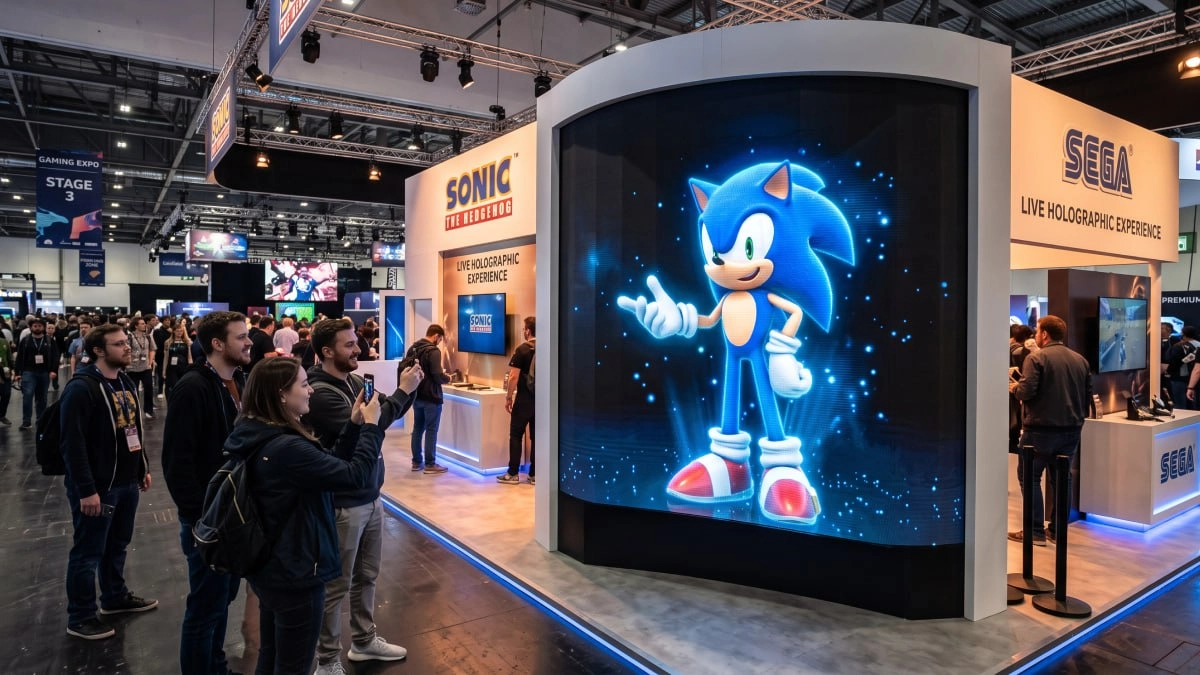
Holographic and Projection-Based Technology
These technologies are often used to create character-led experiences at events.
Users do not have to wear headsets or smart glasses, as is typically required with AR and VR. With holographic and projection-based technologies, digital characters appear in physical spaces as if they are truly there.
In exhibitions, brands can present digital characters at life size to greet visitors or answer questions. Synchronized animation via sensors, along with voice-enabled systems, allows them to react to visitors in real time.
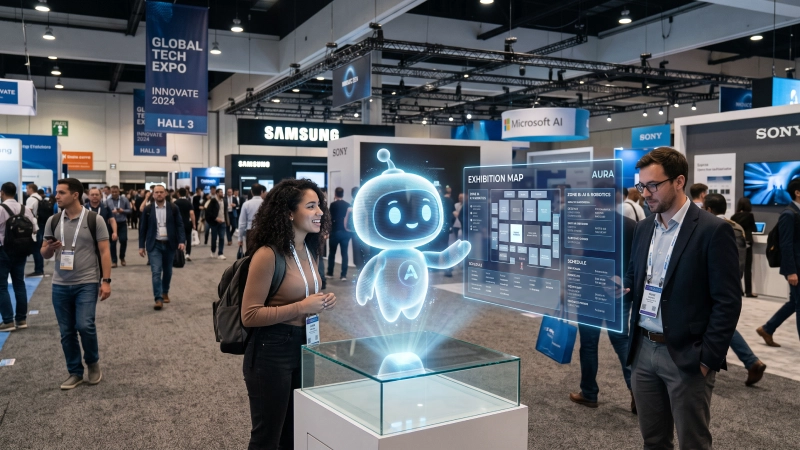
Real-time rendering also plays an important role by letting them adapt to the conversation context.
This particular technique is helpful for more effective storytelling as well. Naturally, people are more likely to pay attention to something they see in the space around them.
Virtual Worlds and Metaverse Platforms
As mentioned earlier, digital characters can take virtual world experiences to a new level. Actually, this relationship works both ways, and metaverse platforms also allow characters to play a more active role.
Brands can keep their mascot present across multiple visits and create a sense of continuity for users. Characters act as guides that help people find what they are looking for and improve their experience. Also, communicating the brand’s values and messaging becomes easier.
For a deeper look at this topic, read “Branding Beyond Reality | Exploring Opportunities in the Metaverse Landscape”
Interactive Displays and Smart Environments
Interactive displays and smart environments allow brand characters to become part of physical spaces. Digital characters can respond to user presence and actions through these displays.
This approach enables businesses to connect their brand mascots with real-world locations such as stores and exhibitions. As a result, it becomes easier to create more engaging, context-aware experiences. In particular, interactive displays and smart environments can:
- Enable responsive character interactions. Simply put, they react to user input dynamically.
- Allow characters to act as guides across physical environments. In a large expo, visitors often need help finding their way. Your mascot can step in to guide them.
The high level of interactivity that smart displays offer leads to memorable, character-led digital experiences. Another benefit is personalization. Characters can read the room and react based on factors like user behavior and preferences.
From a Single Experience to a Connected Character Ecosystem
Brands must use their characters in digital experiences strategically. Success depends on consistency. People must see and interact with the character repeatedly, across different campaigns and touchpoints. This is how you can make the most of your brand mascot and character-led digital experiences.
Strategic thinking and careful planning are critical. The character must have a clear purpose in each experience. Deciding the character’s level of involvement and setting clear boundaries also matter. A clear framework for using the character matters more than the technology behind it.
A character-driven marketing agency can help you develop a character that reflects your brand’s values and fits naturally into digital experiences.
Contact us to discuss your needs.
FAQ
What is a character-led digital experience?
A character-led digital experience is an interaction where a brand character plays an active role in guiding, assisting, entertaining, or communicating with users rather than simply appearing as a visual element.
Can an existing brand mascot be used in a digital experience?
Yes, existing brand mascots can be adapted into digital experiences by giving them new roles and interactions that fit digital environments. The key is to preserve the character’s established identity while using it to support user needs and storytelling.
Where can brands use character-led digital experiences?
Brands can use character-led digital experiences across websites, apps, social platforms, virtual environments, customer support journeys, interactive campaigns, and physical spaces enhanced with digital technology.
What are phygital character experiences?
Phygital character experiences combine physical and digital interactions by bringing brand characters into real-world environments through technologies such as AR, VR, interactive displays, or connected devices. They allow users to engage with characters across both online and offline touchpoints, creating a more connected brand experience.



Post Comments
0 comments