
Key Takeaways
- World Cup Willie marked the first FIFA World Cup mascot in 1966 for England, illustrated as a lion in a Union Jack jersey to capitalize on commercial opportunities and national symbolism.
- Subsequent FIFA World Cup mascots reflected host cultures, including Juanito as a sombrero-wearing boy for 1970 Mexico and Naranjito as an orange in kit form for 1982 Spain.
- Later FIFA World Cup mascot designs featured Zakumi as a leopard for the 2010 South Africa and Zabivaka as a wolf for the 2018 Russia, emphasizing local branding and scoring themes.
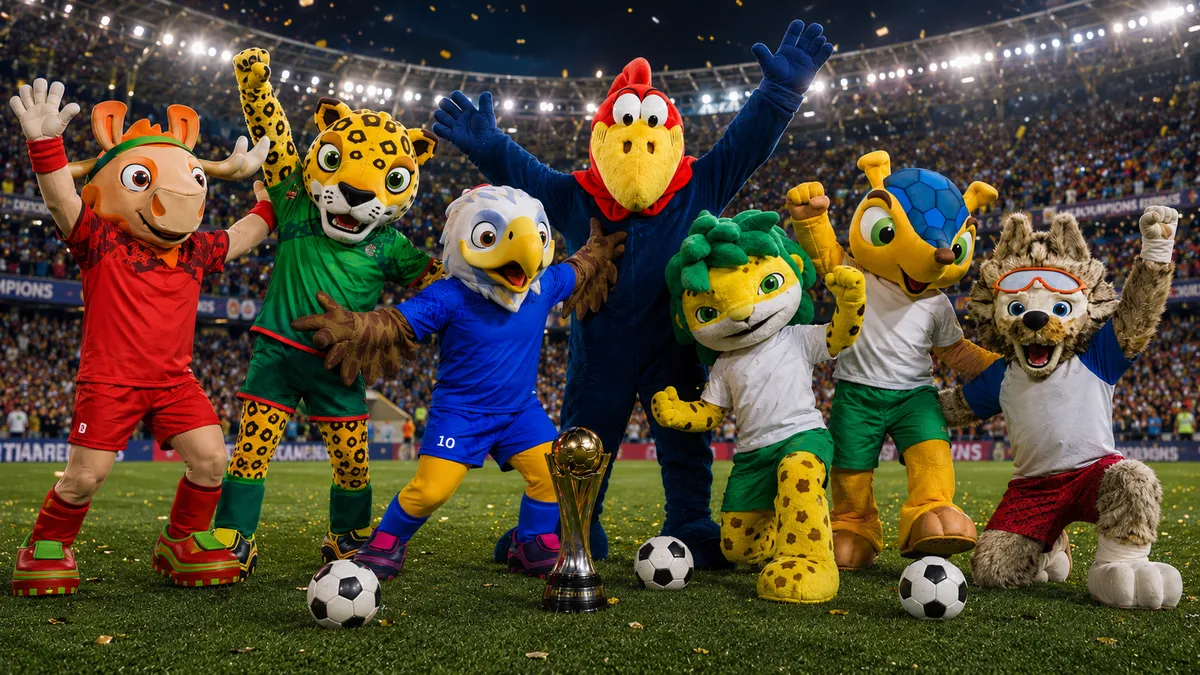
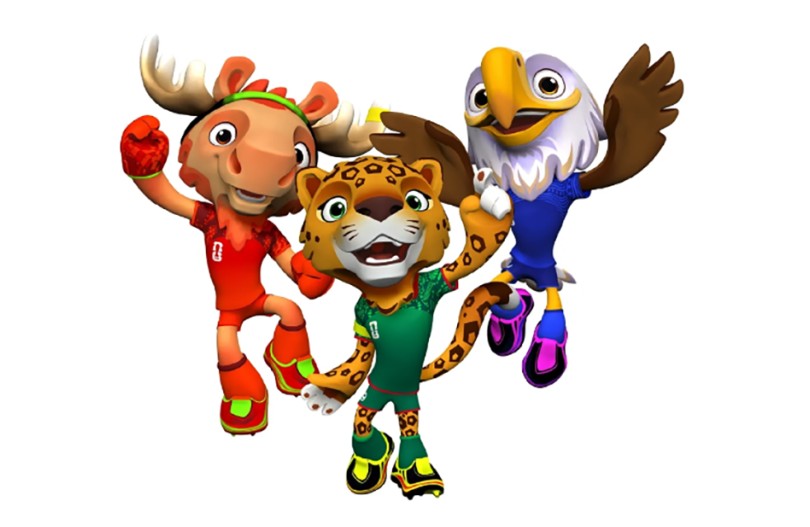
- The 2026 FIFA World Cup introduced three mascots for joint hosts: Maple the Moose for Canada, Zayu the Jaguar for Mexico, and Clutch the Bald Eagle for the USA.
- Tournament organizers can refine future FIFA World Cup mascots and sports mascots by prioritizing strong cultural ties and fan engagement to avoid criticisms related to stereotypes or irrelevance.
It’s 2026. You’re in the stands at a FIFA World Cup match, the crowd roaring, flags waving, and a giant figure struts across the pitch, pumping up the fans. They’re FIFA World Cup Mascots.
We know these oversized quirky characters are more than plush toys to wave at crowds; they’re cultural icons, marketing magic, and the soul of the tournament’s vibe.
The world of World Cup mascots is wild and wonderful; their history, their impact, and the story behind them are worth exploring.
With the FIFA World Cup 2026 on the horizon, hosted by the USA, Canada, and Mexico, it’s a perfect time to reflect on what these iconic sports ambassadors have contributed to the global stage.
Let’s take a closer look at them and the stories that brought them to life.
What Was the First FIFA World Cup Mascot?
The FIFA World Cup didn’t always have mascots.
From 1930 to 1962, the tournament relied on the games alone to draw crowds.
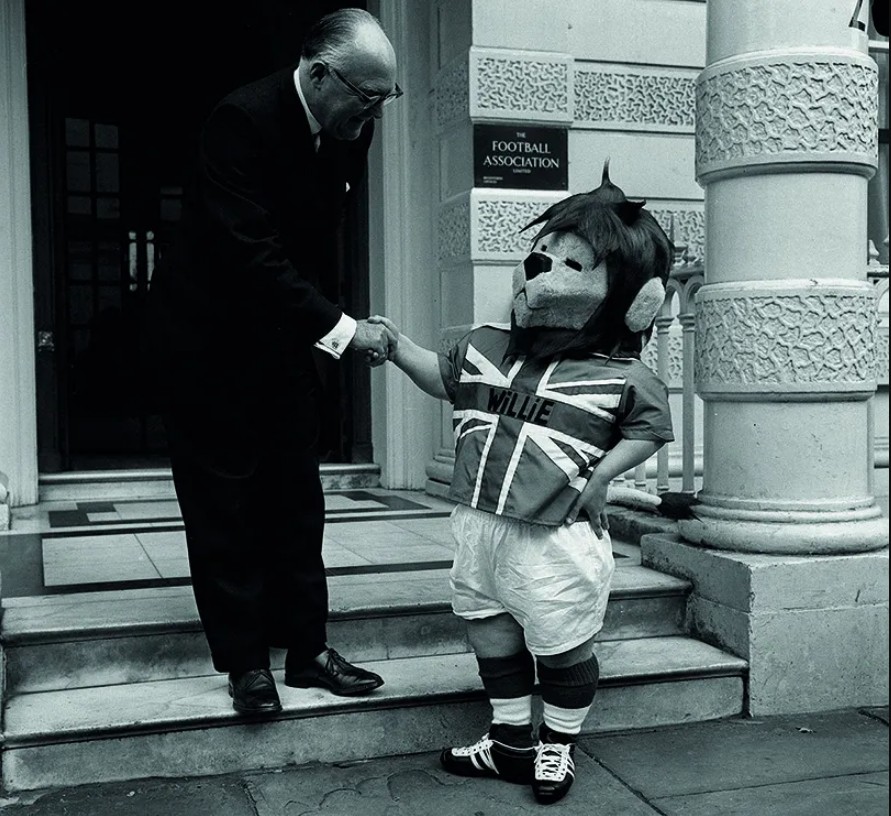
That changed in 1966 when England introduced World Cup Willie, a lion decked out in a Union Jack jersey.
Designed by Reg Hoye, a British commercial artist and a kids’ book illustrator, Willie was a trailblazer; one of the first mascots for a global sporting event.
The FA’s World Cup organizing committee reached out to Reg, requesting a mascot design that would capitalize on the tournament’s commercial potential.
And one of the most memorable artistic works was created.
A lion that was the symbol of British pride stole soccer fans’ hearts and sparked a tradition that’s now 56 years old.
How World Cup Mascots Evolved Over Time
Since Willie, every World Cup has had a mascot, each reflecting the host nation’s character.
Keep reading because we’re going to walk through the highlights of this colorful history.
Juanito (Mexico, 1970): A Mascot with Human Touch
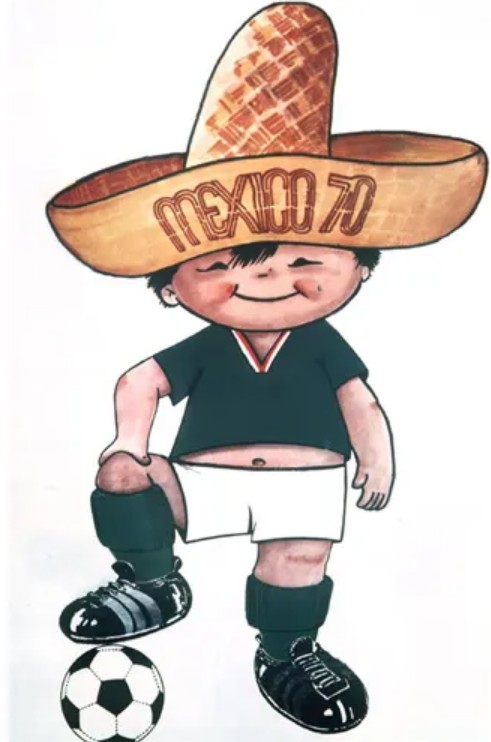
In 1970, Mexico introduced Juanito; a boy in a Mexican green kit and a large classic sombrero that represents the fun and youthful spirit of soccer while capturing Mexico’s warmth and love for the world’s most popular sport.
Juanito was designed by Juan Gonzalez Martinez, an advertising graphic designer.
There was criticism regarding the design, however.
Some called the design generic, lacking the flair to stand out globally. They believed the sombrero leaned into stereotypes, arguing that it felt more touristy than authentic.
Tip and Tap (West Germany, 1974): Symbols of Unity
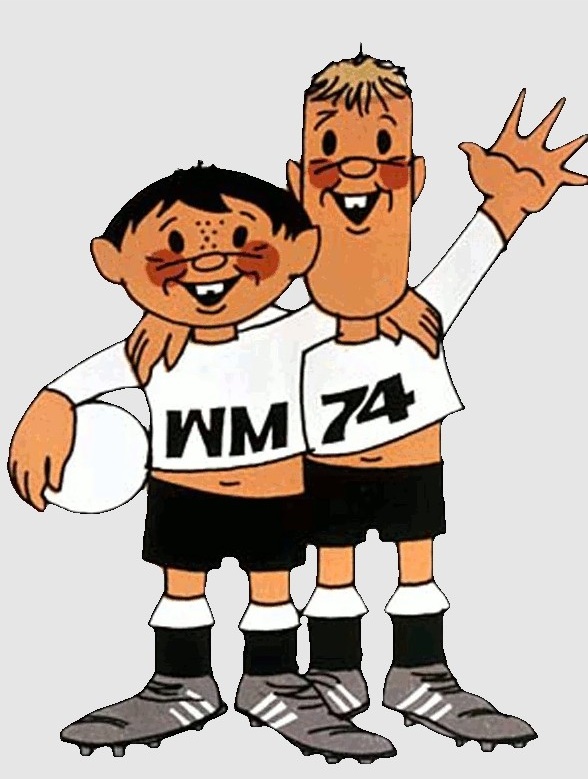
Two happily smiling boys symbolizing unity between East and West Germany, designed by Horst Schafer
Their shirts bore “WM” (Weltmeisterschaft, German for World Cup) and “74.”
The design was simple but meaningful, reflecting a divided nation’s hope for togetherness.
Still, some found the design too plain, almost like stock cartoon characters. The lack of vibrant colors or dynamic poses disappointed some soccer fans as well.
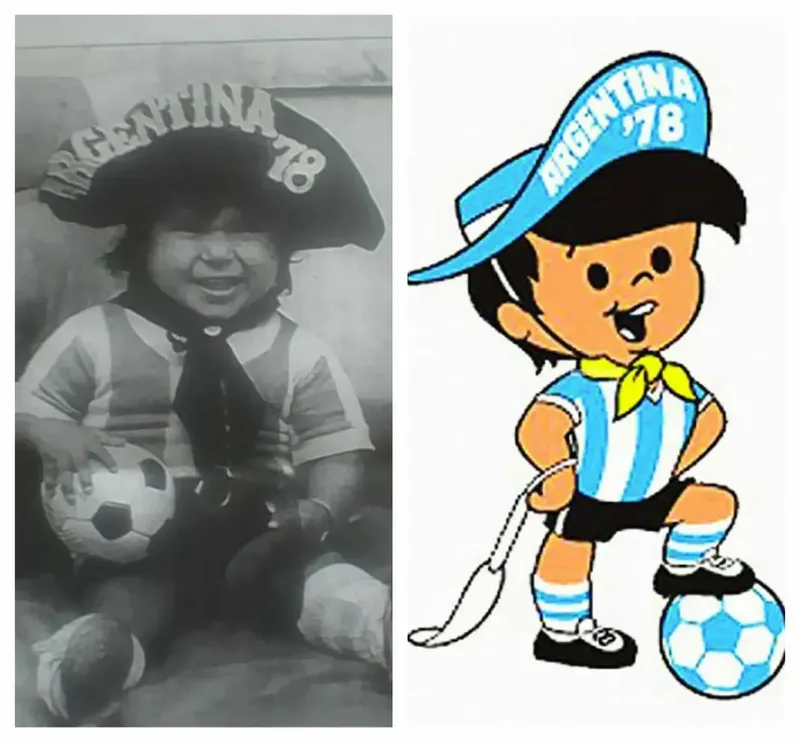
Gauchito (Argentina, 1978): Local Appeal
Gauchito, echoed Juanito.
A gaucho (Argentinian horse rider) boy with a whip and neckerchief, designed by Nestor Cordoba, he celebrated Argentina’s cowboy culture. Critics noted similarities to Juanito, but Gauchito’s local flair made him a hit.
Some noted its striking similarity to Juanito, calling it a lazy copy. The whip and scarf felt niche, falling to engage those unfamiliar with Argentinian horsemen’s traditions.
Naranjito (Spain, 1982): Getting Creative
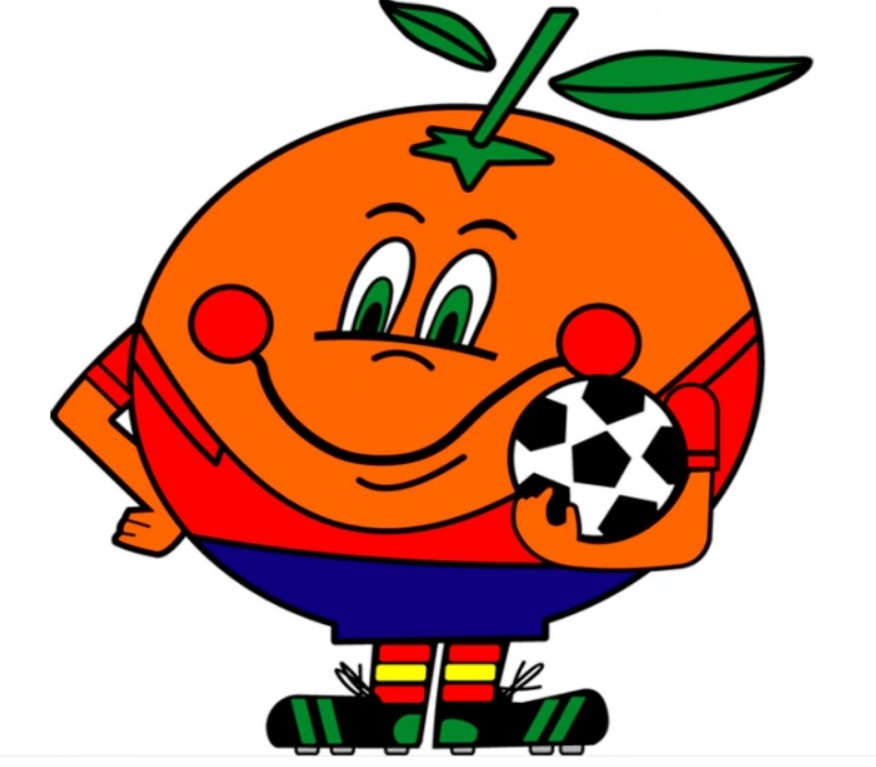
Spain’s 1982 mascot, Naranjito, broke the human mold.
This orange, designed by María Dolores Salto and José María Martín Pacheco, wore Spain’s kit and grinned widely. Oranges are a Spanish staple, and Naranjito’s round shape mimicked a football; a clever touch. It was a bold move away from animals or people, setting a trend for quirky designs.
The cartoonish design was criticised, though, bordering on childish. The orange concept confused non-Spanish audiences, who didn’t connect it to Spain’s citrus heritage.
Pique (Mexico, 1986): Reflecting Mexican Cuisine
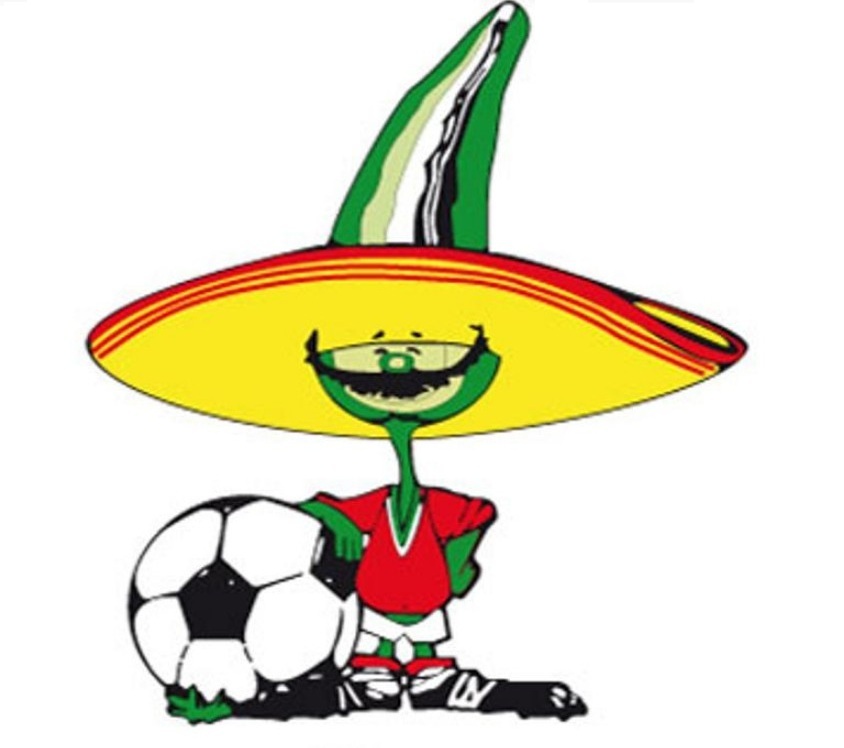
A jalapeño pepper with a mustache and a colimote sombrero, featuring Mexican football team colors while reflecting Mexican cuisine’s spice. Sounds cool!
Pique leaned into stereotypes. That’s why Sport-Billy Production’s FIFA World Cup mascot design sparked controversy for its exaggerated imagery. Some even called it racist.
Ciao (Italy, 1990): A Wild Approach
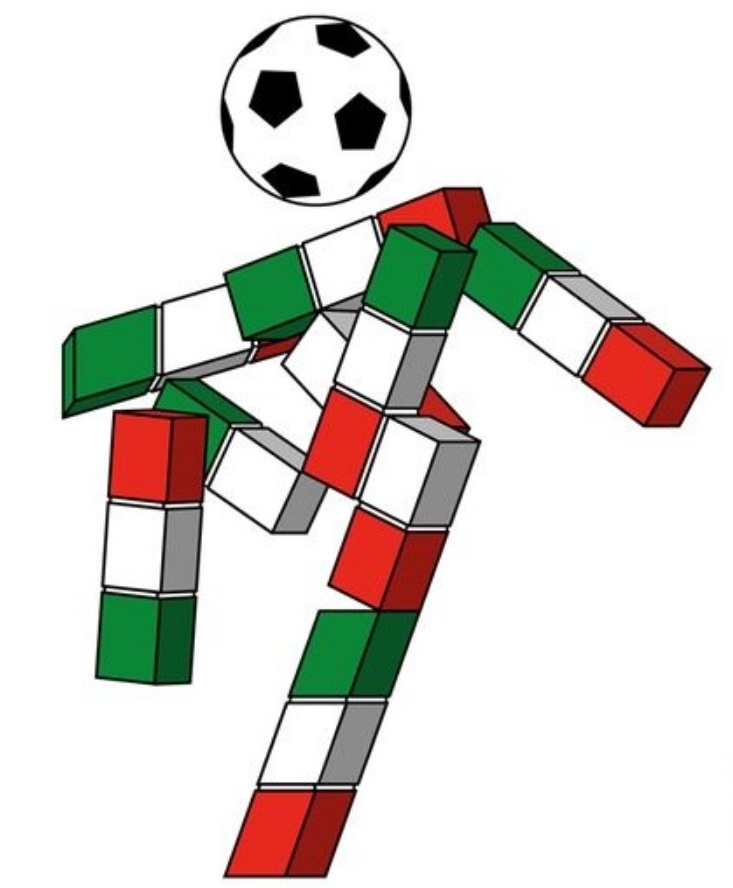
This mascot was a stick figure with a football head in Italy’s red, white, and green colors. Abstract and divisive!
Lucio Boscardin, the Italian creator of Ciao, was inspired by a stop sign. While he was stuck in street traffic, he developed the out-of-the-box concept of the mascot.
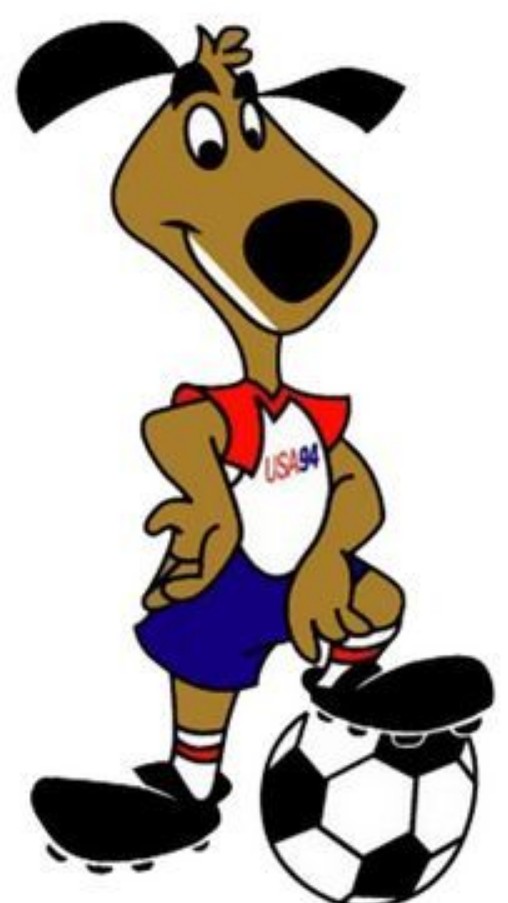
Striker (USA, 1994): Universal Appeal
Given the backlash against earlier mascots, Warner Bros.’ design looked like a safe choice.
Dogs are universal; everyone loves them. And Striker’s red, white, and blue kit screamed Americana.
Yet, the striker wasn’t immune to criticism. Some disapproved of it for being uninspired, calling it a generic dog with no deep tie to American culture beyond the flag colors. Some felt it leaned too heavily on cartoon clichés.
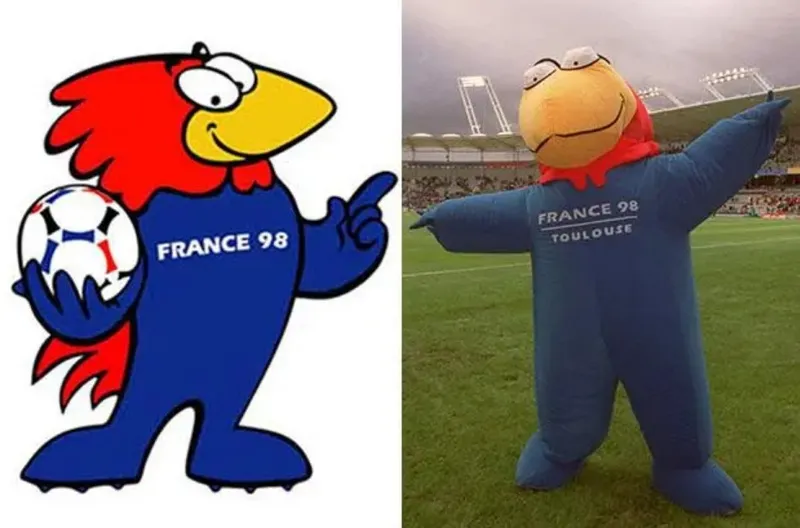
Footix (France, 1998): Loved by Fans
The FIFA World Cup Mascot 1988 was designed by Fabrice Pialot: A Gallic cockerel colored red and yellow, and a symbolic resonance of the French nation.
The design concept was particularly striking.
Per a research paper, Footix was a symbol of the bird announcing the arrival of dawn, symbolizing the rebirth of the sun, a powerful figure in pagan worship. The name “Footix” cleverly combines “football” and “Asterix,” linking it to French comic culture.
Footix immediately stole soccer fans’ hearts, with FIFA reporting over 1 million plush toys sold. Yet, some felt the Asterix nod was too niche for global fans.
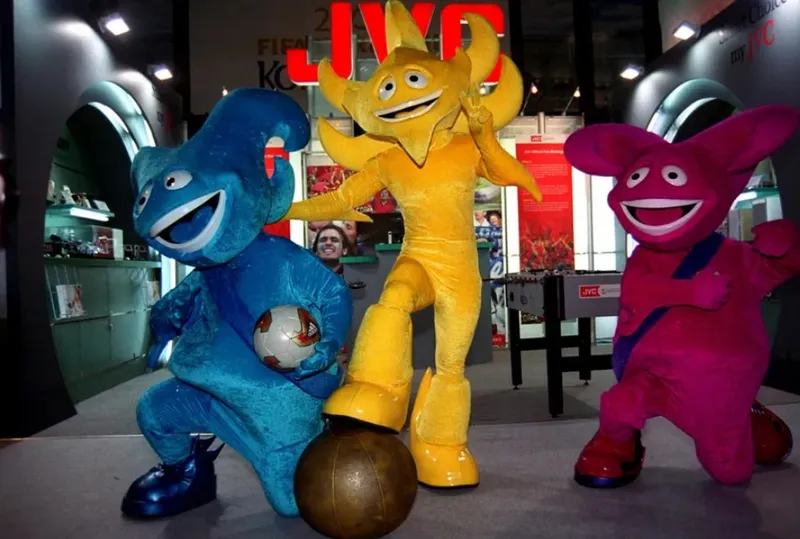
Ato, Kaz, and Nik (Japan and South Korea, 2002): Lively Aliens
Three vibrant and energetic aliens, each with a unique futuristic design, whose names were chosen through a global naming contest. They’re Ato, Kaz, and Nik, collectively called the Spheriks.
These digitally created mascots represented the “Automball” team, a fictional team whose players were three aliens named Ato, Kaz, and Nik.
With their unconventional design and complex backstory, Ato, Kaz, and Nik (the Spheriks), marked a turning point in World Cup mascot design.
Yet, they’re often ranked among the least memorable. Critics called them out-of-place aliens.
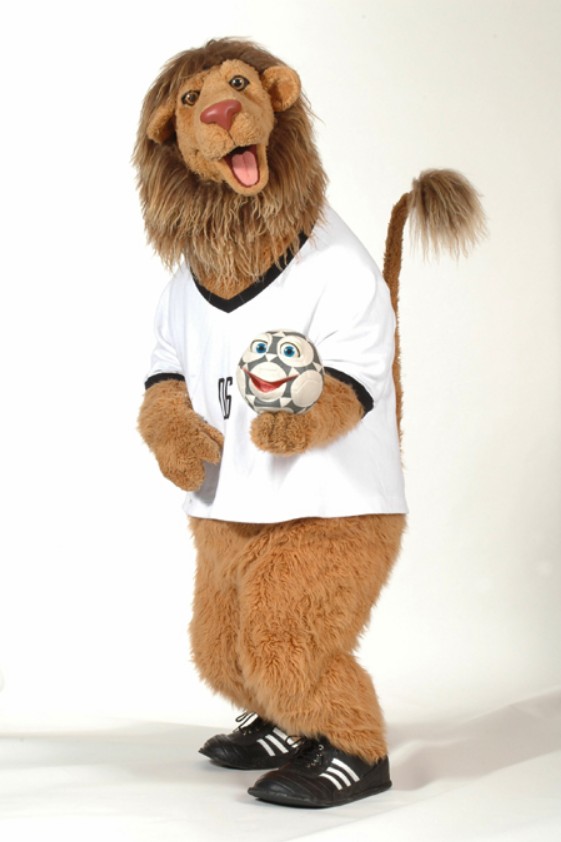
Goleo (Germany, 2006): Missing the Mark
Not all FIFA World Cup mascots are popular with fans.
The character designed by the Jim Henson Company is a notable example.
Goleo flopped hard, falling to make the desired impact.
Why?
The lack of cultural association with the host country was the main reason.
A lion wearing a German football jersey was a puzzling choice, as lions aren’t typically German symbols.
Fans mocked his lack of pants, and the toy company NICI went bankrupt after poor sales. Only 300,000 Goleo toys were sold, compared to Footix’s million.
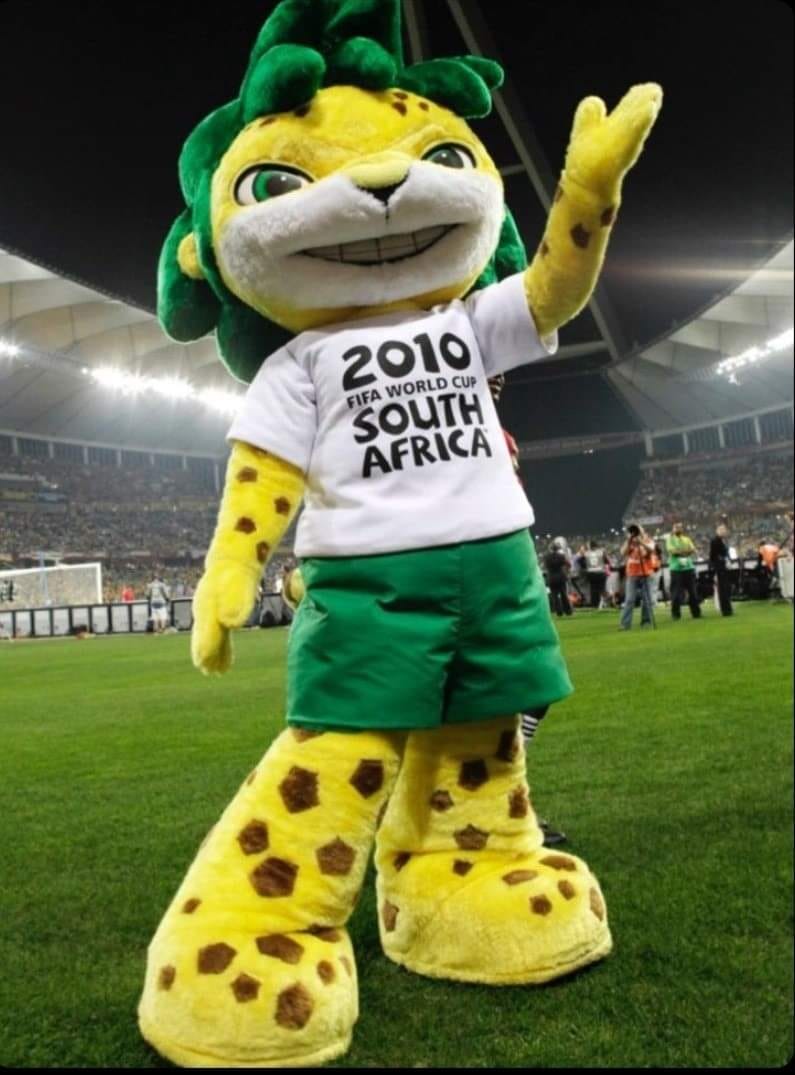
Zakumi (South Africa, 2010): Memorable
The green-haired leopard FIFA Mascot was designed locally. His name combined “ZA” (South Africa) and “kumi” (ten in African languages).
Zakumi’s green and gold colors matched the national team, and his playful vibe won hearts.
Fans described it as positive and appealing.
Though the tournament had fewer positive features, the local design and strong branding helped Zakumi to emerge as one of the few memorable elements for spectators.
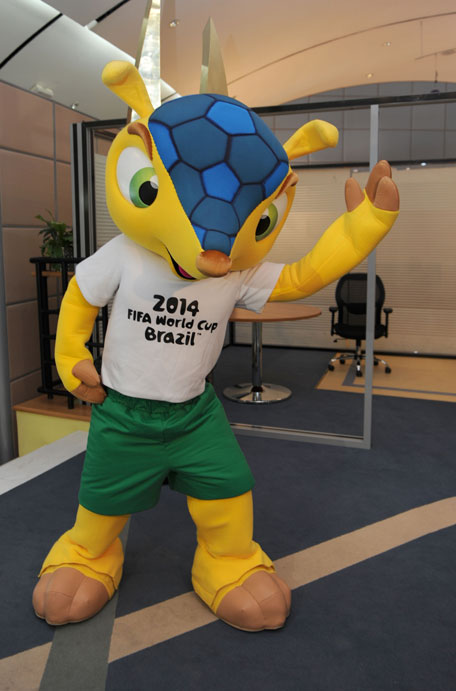
Fuleco (Brazil, 2014): Spreading Environmental Awareness
Named for “futebol” (Football) and “ecologia” (ecology), Fuleco represented Brazil’s three-banded armadillo, a vulnerable species according to the IUCN Red List
FIFA analyzed 47 different proposals from six agencies; 100%Design got the highest votes.
Fans embraced it, with over 500,000 toys sold. However, some felt it carried a too heavy conservation message.
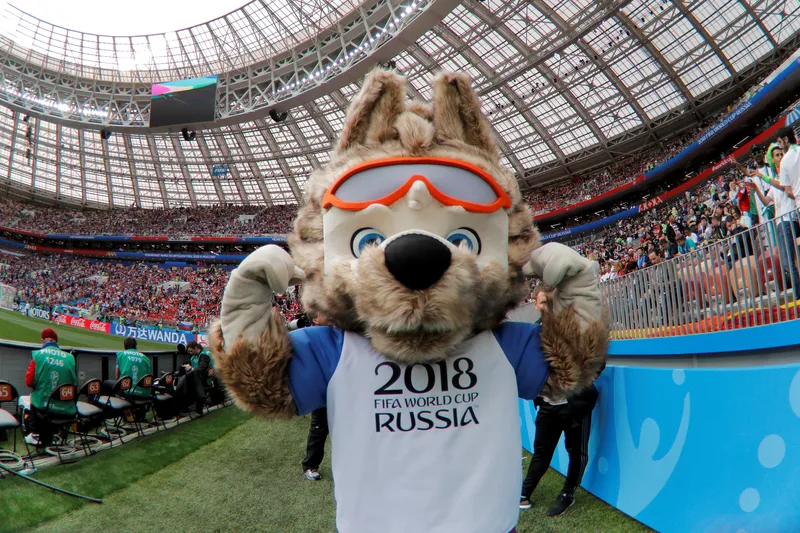
Zabivaka (Russia, 2018): The One Who Scores
Zabivaka, a wolf, was chosen through a public vote, with 53% of over 1 million votes.
Designed by Ekaterina Bocharova, this mascot borrowed its name from a Russian word meaning “Shooter” or “the one who scores”.
Zabivaka’s large glasses and cheerful, confident demeanor were a hit, with FIFA noting strong social media engagement. Zabivaka not only won the hearts of Russians but also captivated international spectators.
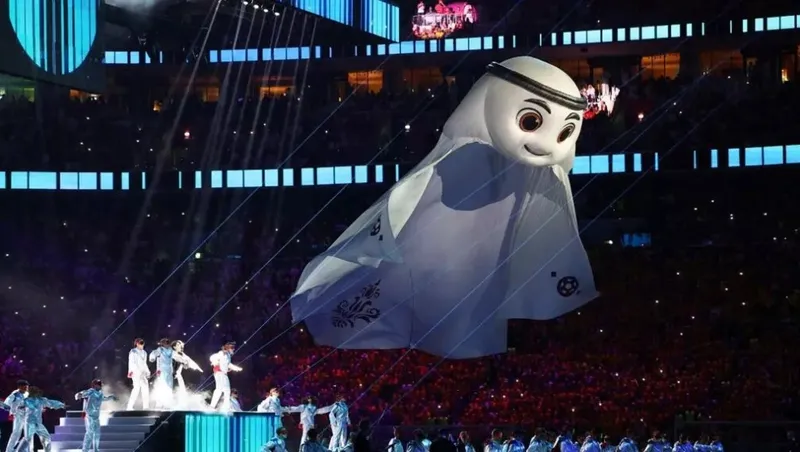
La’eeb (Qatar, 2022): A Digital-first Icon
La’eeb, meaning “super-skilled player” in Arabic, was a first: a keffiyeh-inspired character from the “mascot-verse”.
The abstract design of this FIFA World Cup mascot sparked debate. Some saw it as a ghost, others a cultural nod. Its digital presence was huge, however. This widely watched mascot character captivated viewers with its animated series that was shared across various digital platforms.
Maple, Zayu, and Clutch (Canada, Mexico, and the USA, 2026)
The 2026 FIFA World Cup is going to be a special one, as it will be the first time three countries come together to host the event.
To celebrate this unique collaboration, there will be three official mascots, each representing one of the host nations and highlighting the tournament’s themes of unity and diversity.
First up is Maple the Moose from Canada, a standout goodkepper who’s “born to roam” Across Canada. He captures the beauty of Canada’s landscapes and rich culture. Maple is not just a moose; he’s a street-style artist, a music lover, and a tough goalkeeper known for his “legendary saves”.
Next, we have Zayu the Jaguar from Mexico, an agile striker whose name nods to unity, strength, and joy. On the soccer field, Zayu is a fierce striker, and off the field, he embodies Mexican traditions, dance, and delicious food.
Finally, there’s Clutch the Bald Eagle, an upbeat midfielder representing the United States. Clutch symbolizes the American spirit of determination and adventure. As a natural midfielder, he’s all about leading by example and bringing people together.
In Critical Reviews of FIFA 2026 Mascots, Dream Farm’s leadership team shares a clear-eyed analysis of these mascots.
The Most and the Least Favorite FIFA World Cup Mascots
There is no official list of the best and worst mascots for the World Cup.
But when it comes to memorability, cultural relevance, and design, Willie, Footix, Zakumi, Fuleco, and Naranjito rank among the top-ranked.
On the flip side, we have mascots that missed the mark: Goleo, The Spheriks, Pique, and perhaps La’eeb.
What’s your most and least favorite FIFA World Cup mascots from the list above?
World Cup Mascots in the AI Age: What’s Coming?
Gone are the days when soccer team mascots were merely plush characters in costumes waving at the crowd.
Remember, we’re now living in the era of Artificial Intelligence, where digitally created avatars are dominating popular social media, gaining thousands, even millions, of followers and collaborating with global brands.
The same is happening to mascots; they’re leveling up with AI.
Take Qatar Airways’ Sama, the world’s first AI-powered cabin crew digital human. Since its launch in 2023, Sama has been sharing travel tips, answering questions, and engaging on social media with slick videos.
She’s a glimpse of what football team mascots could become.
Imagine an AI-powered mascot that guides fans through stadium rules, shares match highlights, or calls out bad behaviors like offensive chants (those FIFA fined federations for in 2018) in real-time.
Picture it tweeting, “Hey, let’s keep the chants fun and respectful!” Or picture it posting a video saying, “We’re all here for football. Let’s cheer, not fight.”
Per data from Inside FIFA, the FIFA World Cup Qatar 2022 engaged 5 billion fans across all media. An AI football team mascot could own that space, posting real-time highlights or fun polls.
Imagine it tweeting, “Who’s your player of the match?” and instantly tallying votes.
This will truly be an engagement with significant impact, won’t it?
What to Expect from the Next FIFA Mascot?
Picture a team mascot that talks, posts, and guides fans like a digital best friend. A reliable brand mascot agency makes it a reality for you.
A marketing-savvy, character-led agency doesn’t just sketch a team mascot; it creates digital ambassadors with unique story universes and strong backstories, rooted in the team’s culture.
It brings your mascot to life by creating eye-catching visuals and viral video content for apps, ads, stadium screens, or social platforms.
It designs, launches, and manages social media campaigns that hook global fans with rich narratives, from Instagram Reels to X posts.
It tracks and monitors engagement across various touchpoints, tweaking content pieces to maximize reach.
AI integration? A reliable mascot creation partner masters the trends.
You can embed AI into your team mascot, enabling real-time chats or automated content creation. An interactive team mascot assistant could answer questions like, “Where’s my seat?” or “What’s the score?” in seconds.
Your AI mascot could even gamify the experience or host virtual events for fans. You can even turn it into a social media influencer that is followed by thousands.
The potential is huge, and the possibilities are endless.
[single_post_cta_tag tag=”brandmascot”]
Also check out:
- “Why Fans Love Virtual Football Mascots” for marketing benefits.
- “21 Top Soccer Mascots of All Time” to understand why your football club needs a mascot.
- “45 Famous Sports Mascots that Bring Teams and Fans Together” to learn about other examples of iconic sports mascots.
- “19 Unique Sports Mascot Ideas that Teams Can Actually Use” for inspiration.


Post Comments
0 comments